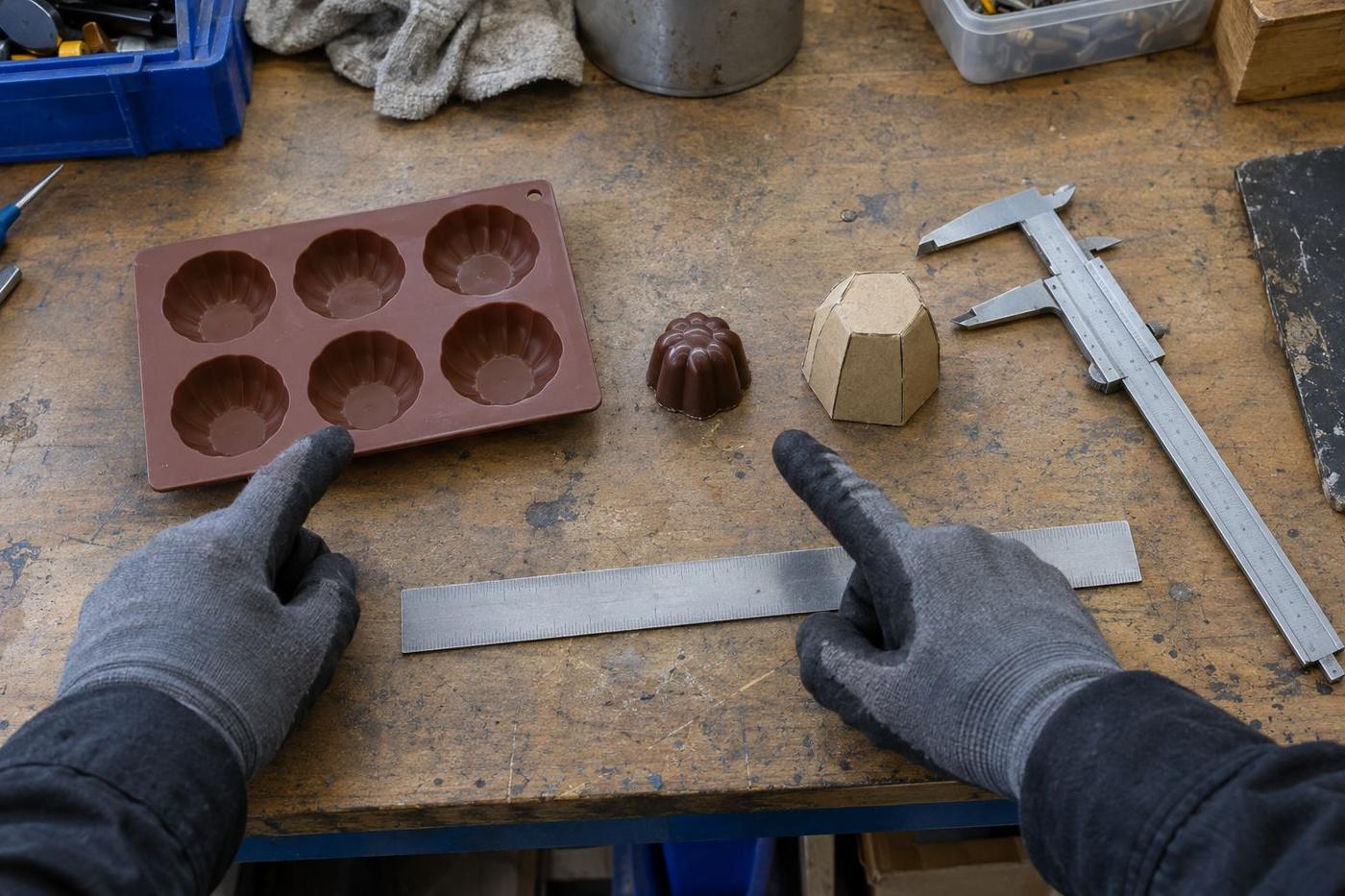
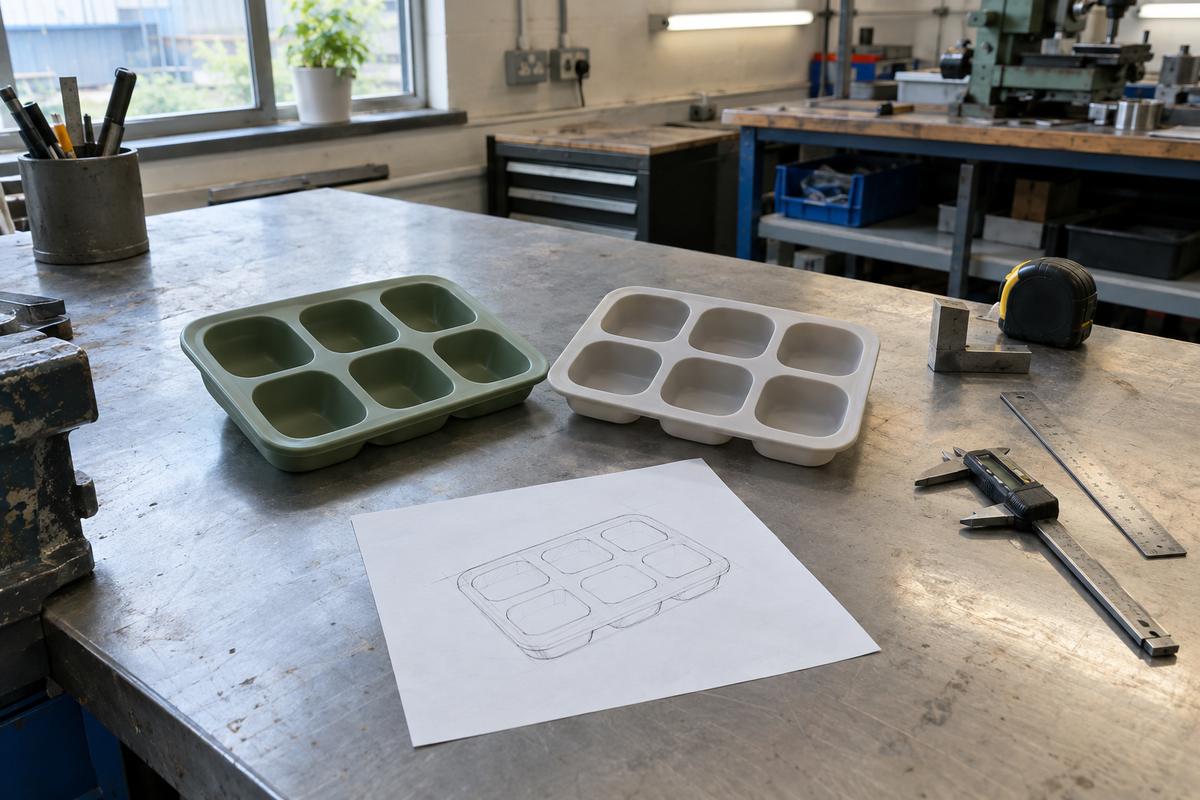
01Start with the product, not the mould
It sounds obvious, but the first question isn't "what mould do I want?" It's "what am I making?" A dessert that's served warm behaves differently in a mould from one that's served frozen. A chocolate that's hand-tempered behaves differently from one poured from a machine. Describe the product first — the mould conversation flows from there.
02Bring the numbers you have and skip the ones you don't
You don't need to know the shore hardness, the elongation, the working range. That's our job. You do need to know: how you'll fill it, how you'll set it, how you'll extract, how you'll clean, and roughly how many you'll make per shift. If you know your depositor plate spec or your oven cycle, that helps. If you don't, we'll ask.
03Understand what a "food-contact grade" actually means
Silicone is described as food-contact when the raw material carries a supplier declaration confirming it's formulated for food contact. That's a material statement — not a site audit. It's the standard basis for a food-contact mould, and it's what your food-safety paperwork usually asks for. If your specification demands site certification on top, tell us at enquiry stage.
04Expect an itemised quote
A good food-contact mould quote has two lines: what the tool costs to build, and what each part or tray costs to reorder. If a quote rolls everything into a single number, ask for the split. It tells you where money is going and what a reorder will actually cost.
05Get material paperwork with the mould
Every food-contact mould should ship with a supplier declaration of what it's made of. Keep it in your food-safety folder. If your mould arrives without one, ask for it — it's a legitimate request and shouldn't be a fight.
06Know what a reorder looks like
Ask, at first order, how the reorder process works. A supplier that keeps drawings and grades on file makes replacements easy. A supplier that starts from scratch every time will slow you down and probably drift the spec.