01Gloss is temper first, mould second
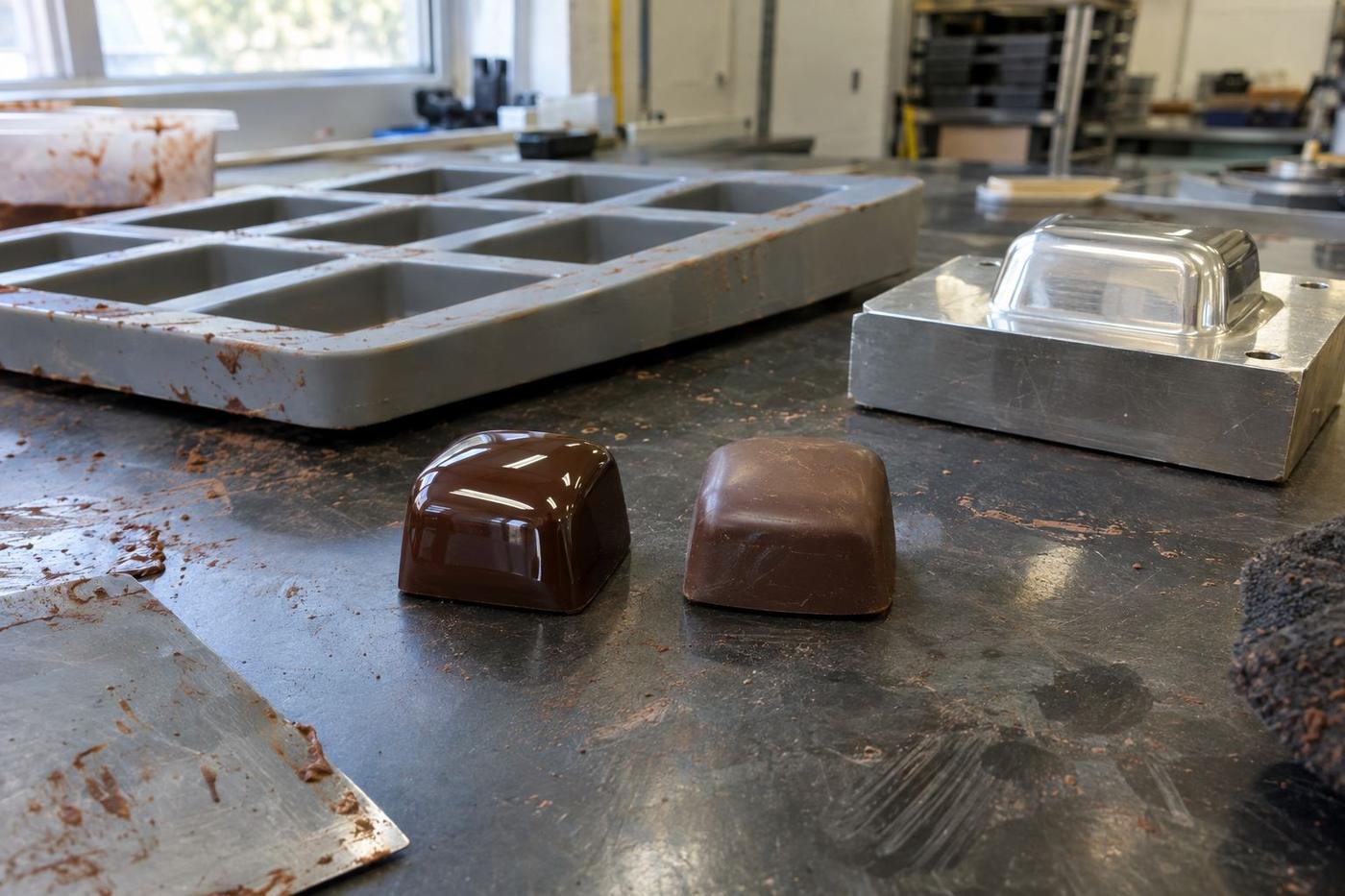
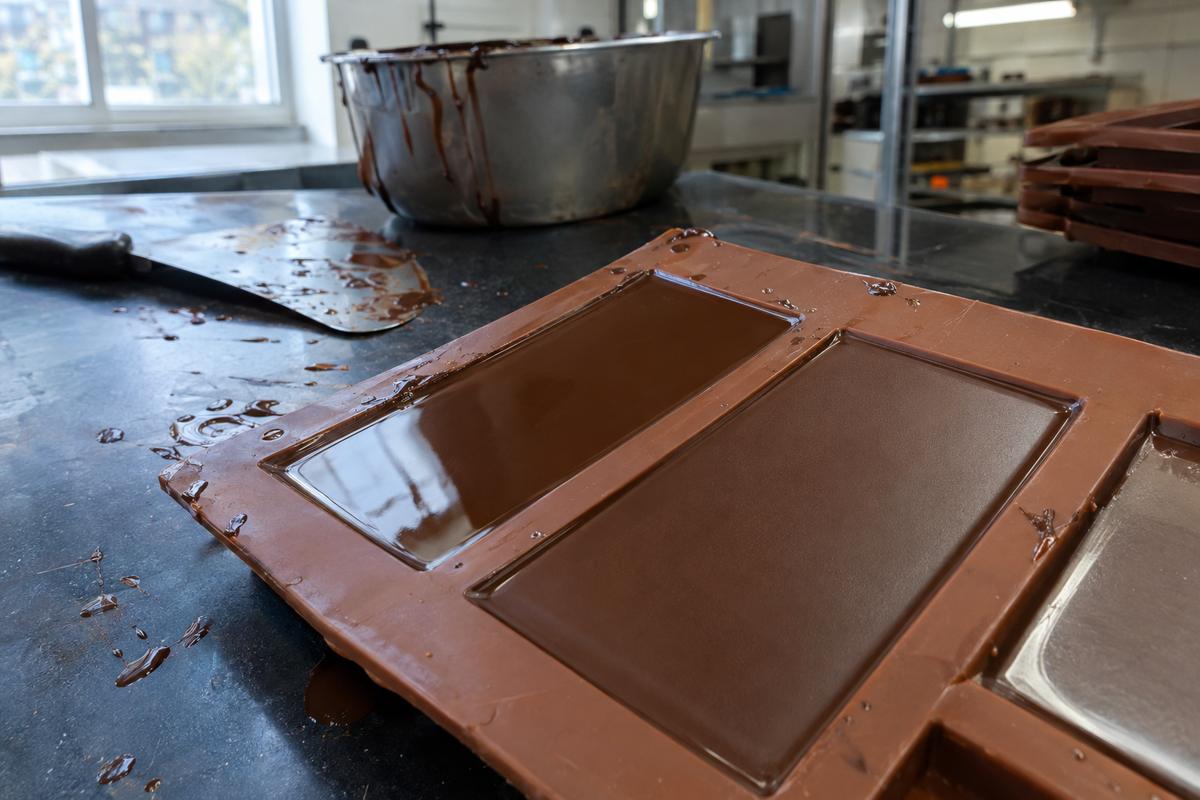
The single biggest determinant of chocolate gloss is temper. A perfectly tempered bar in a rough mould can still look glossy, because the chocolate has crystallised in its glossy form. A poorly tempered bar in a mirror-finish mould will look dull, no matter how good the mould is. So: gloss starts with the chocolate.
02Cavity finish still matters, though
Once temper is right, cavity finish takes over as the finishing touch. A cavity polished to a high finish releases a bar with a smooth, reflective surface. A matte cavity releases a bar with a satin surface. A textured cavity gives you texture. So the mould defines the ceiling on gloss, and temper determines whether you hit it.
03Silicone vs polycarbonate finish
Silicone gives a slightly softer surface than a polished polycarbonate mould does — silicone is by nature a slightly softer material. If mirror gloss is the whole point of your bar, and volume is high, polycarbonate is often the right answer. For most artisan and mid-volume work, silicone gives an excellent surface with better release.
04Branded logo detail affects perceived gloss
A recessed logo in the cavity floor breaks up the reflective surface. That's the point of it, but it means a bar with a logo will read slightly less "glassy" than a plain bar. Chefs sometimes read this as poorer finish; it's actually the logo working.
05Cavity ageing changes finish over time
Cavity finish drifts over the life of a mould. A high-polish cavity gradually matt-es under wear. This isn't a defect — it's the mould living. If gloss consistency matters over a long run, plan a scheduled tooling replacement rather than waiting for a visible drift.
06What we can and can't do at the mould
We can polish to a high finish. We can supply matte or satin. We can give you a textured surface if that's what you want. What we can't do is fix a temper problem at the tool. If your bars are dull, we'll ask about the tempering line before assuming it's the mould.