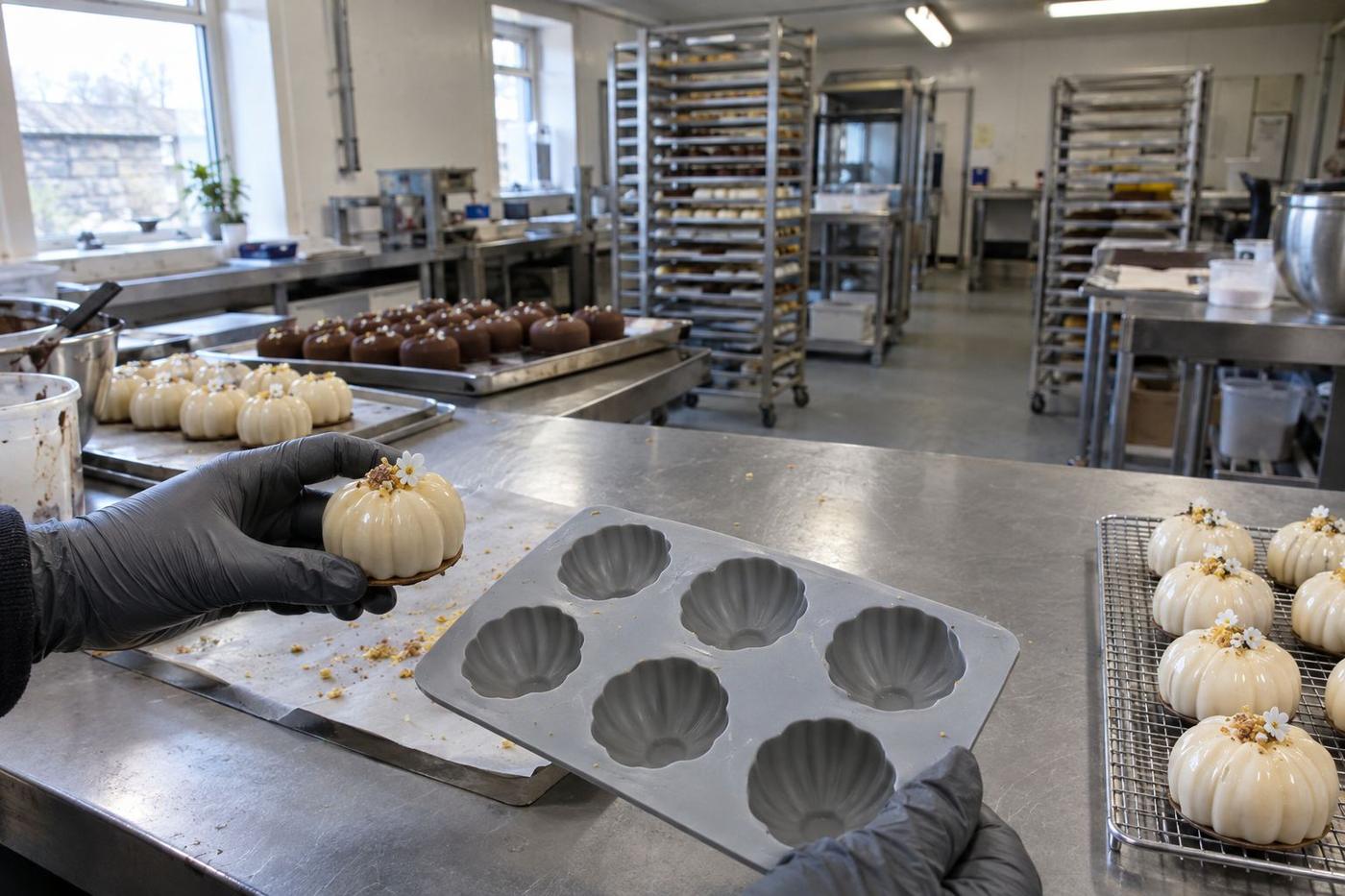
The demould motion
How does the pastry team actually pop the dessert out? Tell us — invert-onto-tray, warm-tap, flex-and-pop. The silicone hardness sits around that answer.
Service · patisserie
A patisserie mould has to hold a delicate shape, release without a dent, and repeat that a hundred times a service. It also has to look like the chef's drawing.
Overview
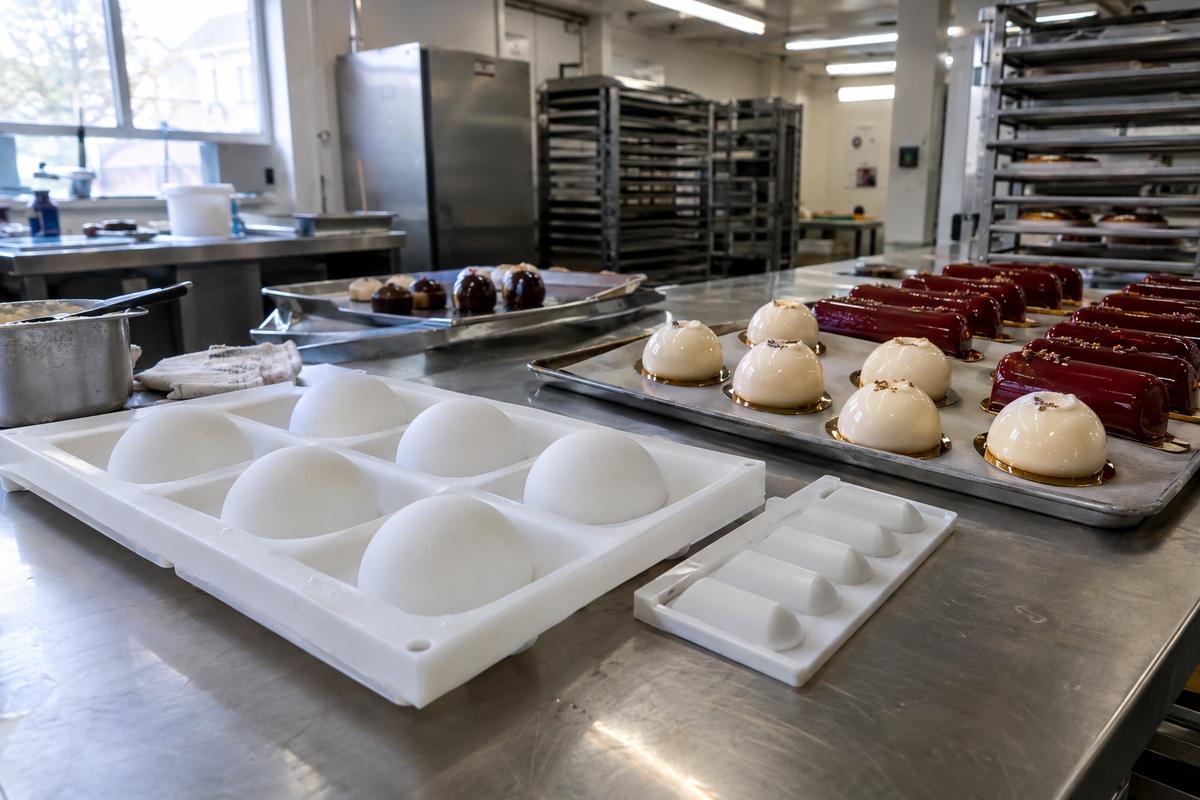
Patisserie is a discipline of geometry. The chef draws a form; the mould renders it in a shape that can be filled, chilled, unmoulded and glazed without a fingerprint or a scar.
We work with pastry teams on individual dessert moulds, entremet cavities, mousse rings, insert moulds, and shared tooling for hotel groups and specialist patisseries. Grade is food-contact silicone; the finish is the finish that comes off the mould.
What we make
Single-portion moulds for restaurant service. We work with the pastry chef's sketch and prototype the form until the release is right.
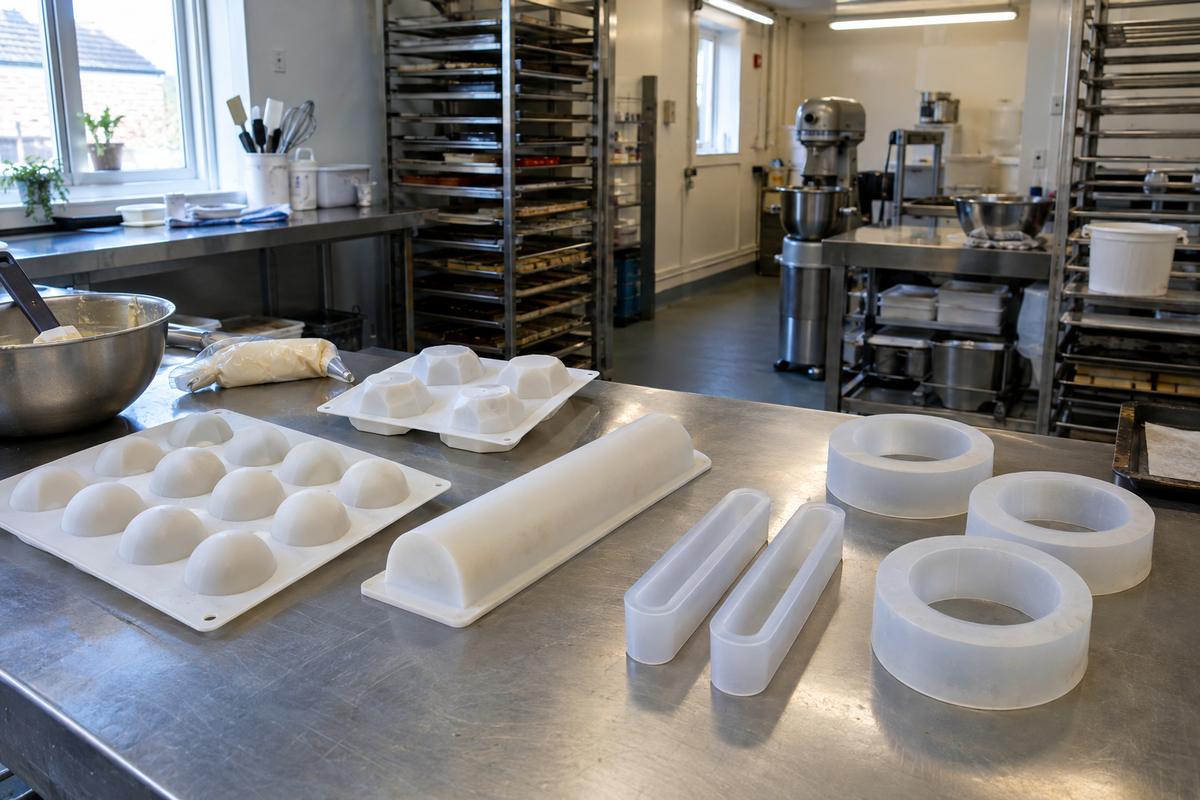
Cavity moulds for shared or plated entremets — dome, arc, log, tablet, quenelle. We spec silicone hardness around the demoulding motion the team uses.
Interior insert forms for layered desserts. Slim, deep, and sized so the frozen insert drops out cleanly into the outer cavity.
One-piece silicone with defined internal walls, so the mousse holds shape between fill and glaze without a formliner.
One-off cavity work for a signature plate. Small run, hand-cast, prototyped with the chef before production.
How it gets made
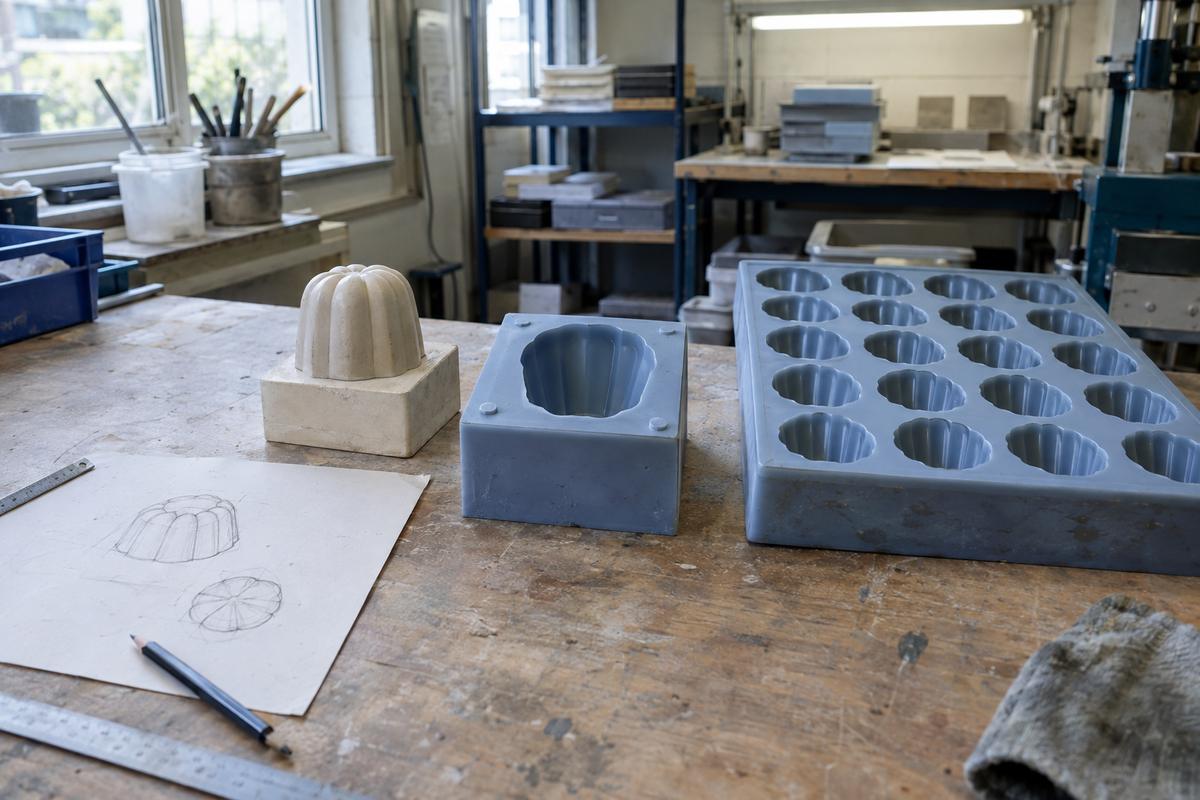
Every patisserie mould starts as a drawing we agree with you. We make a master, pour a single proof cavity in PFAS-free platinum-cure food-grade silicone and let you test it with your own recipe.
Once you are happy, we pour or press the full tray, record the grade against your order and keep the drawing on file for reorders.
What we ask up front
How does the pastry team actually pop the dessert out? Tell us — invert-onto-tray, warm-tap, flex-and-pop. The silicone hardness sits around that answer.
Blast freezer, chiller, ambient. Each one changes the wall thickness and shape stability we design around.
Glaze, spray, gold leaf, isomalt shard. The finish on top of the dessert is affected by how flat the top of the mould sits — we bench-flatten every tray.
A 20-a-service prep list wants a different cavity count from a 300-cover buffet. We plan tray layout around your kitchen, not a catalogue.
Typical work
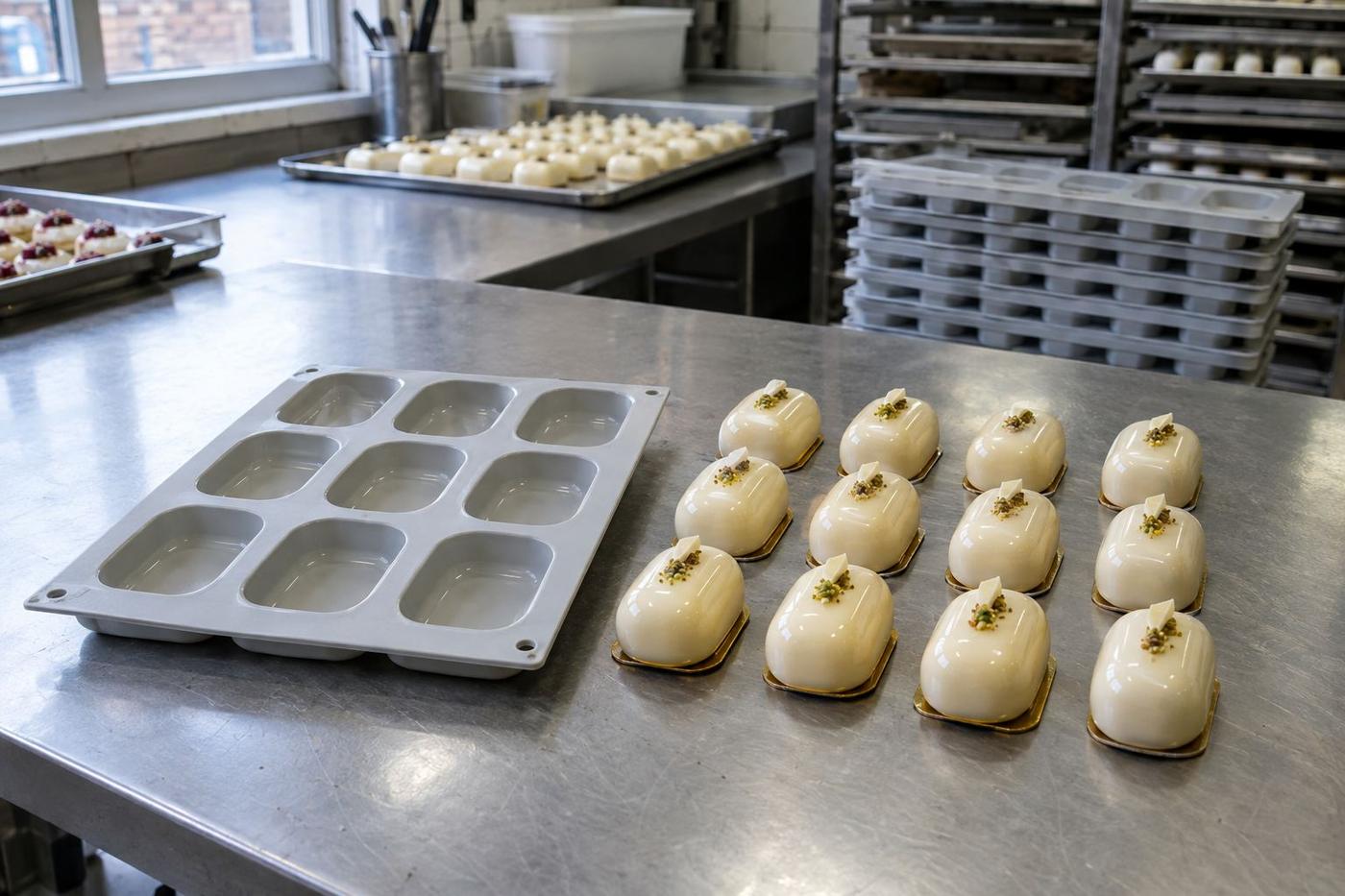
A shared cavity mould for a signature mousse across four sites, sized to each site's chiller shelf.
See projectSlim insert tray for a fruit-compote centre in a chef's signature plated dessert.
See projectA demi-sphere cavity mould that turns out a clean quenelle at every service.
See projectQuestions
That is a hardness question. We usually run patisserie moulds at a softer shore than bakery moulds, because a flex-and-pop is gentler than a knock-out.
Yes, and we design for it. Food-contact silicone tolerates blast freezing well. We add corner radii so ice does not build in an unwashable pocket.
Yes. A single hand-cast cavity is a real order; we'll build one, run it past the chef, iterate, then scale to a tray once the form is right.
Cavity finish carries onto the dessert. We can supply high polish, satin, or fine matte inside the cavity. Tell us which reads best under your glaze.
Ready?
Send a photo, a sketch or a sample. We'll come back with a route and a quote.
Real people, a real workshop
No call centre and no middlemen. When you contact TCI Culinary, you speak to the team who design, build and check your mould.



 Thomas LaneManaging Director
 George PrestonDesign & Project Manager
 Kelly BallingerHead of Partnerships
 Jim AndertonProduction Manager
 TheodoreEmployee Welfare