Guide
Buying your first food-contact mould
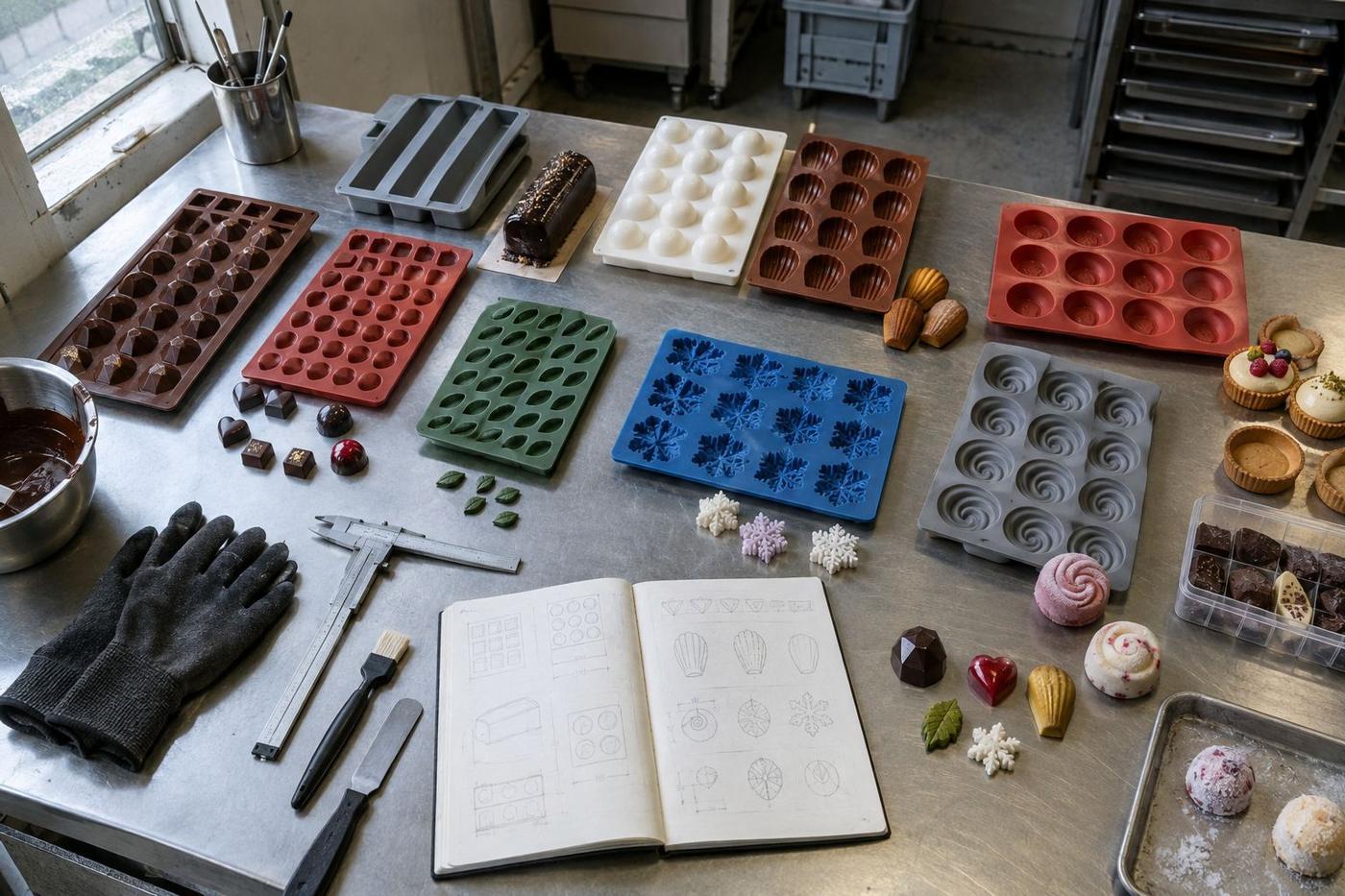
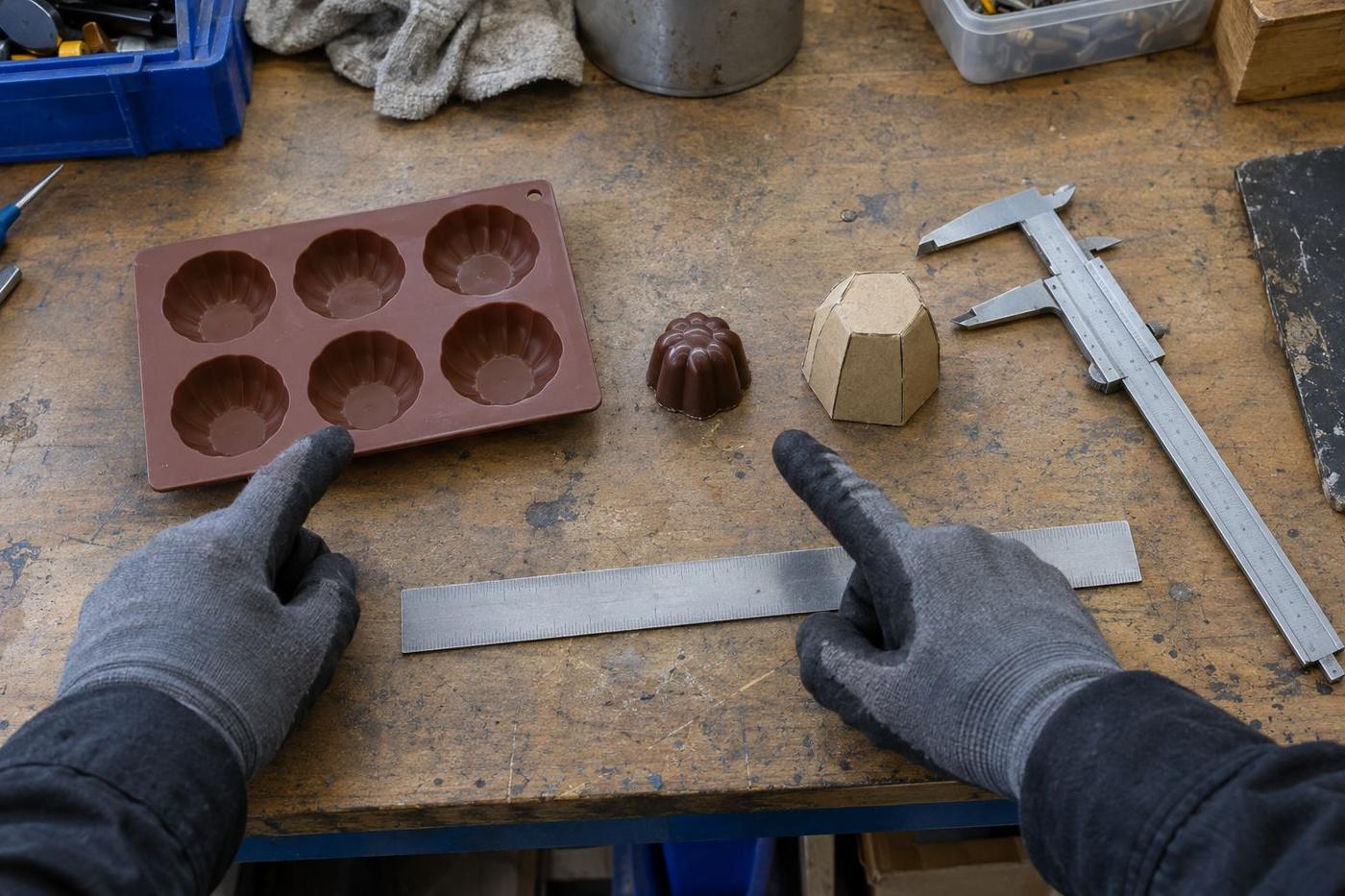
If you've never spec'd a custom food-contact mould before, the process can feel opaque. It really isn't — it's a specific set of questions and answers. This guide walks through them.
Read the guideKnowledge hub
12 guides and 12 case studies on buying, designing, using and looking after food-contact silicone moulds.
Guides
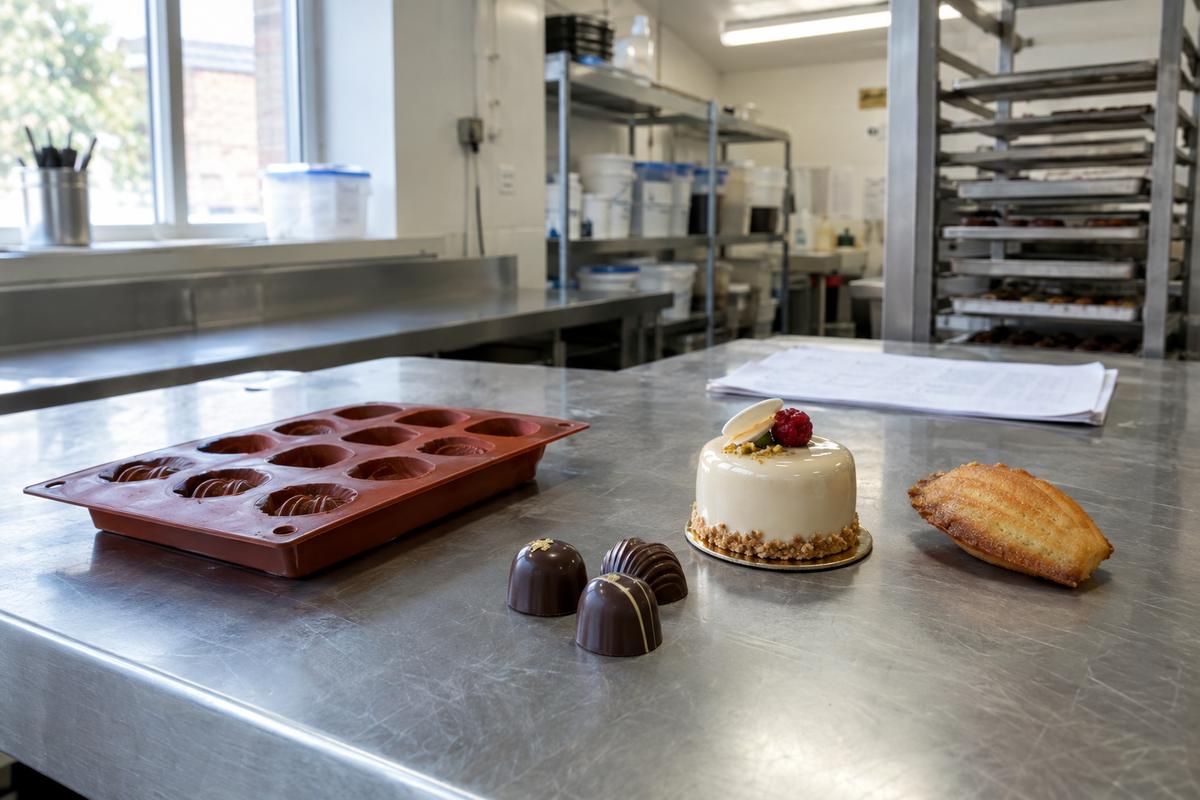
Practical guides for anyone buying a food-contact silicone mould for the first time, or anyone whose supplier hasn't explained the basics properly.
Read a guide
If you've never spec'd a custom food-contact mould before, the process can feel opaque. It really isn't — it's a specific set of questions and answers. This guide walks through them.
Read the guide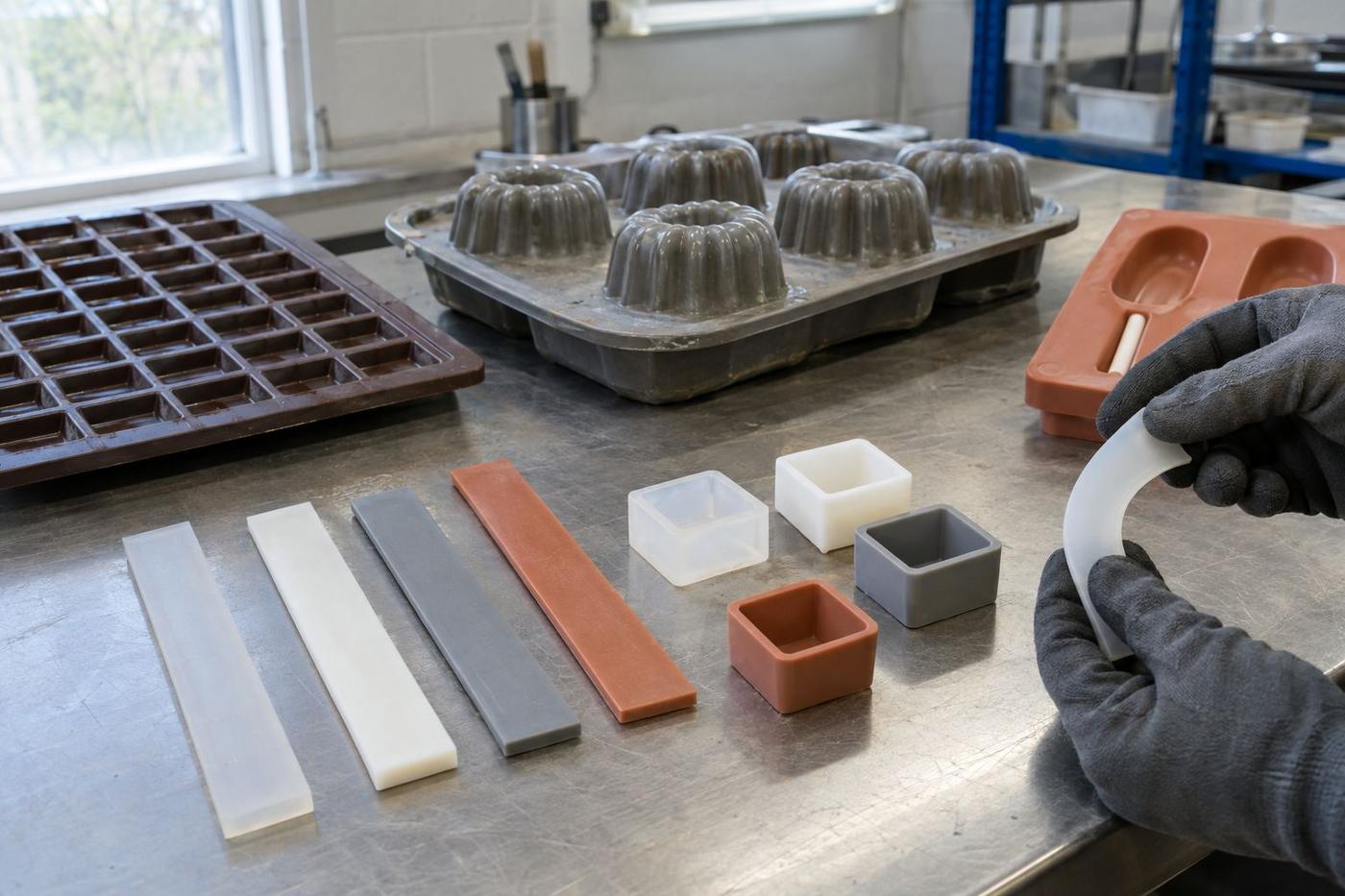
You don't need to remember a spec number to buy the right mould. You do need to know what a grade does. This guide walks through the ideas without the acronyms.
Read the guide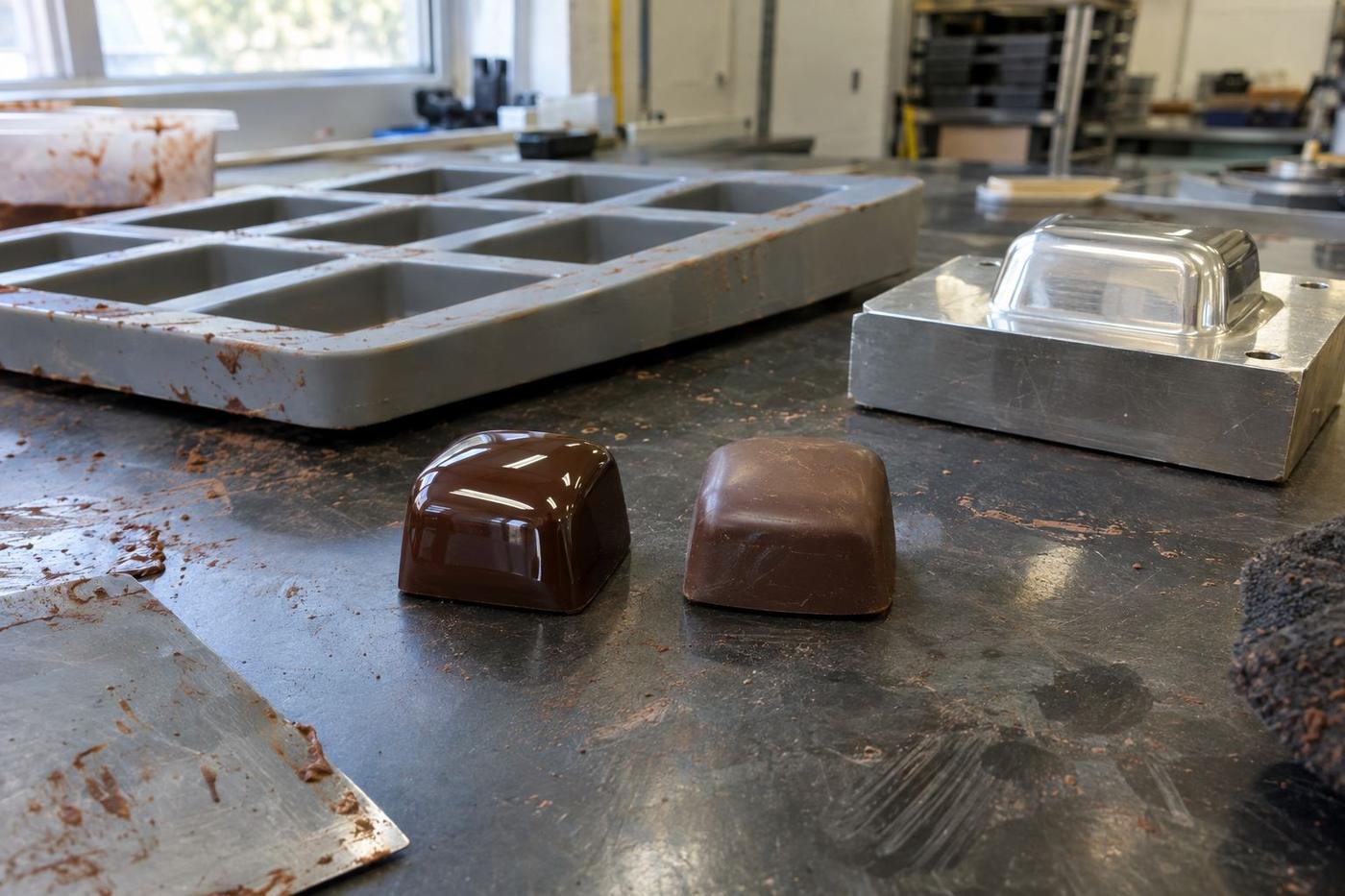
Gloss on a chocolate bar comes from two places: the temper you gave the chocolate, and the finish inside the mould. Understanding the split helps you set expectations.
Read the guide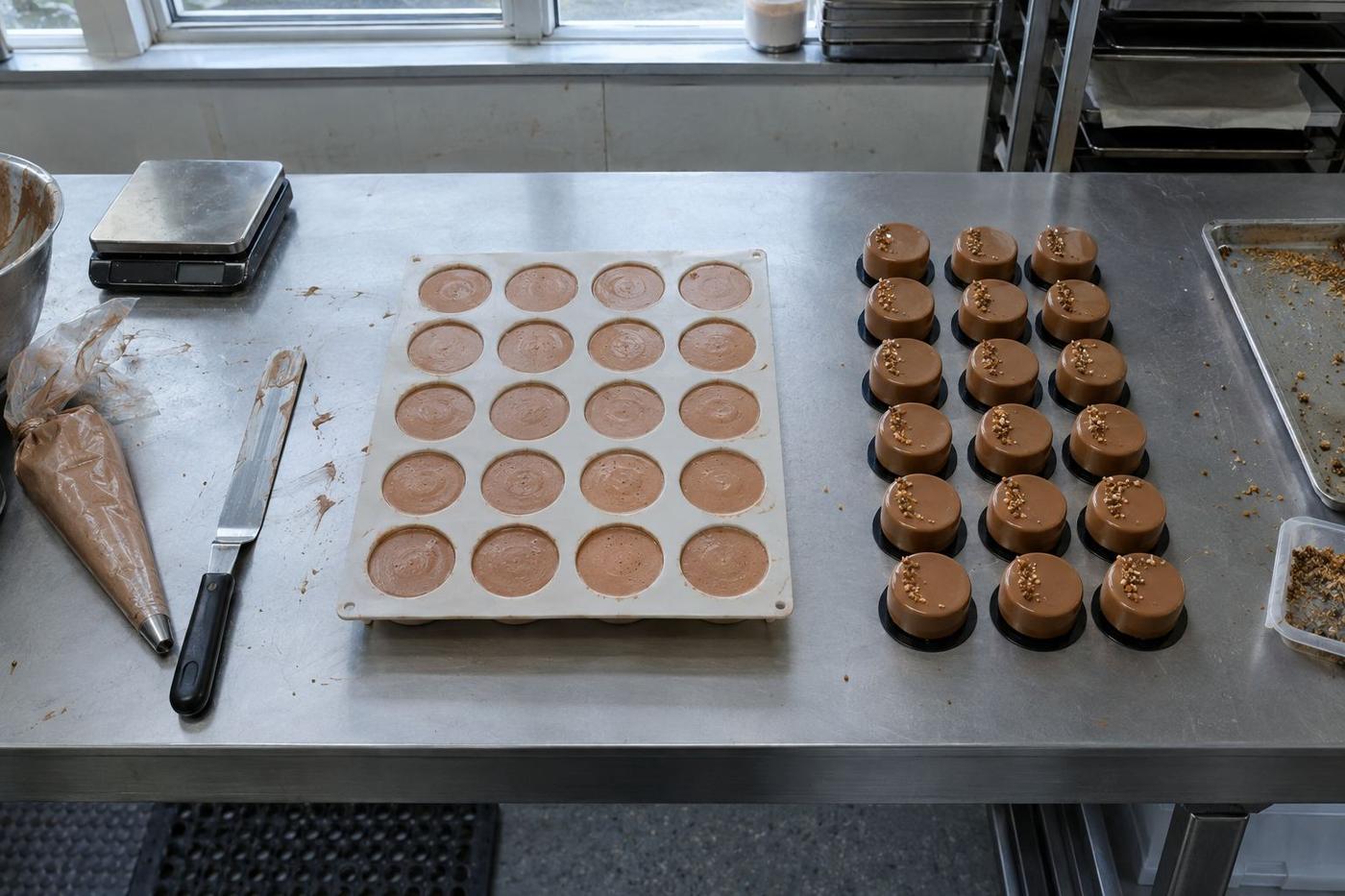
For a lot of food businesses, cavity volume is the whole game. Get it right and your food-cost holds; get it wrong and every dessert leaks margin.
Read the guide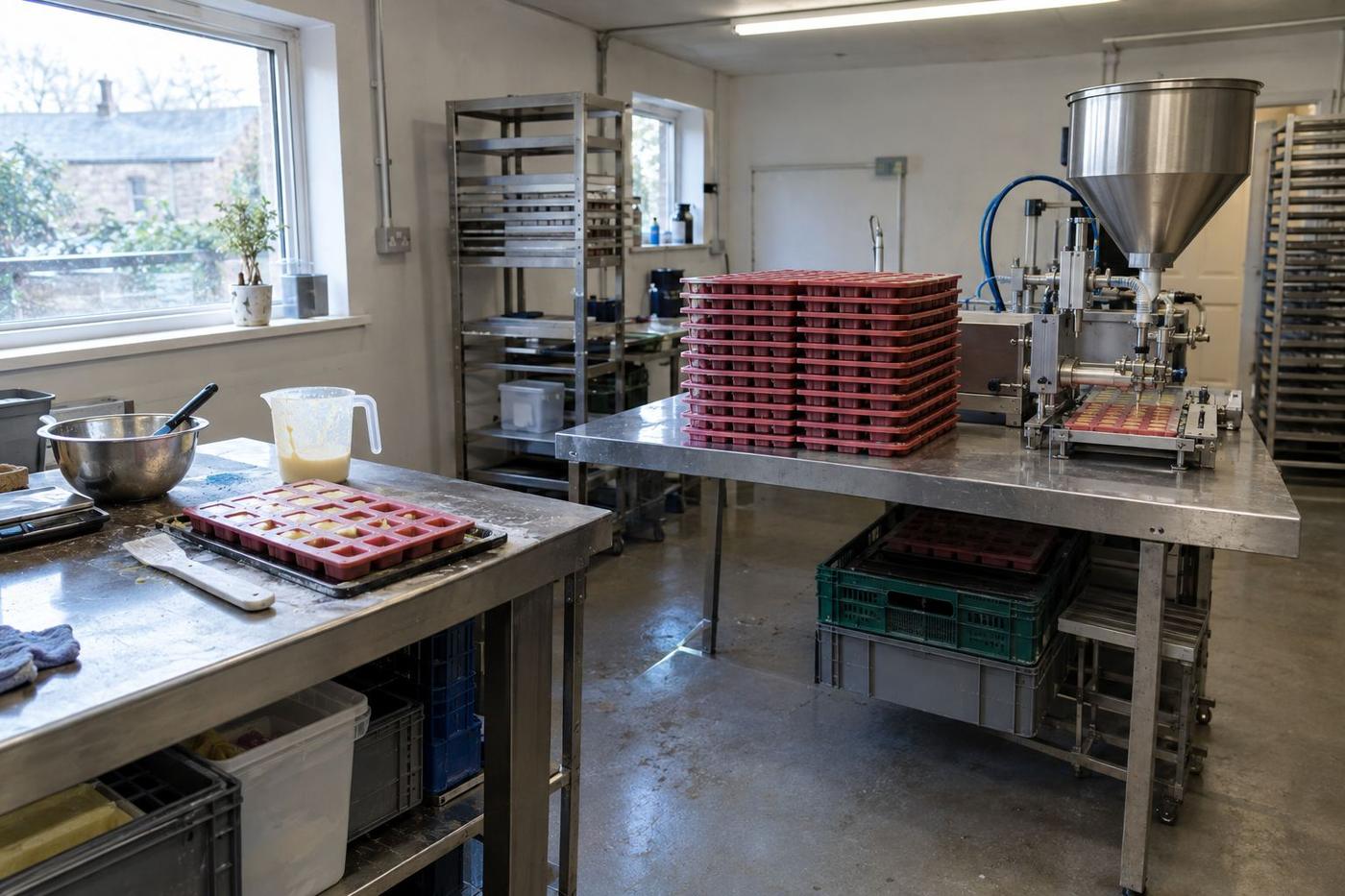
A hand-poured silicone tray is a good place to start and, for many brands, a good place to stay. Knowing when to graduate is a real decision.
Read the guide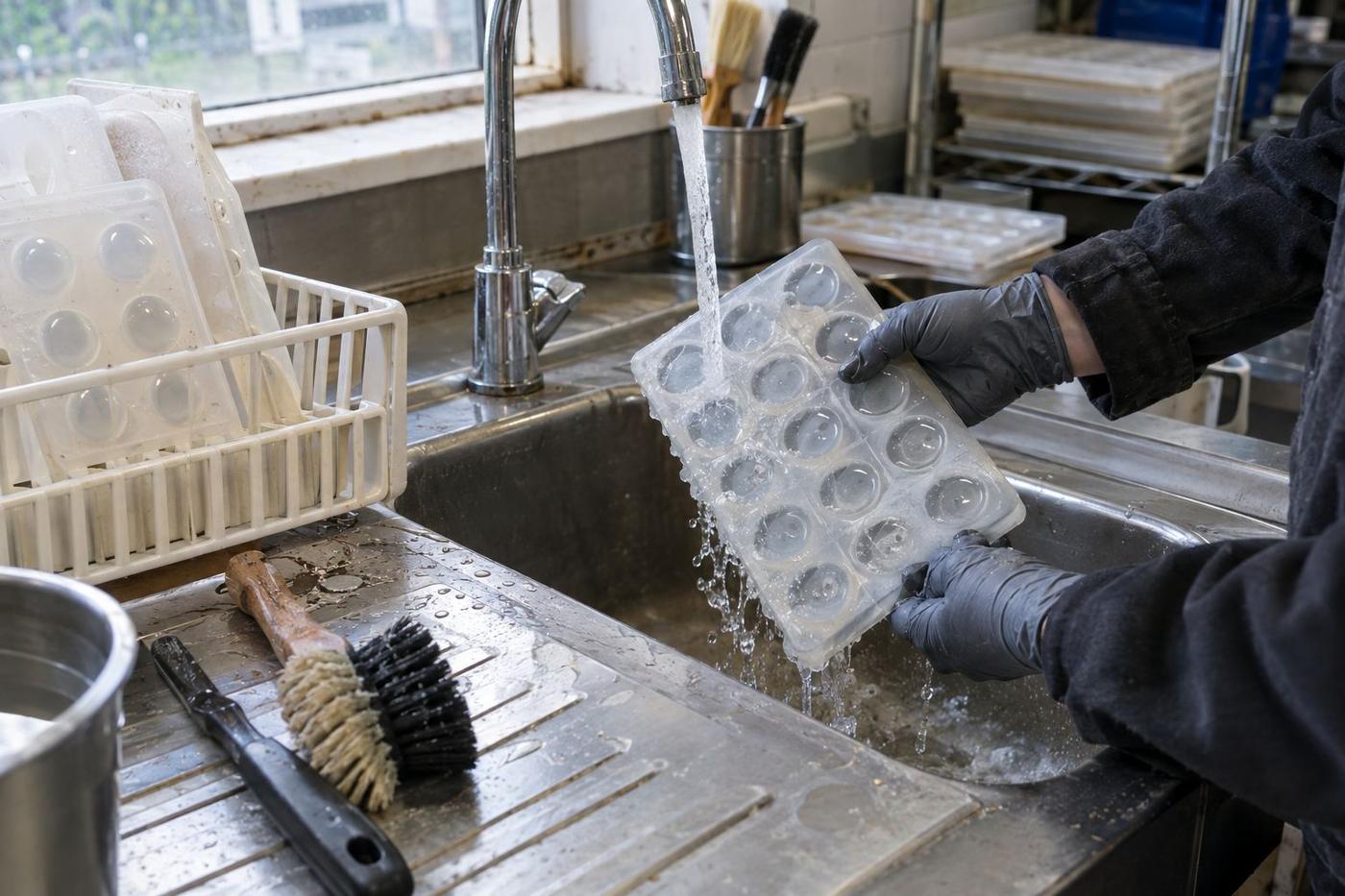
The wash cycle usually ages a food mould faster than the fill does. Understanding cleandown is understanding mould life.
Read the guide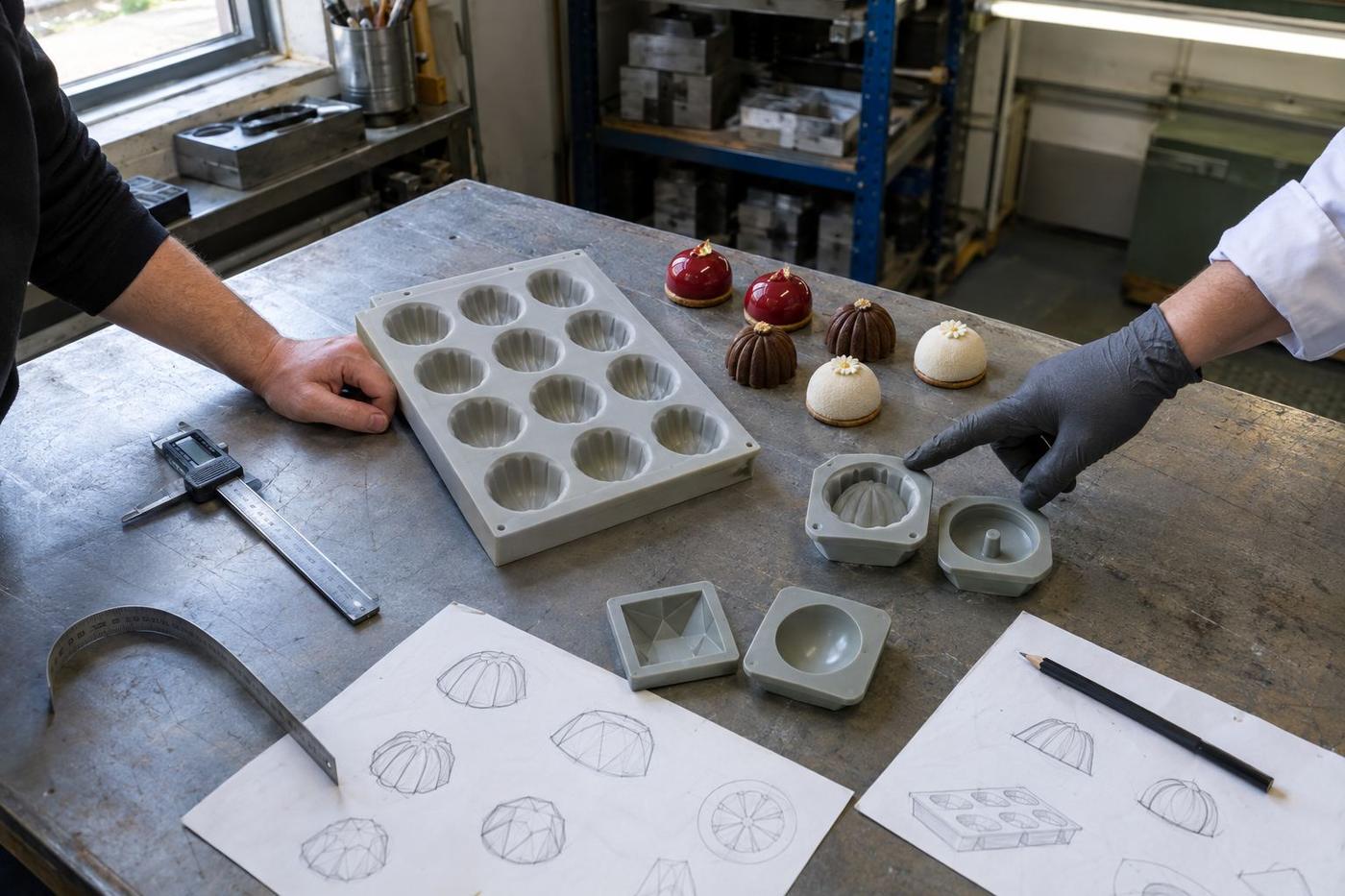
The best mould conversations happen between a mould maker and the chef who'll actually use the tool. Here's how to make that a productive hour.
Read the guide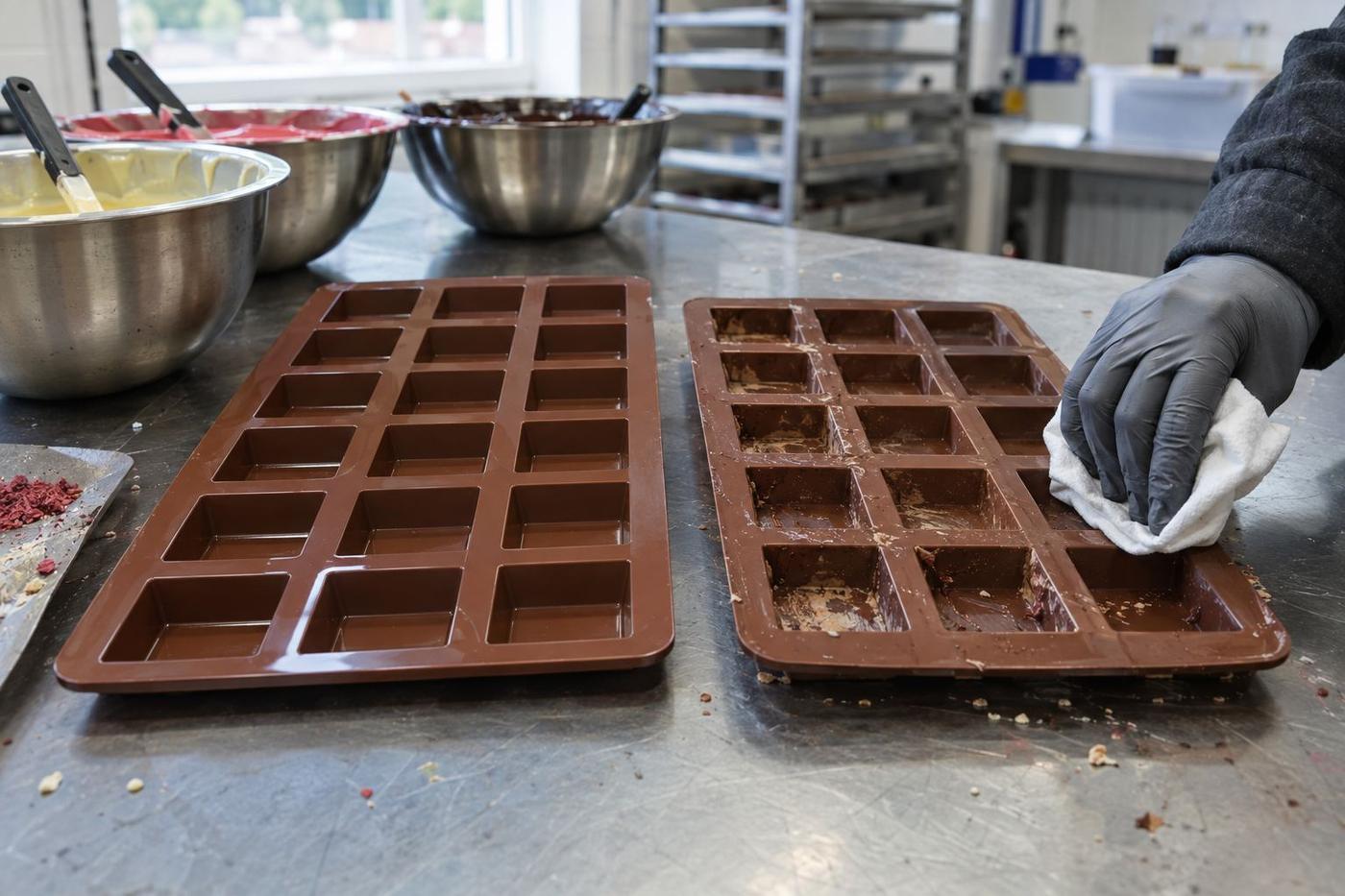
Gloss on chocolate comes from three things: your temper, the cavity surface and what has built up on it. Here is how the last two work.
Read the guide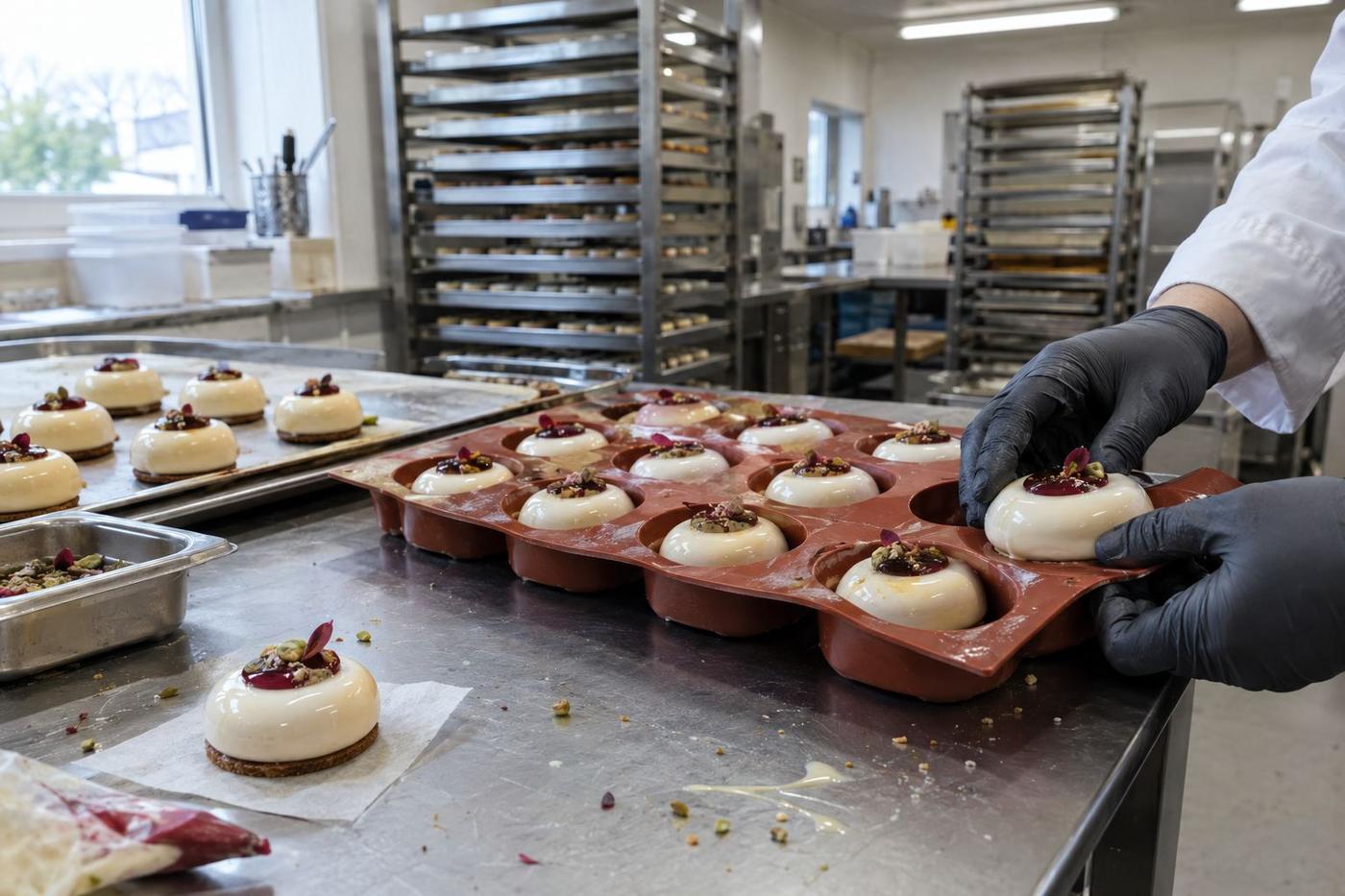
A dessert that works for twelve covers does not always work for two hundred. The mould is often where the scaling succeeds or fails.
Read the guide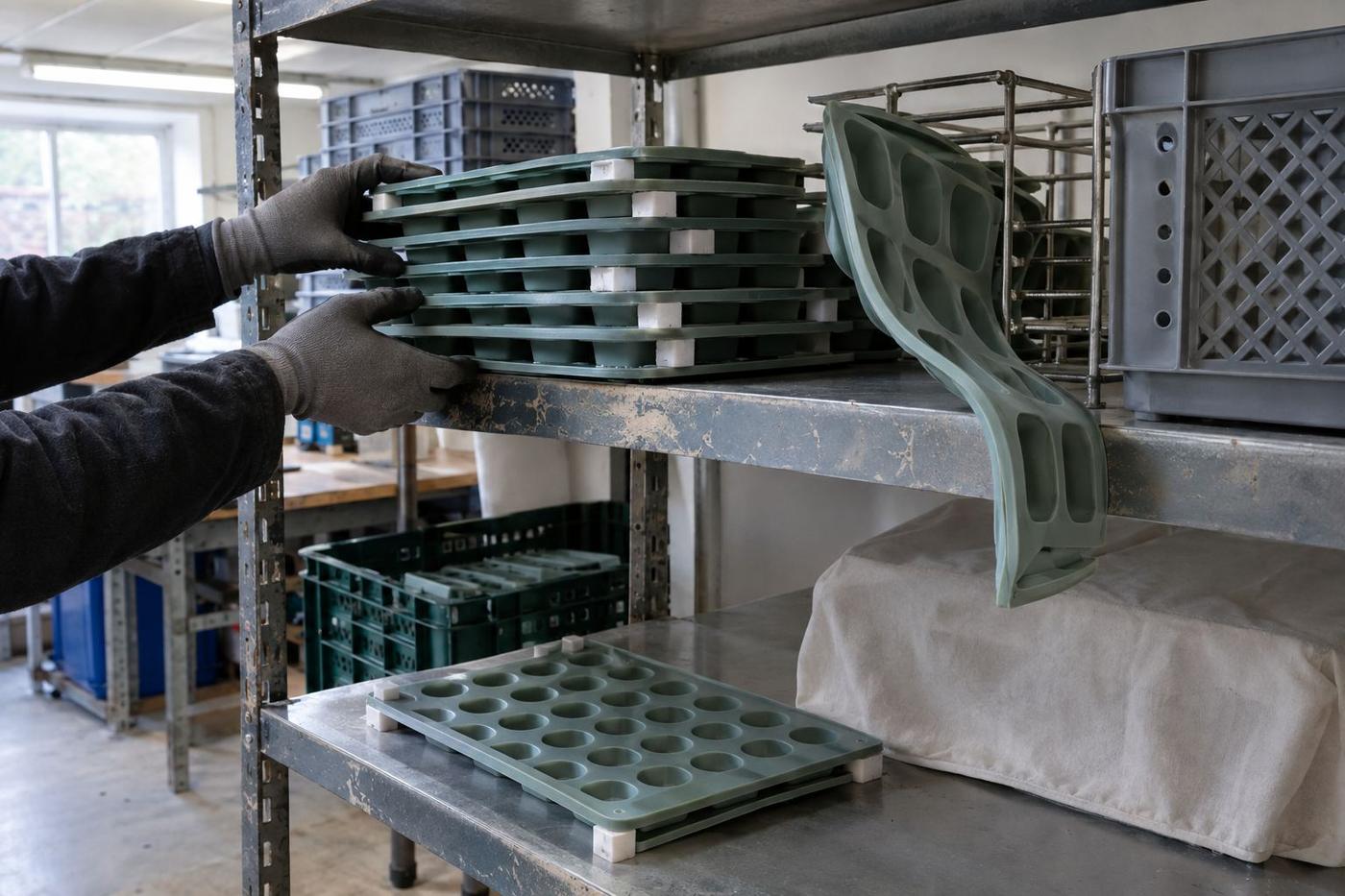
A good silicone mould lasts a long time if it is stored well. Most early failures come from how moulds are kept, not how they are used.
Read the guide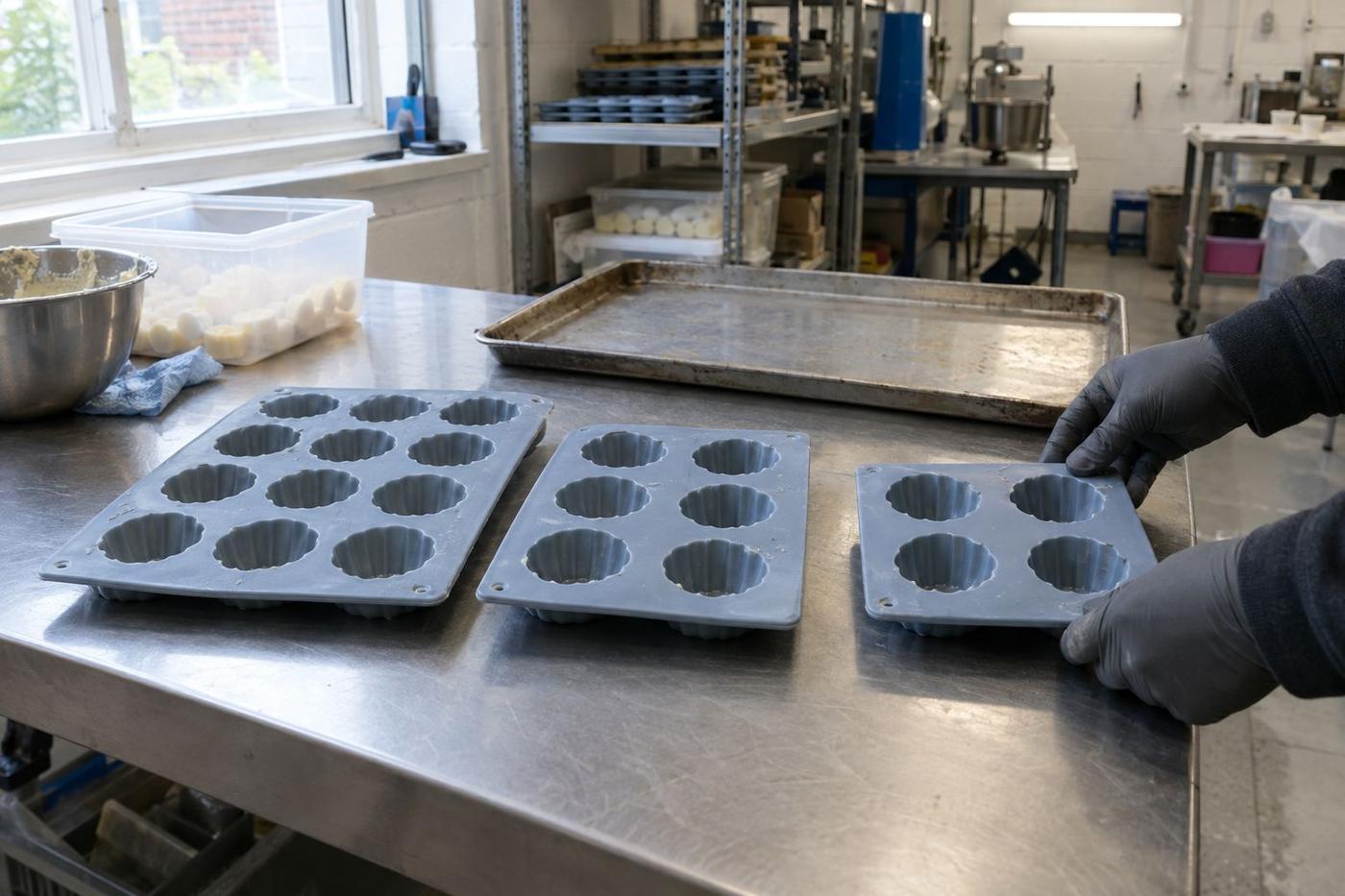
More cavities is not always better. The right number comes from your shelf, your hands and your day.
Read the guide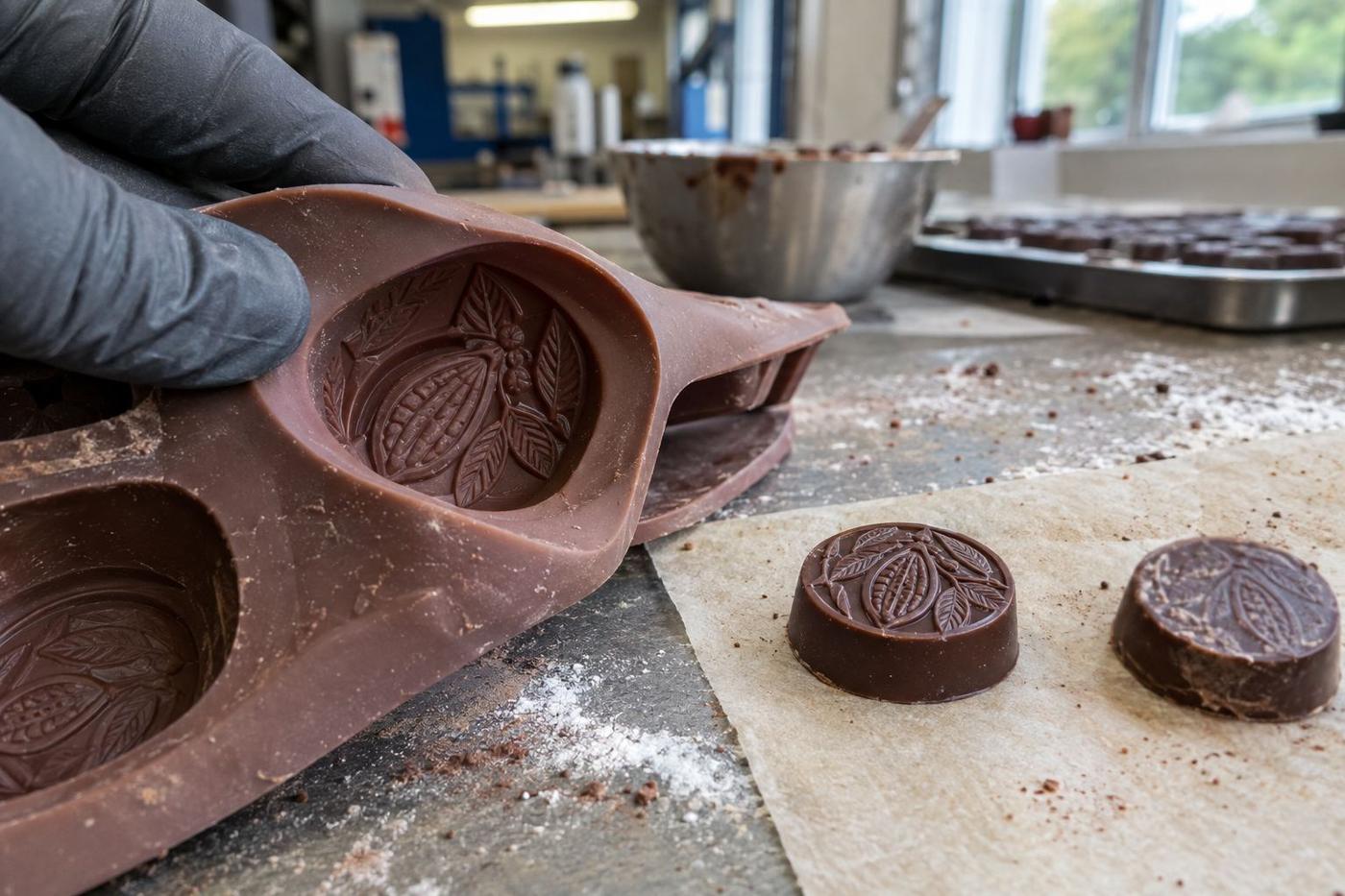
A logo on food only works if it reads. Here is what makes the difference between a crisp mark and a smudge.
Read the guideCase studies
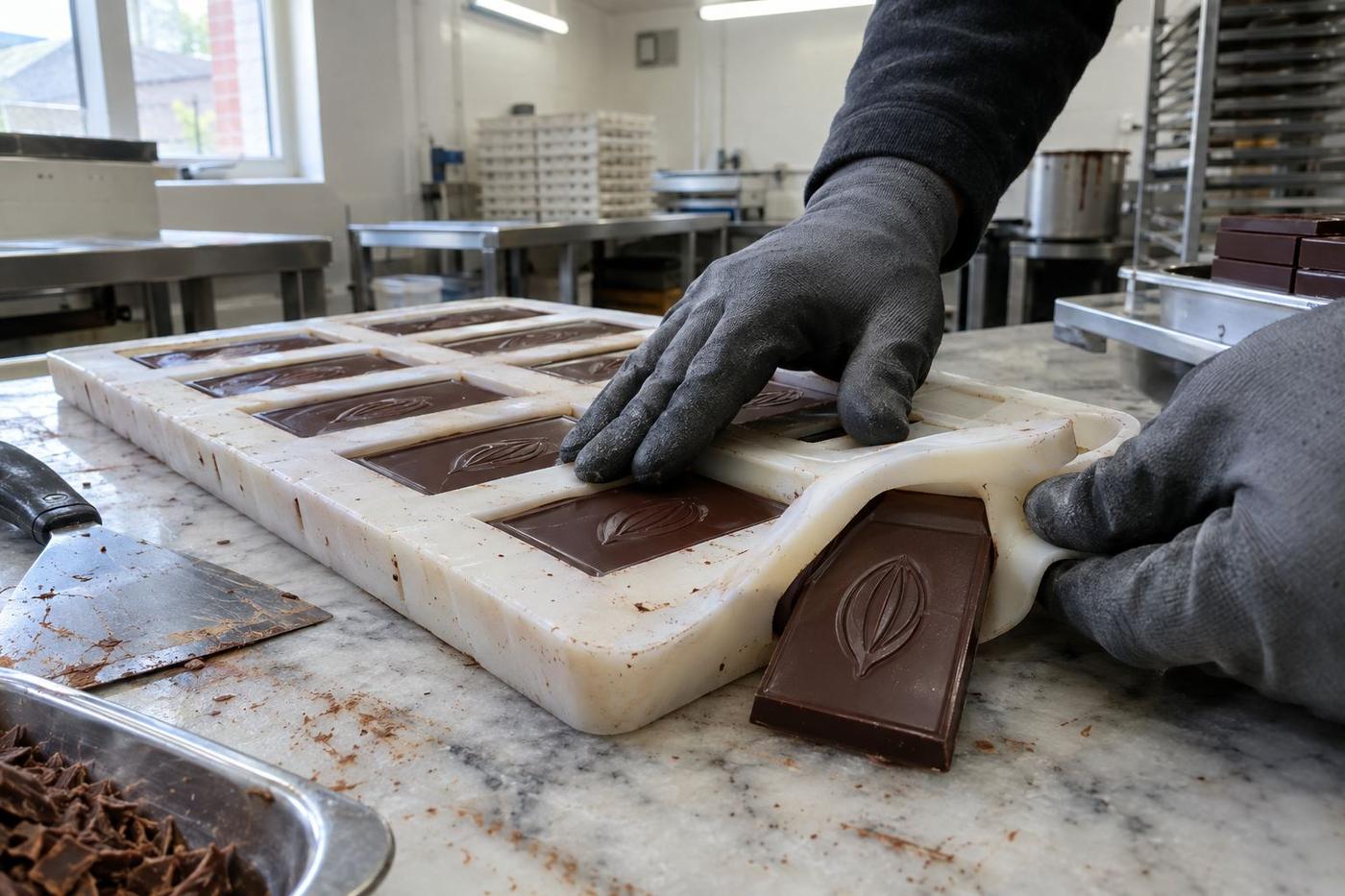
One bar, one moulded logo, one bench-tap knock-out. A concise project that shows what silicone chocolate mould work looks like when the temper and knock-out are considered up-front.
Read the project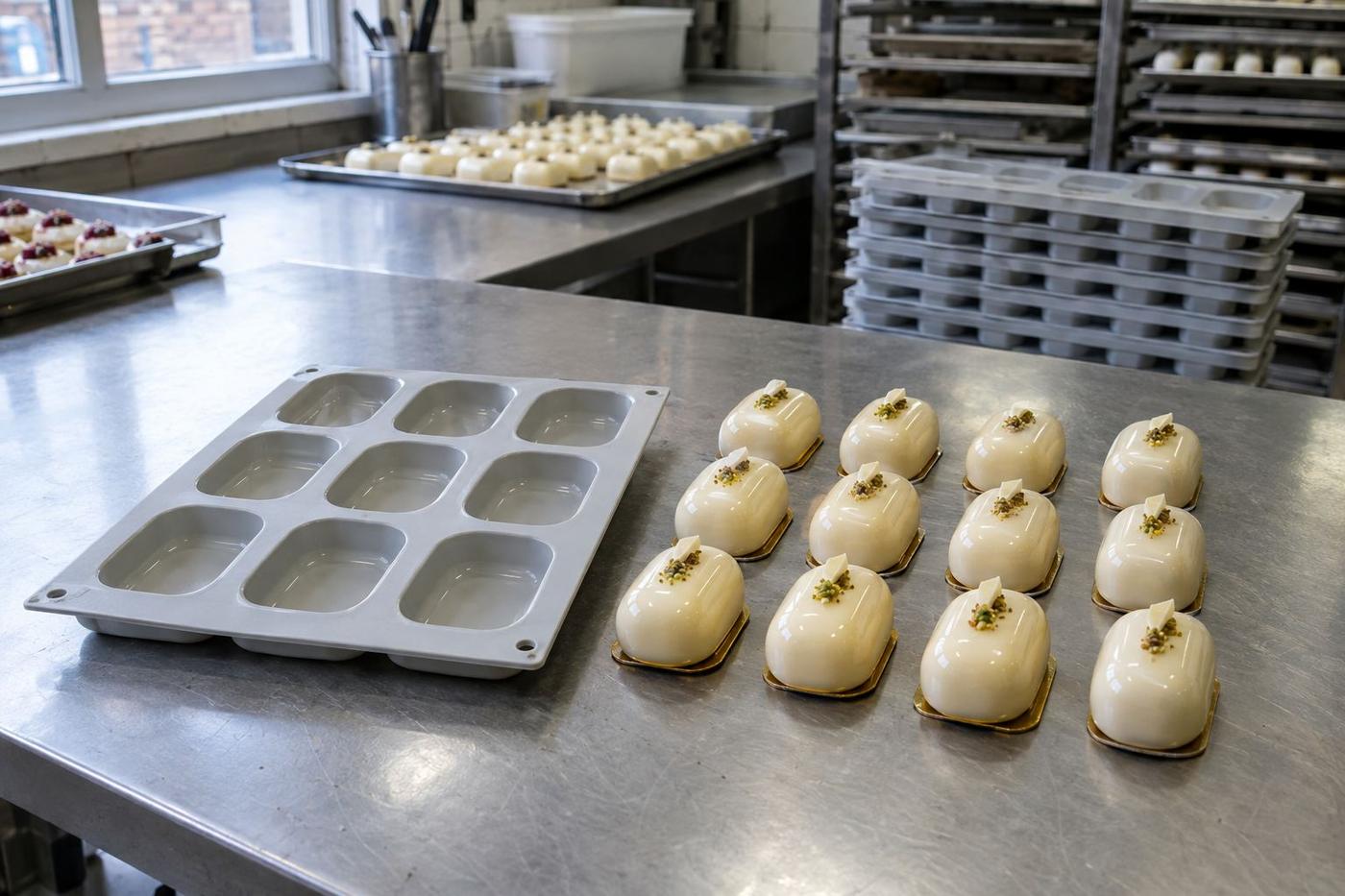
Four sites, one signature dessert, one shared cavity design. A project about consistency across venues rather than clever geometry.
Read the project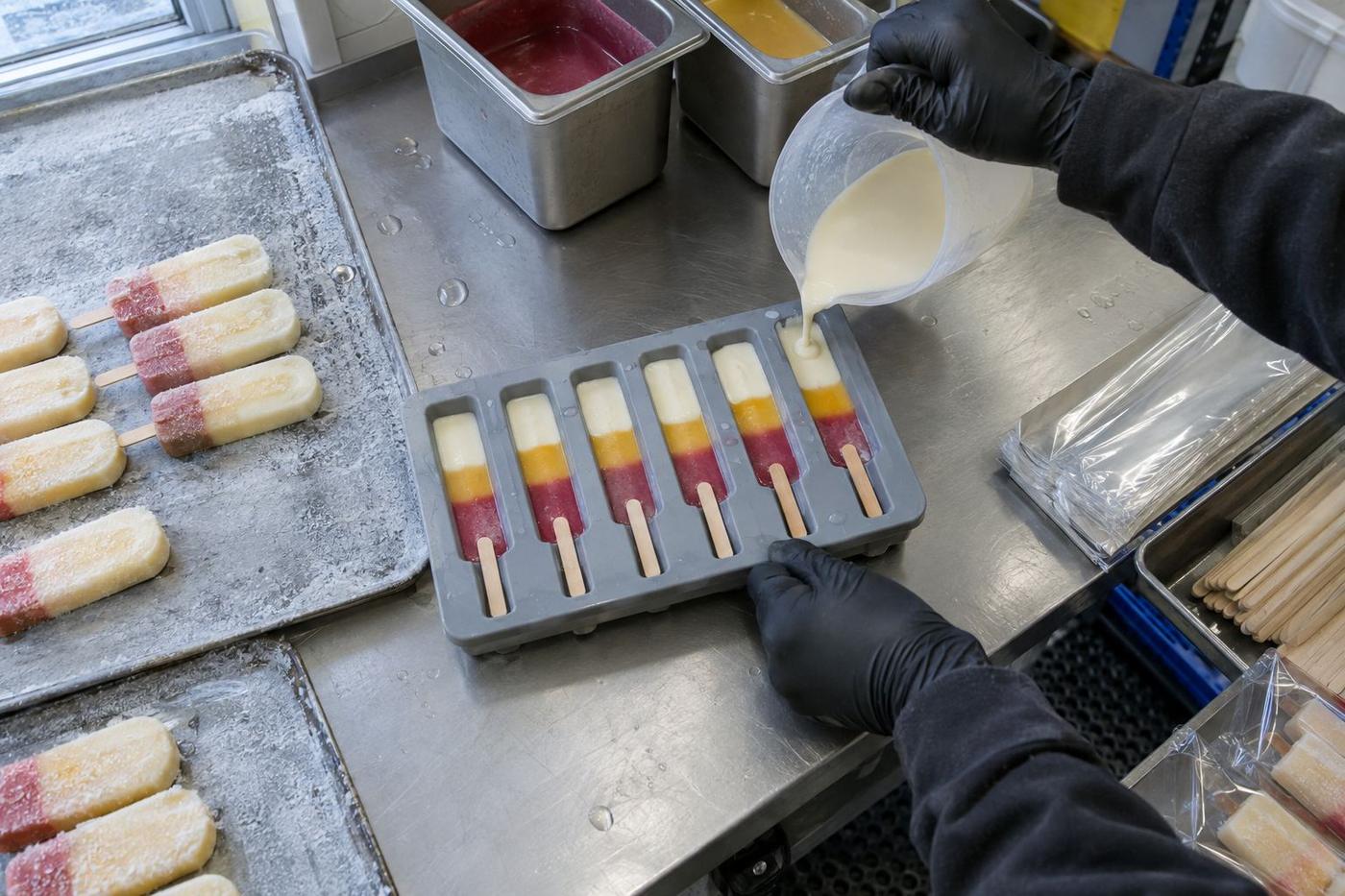
A three-colour lolly with a wooden stick, blast-frozen, extracted by warm-water dip, wrapped by hand. Sequenced fill drove the mould design.
Read the project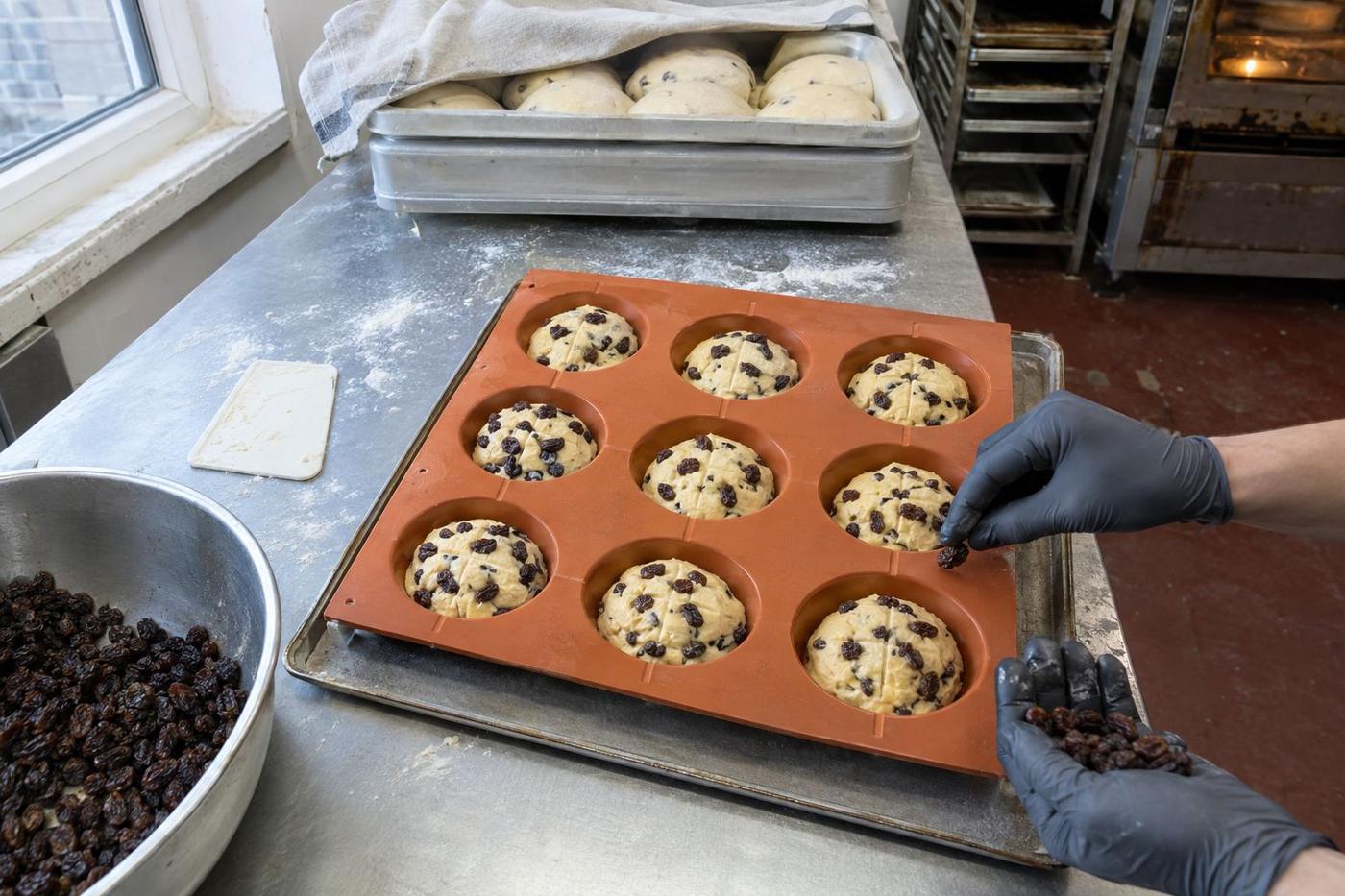
A specialist regional format, sized to the bakery's existing rack, with a scored cavity top to help raisin studding sit even at bake.
Read the project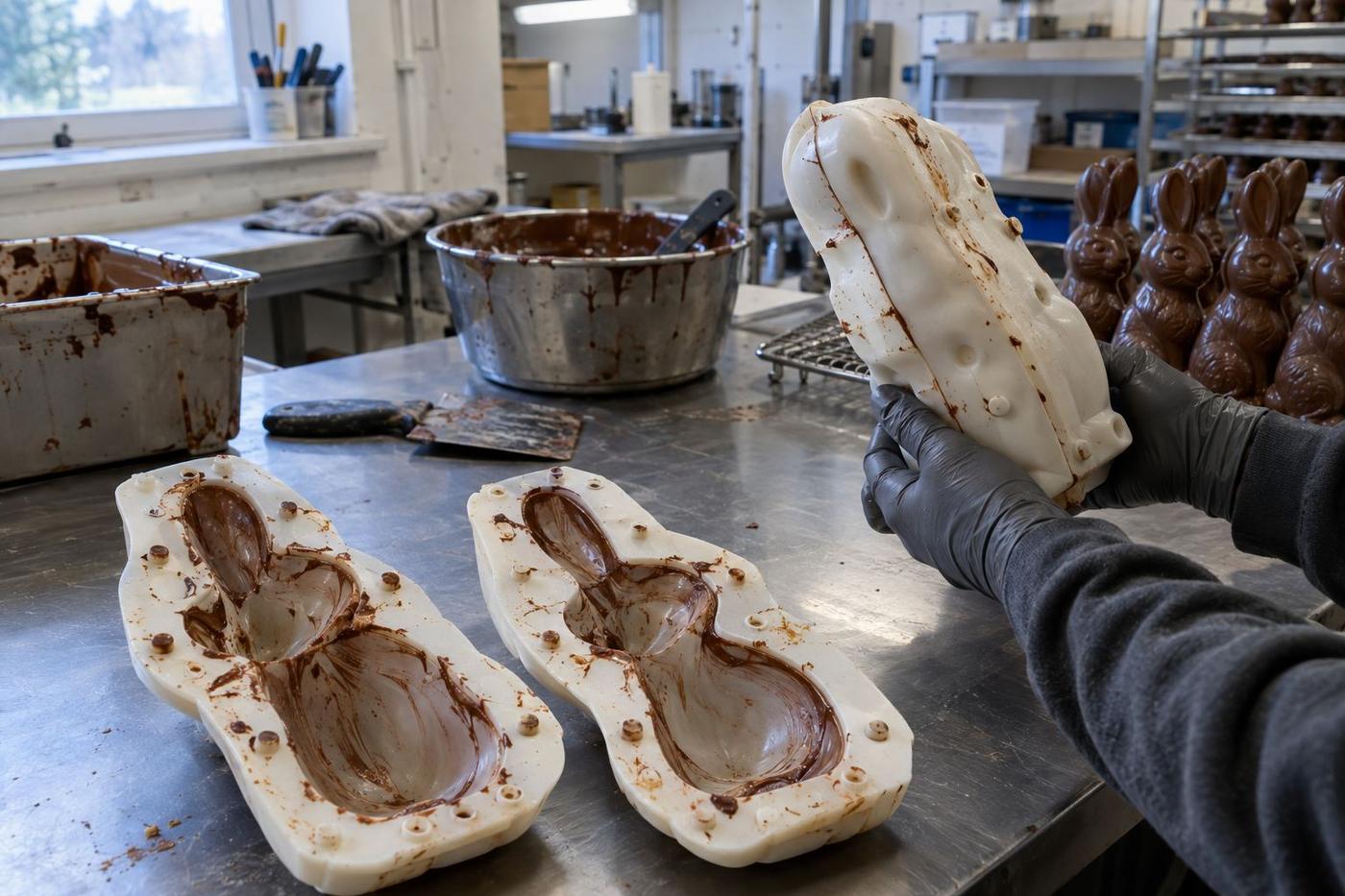
Two half-moulds, precise registration, a closing-and-rotate method worked out with the chef. Classic seasonal chocolate tooling.
Read the project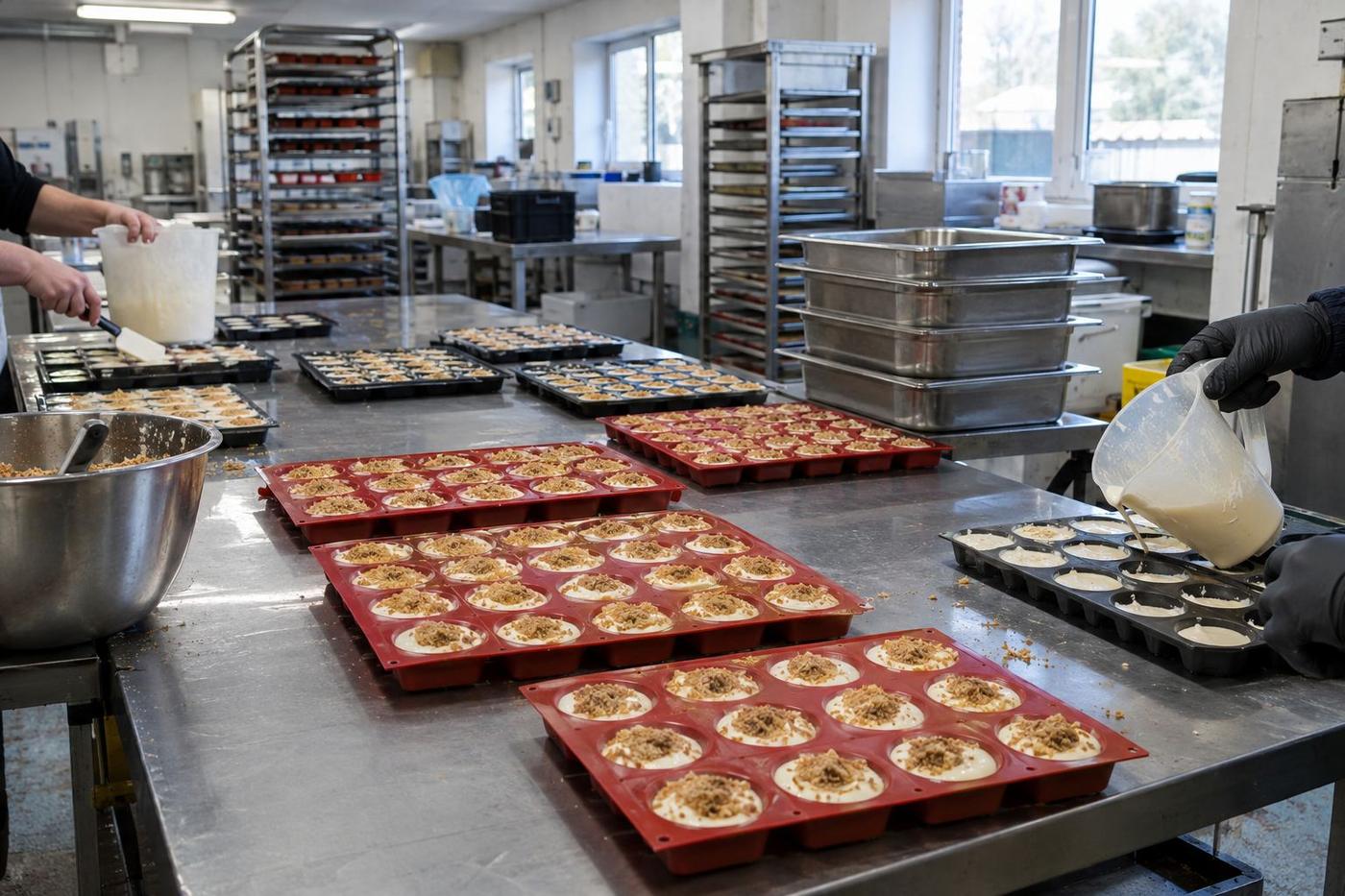
A wedding caterer holding a portion cost across large numbers, cavity volume held to a specified target across every tray in the fleet.
Read the projectAlso on this site
How each moulding route works. Read processes
Food-contact silicone in plain English. Read materials
What we check and what we send. See quality
At a glance
Solid pieces and shelled pieces
Swipe to see the whole diagram
Something not covered?
If you're trying to write a spec, we'd rather help you write it well than talk you into an order.
Real people, a real workshop
No call centre and no middlemen. When you contact TCI Culinary, you speak to the team who design, build and check your mould.



 Thomas LaneManaging Director
 George PrestonDesign & Project Manager
 Kelly BallingerHead of Partnerships
 Jim AndertonProduction Manager
 TheodoreEmployee Welfare