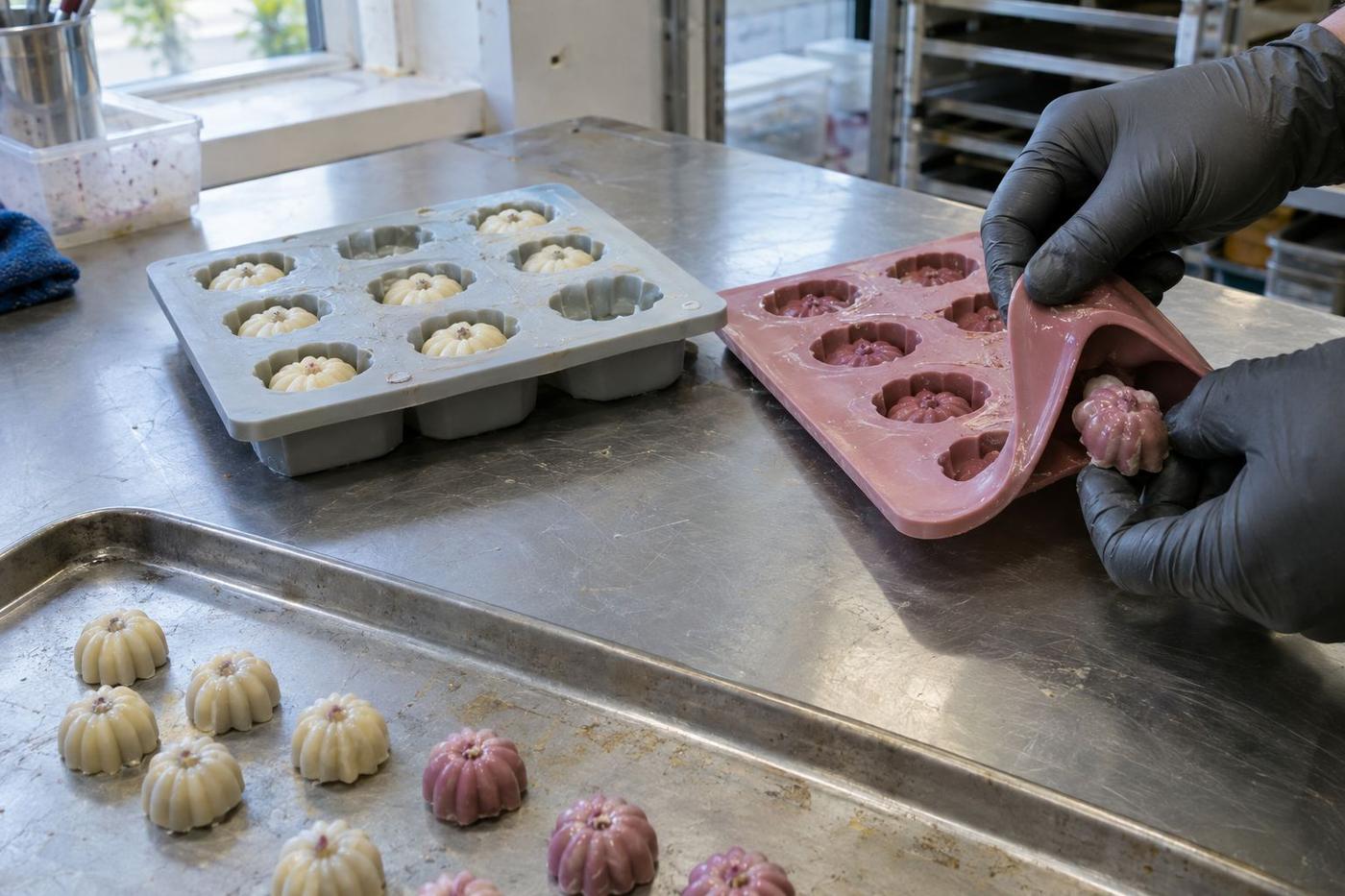
Fill temperature and behaviour
Warm chocolate, cold mousse, hot sugar. Each stresses the mould differently.
Service · fit for release
A mould that's too stiff tears delicate work. Too soft, it distorts under the fill. Choosing the flex is a specification decision, not a preference.
Overview
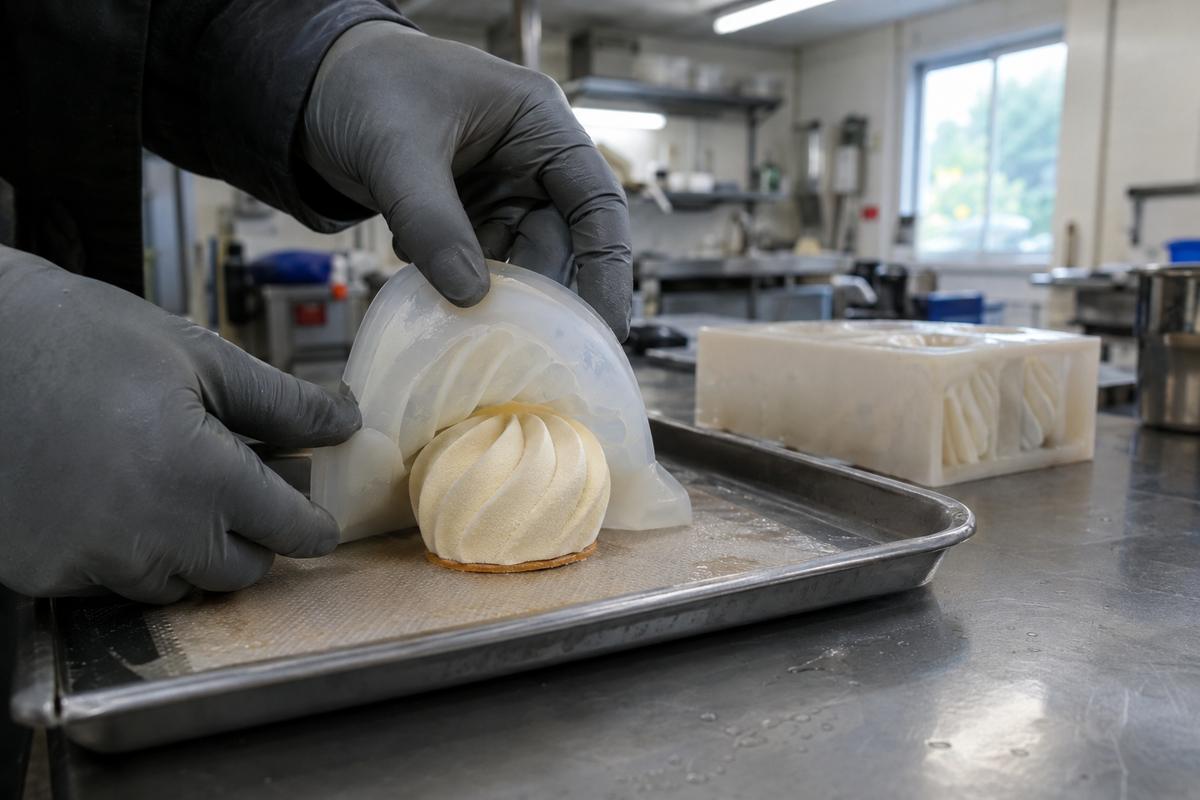
Silicone hardness is measured on the shore scale — a number that describes how firm the rubber is. We do not throw the number at buyers. What matters is that the flex fits how you demould.
This service is the conversation we have on every job — before we quote it. What does the product do in the mould? How is it filled, set, and demoulded? What are we actually asking the silicone to do?
What we make
Flex-and-pop wants a softer mould than tap-and-catch. Invert-onto-tray wants firmer than either. We spec around the motion you actually use.
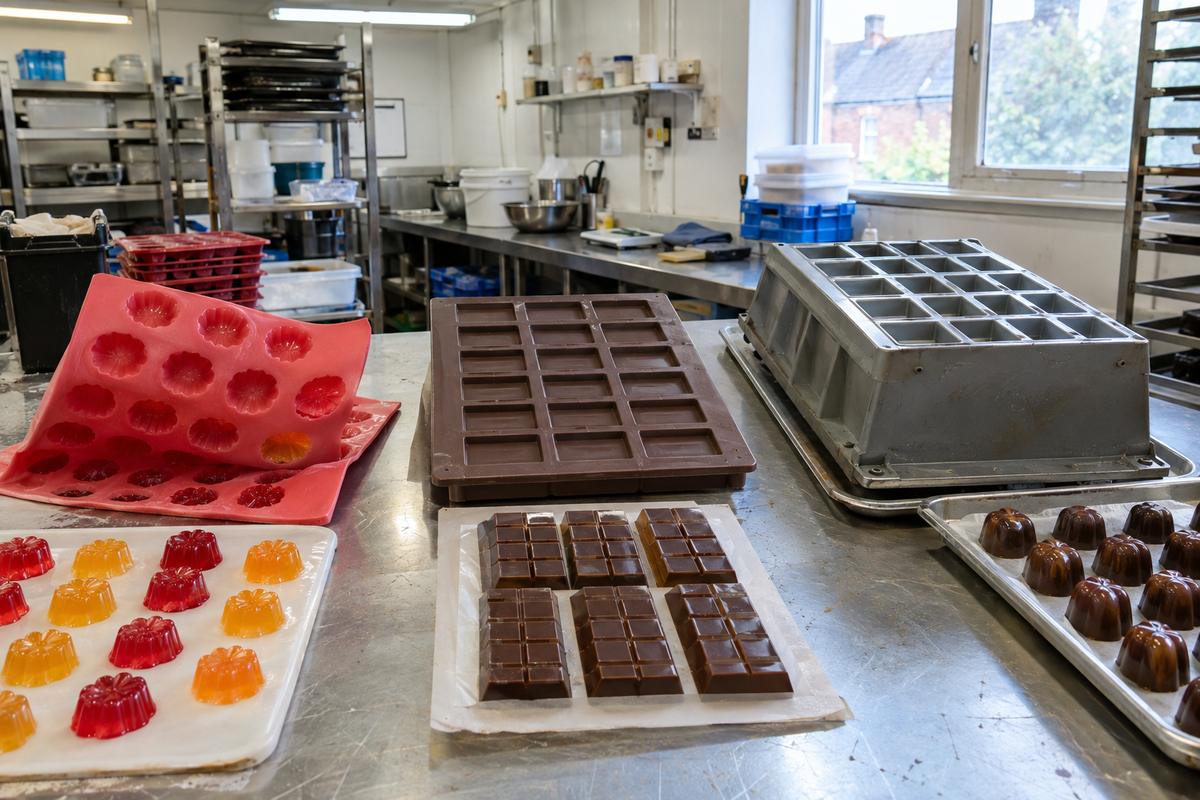
A mousse, a bar of chocolate and a jelly each need a different release. We test the interaction on a sample cavity before committing to a full tray.
A soft cavity in a thin wall distorts under a fill. We build wall thickness so shape holds through the cycle.
Sharp corners tear silicone; a small radius transforms mould life. We take care of these details at drawing stage.
If a fill or process has changed between orders, we re-check the spec rather than assuming.
How it gets made
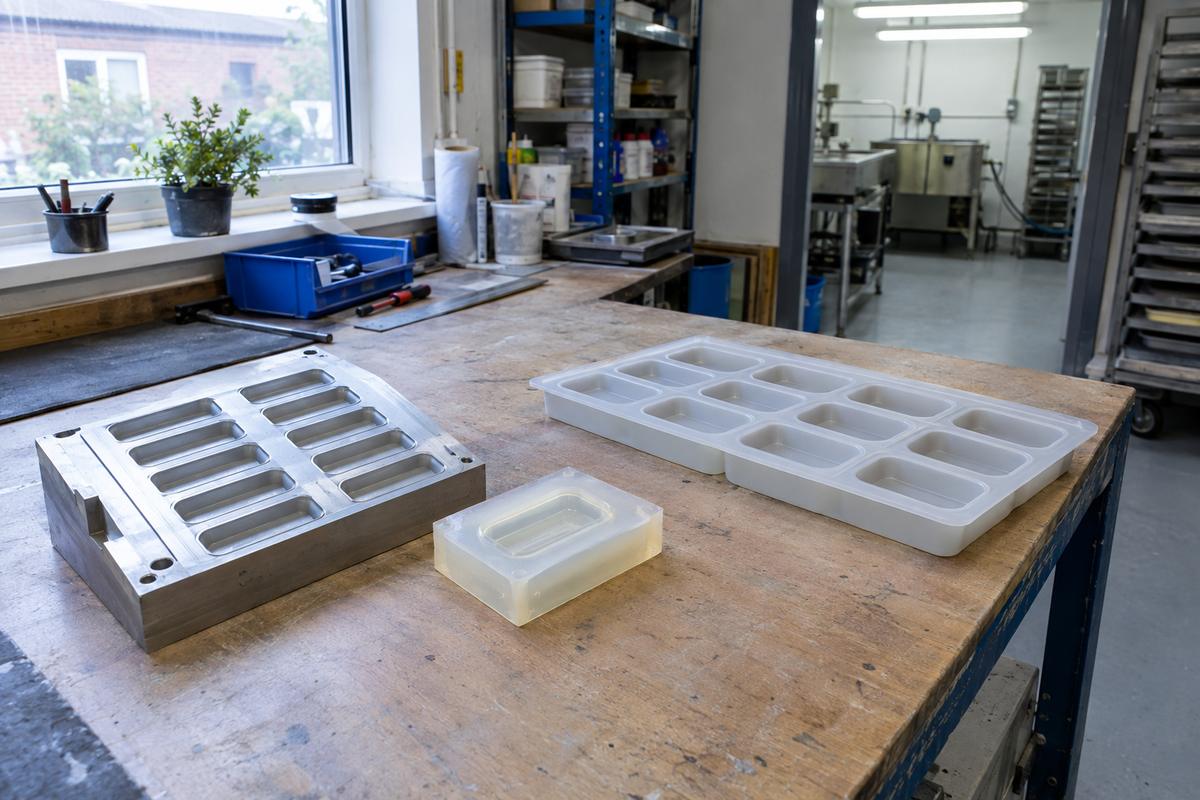
Every mould starts as a drawing we agree with you. We make a master, pour a single proof cavity in PFAS-free platinum-cure food-grade silicone and let you test it with your own recipe.
Once you are happy, we pour or press the full tray, record the grade against your order and keep the drawing on file for reorders.
What we ask up front
Warm chocolate, cold mousse, hot sugar. Each stresses the mould differently.
Ambient, chilled, blast frozen. The material's behaviour in the set drives release.
How exactly does your team get the product out? Watching once beats a description.
A mould that's washed hard between uses ages faster. We spec accordingly.
Typical work
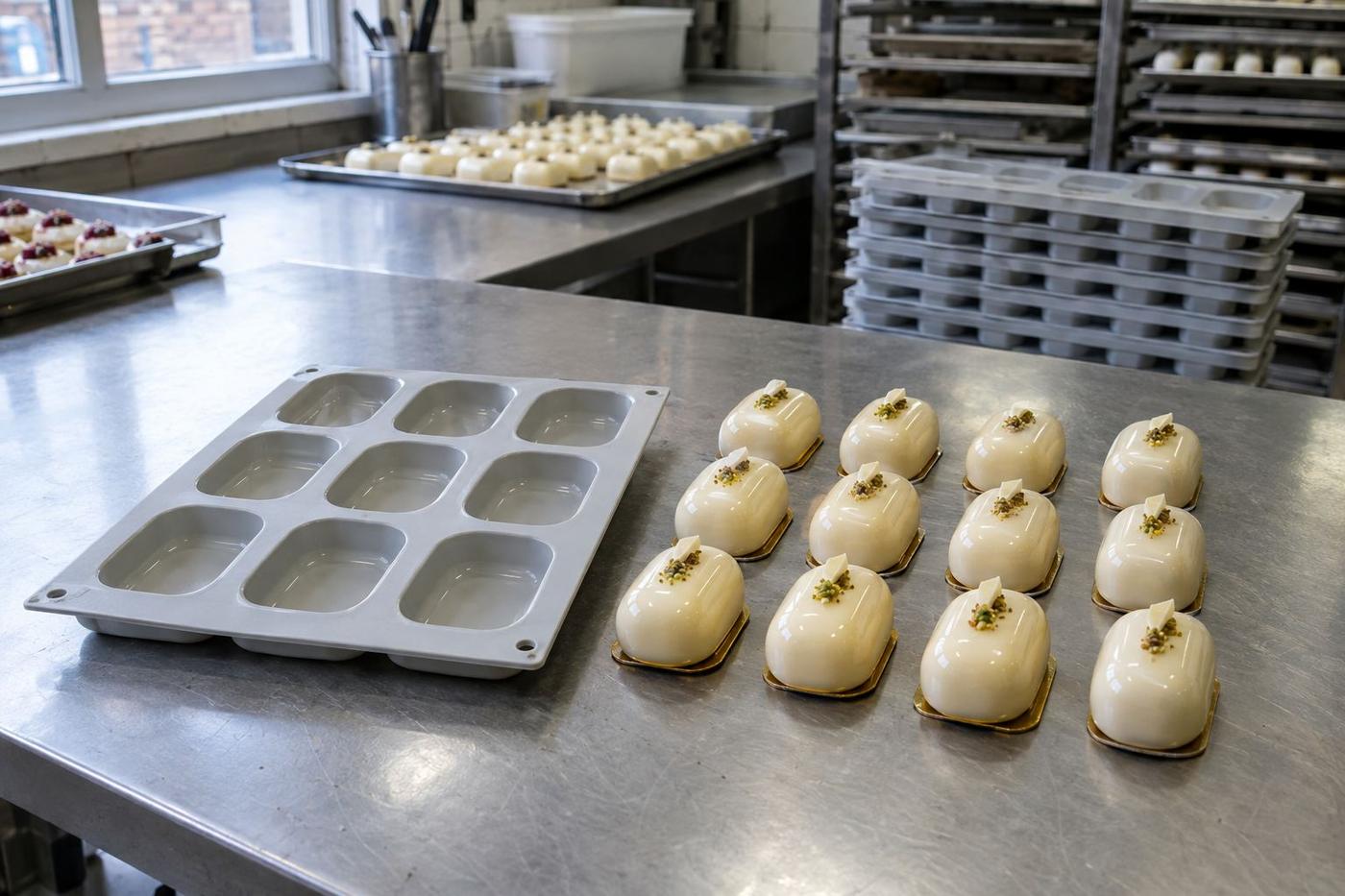
A softer shore cavity mould for a mousse dessert with a delicate sponge base.
See project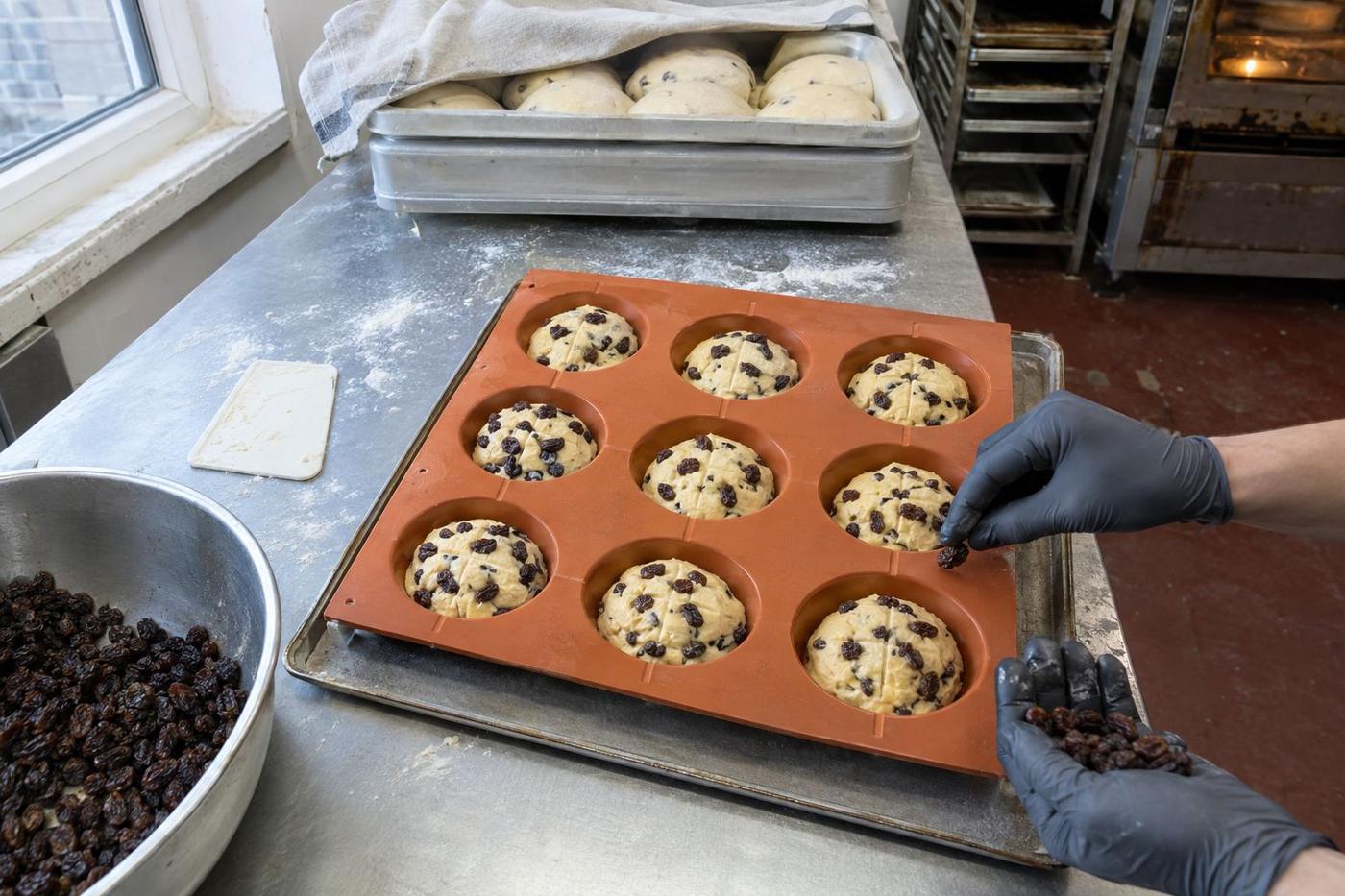
A firmer shore, thicker walled tray for enriched dough that needs to hold cavity shape through proof.
See project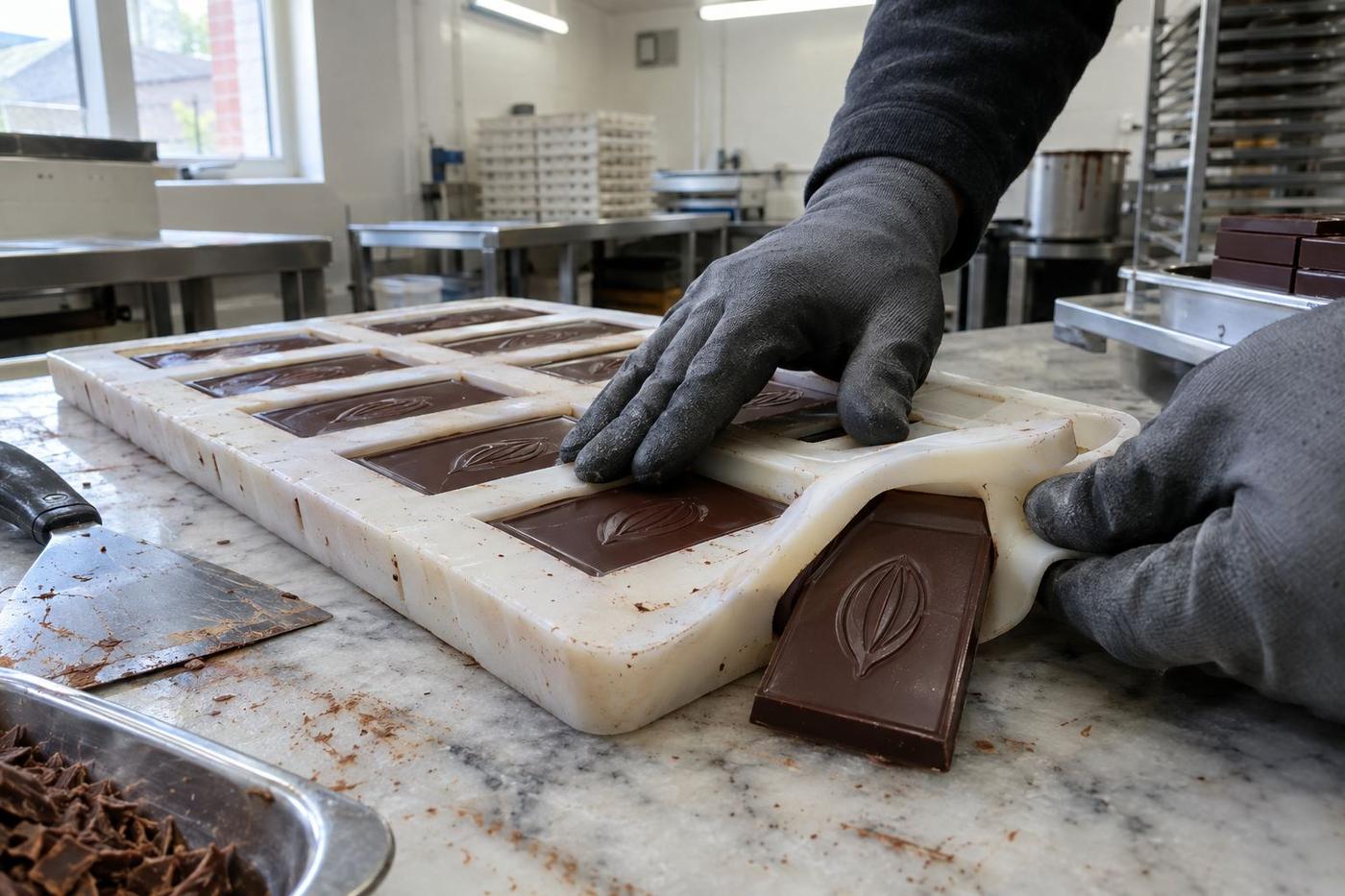
A tablet chocolate mould with balanced flex so the snap is clean and the tray does not warp.
See projectAt a glance
Solid pieces and shelled pieces
Swipe to see the whole diagram
Questions
It depends on the product and the demould motion. Rather than quote a number, we ask what the product does and pick the shore that fits.
Yes. A single hand-cast sample cavity is a real order. We build one, you test it, we adjust if needed.
Yes and no. Softer moulds wear differently from harder ones. Both can live long lives if the design is right; both can fail early if the corners are sharp or the walls are too thin.
Yes — on the material spec that goes out with the mould. If you reorder, we don't need to guess.
Ready?
Send a photo, a sketch or a sample. We'll come back with a route and a quote.
Real people, a real workshop
No call centre and no middlemen. When you contact TCI Culinary, you speak to the team who design, build and check your mould.



 Thomas LaneManaging Director
 George PrestonDesign & Project Manager
 Kelly BallingerHead of Partnerships
 Jim AndertonProduction Manager
 TheodoreEmployee Welfare