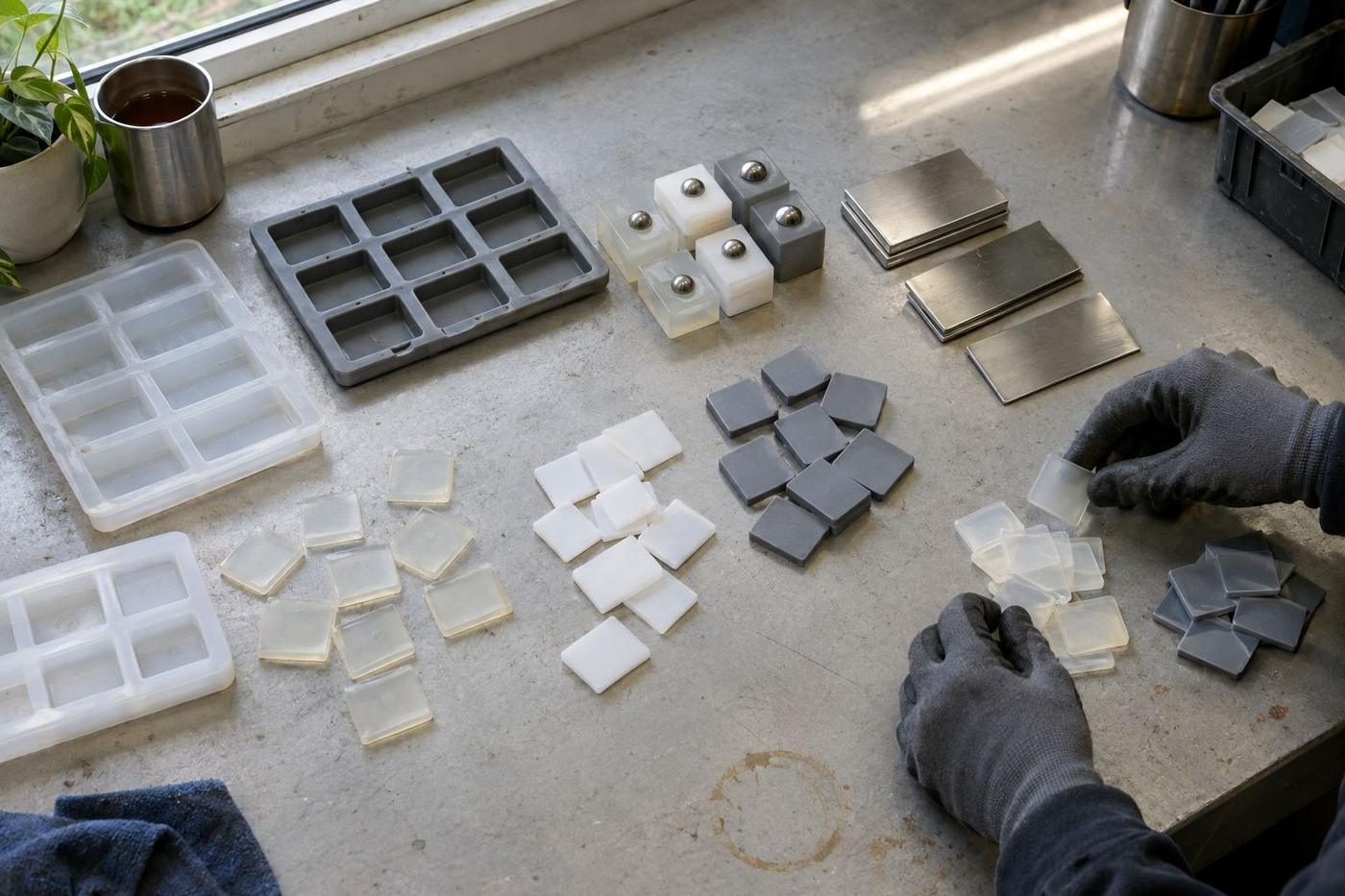
Grade language, in plain terms
We describe grades as food-contact grade, hot-fill capable, high-temperature capable, or caustic-tolerant, and record the exact spec on paperwork.
Service · grade & spec
A food-contact mould is only as good as the material spec behind it. We choose the grade around your product and your cleandown, then document it on the way out.
Overview
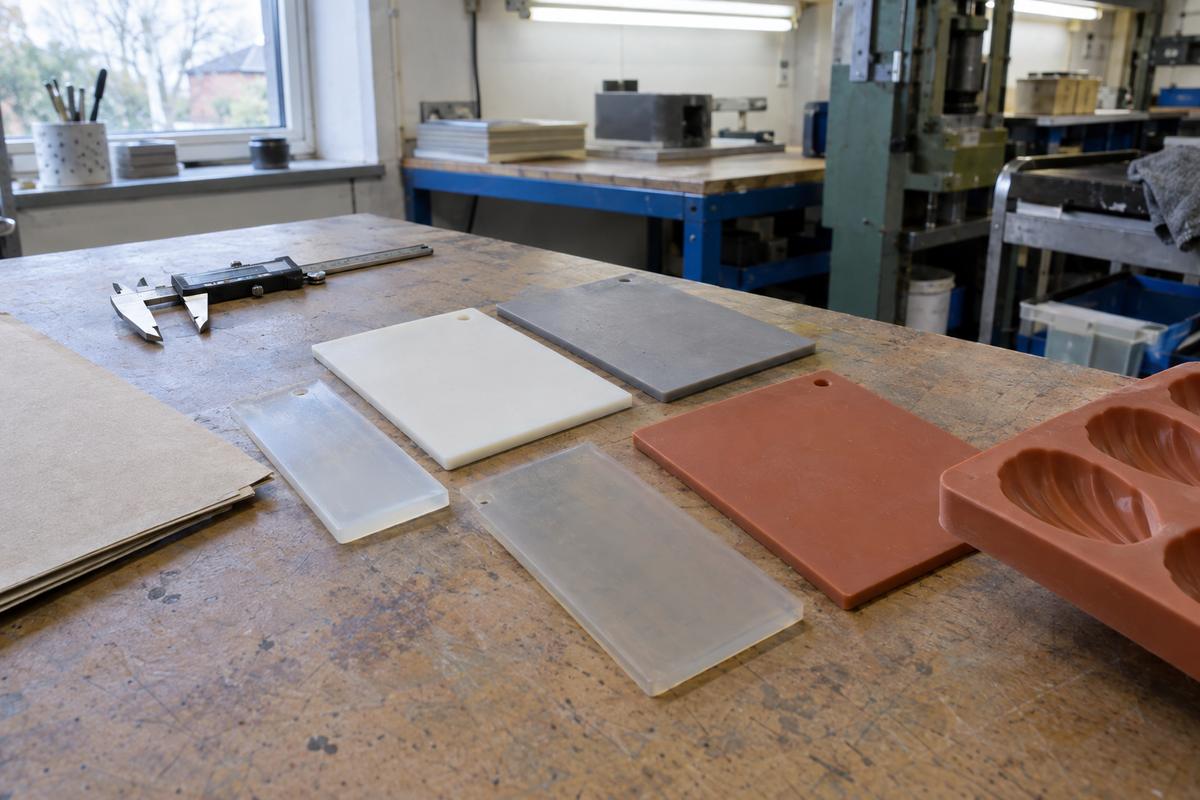
Not every silicone is food-contact. Not every food-contact silicone suits every product. Some grades handle hot sugar and some do not. Some tolerate a caustic wash and some soften on the first cycle. Grade selection is a real specification job.
We buy food-contact silicone to a defined grade, record which grade went into your mould, and hand over a supplier declaration with the order. Your food-safety paperwork is not left for you to reconstruct.
What we make
Chocolate, hot sugar, mousse, gummy, dough — each one narrows the sensible grade list. We start by asking what the mould contains.
Caustic, dishwasher, hot water, hand wash. The most punishing cycle drives grade selection more than the fill does.
The grade of silicone used in your mould is recorded against your order. Auditable, retrievable at reorder.
A supplier declaration accompanies the mould, stating what it's made of and confirming food-contact compliance.
We tell you what the grade is not for. A grade selected for a chiller line is not necessarily right for an oven.
How it gets made
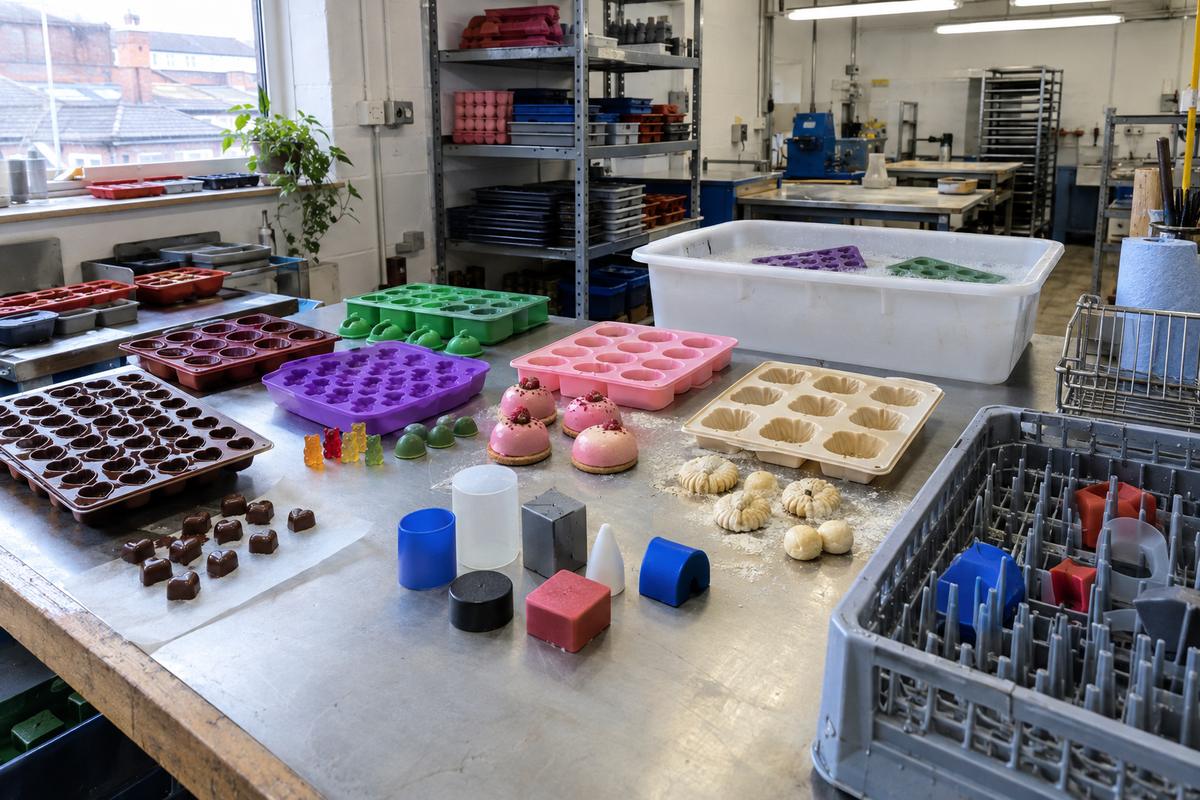
Every mould starts as a drawing we agree with you. We make a master, pour a single proof cavity in PFAS-free platinum-cure food-grade silicone and let you test it with your own recipe.
Once you are happy, we pour or press the full tray, record the grade against your order and keep the drawing on file for reorders.

What we ask up front
We describe grades as food-contact grade, hot-fill capable, high-temperature capable, or caustic-tolerant, and record the exact spec on paperwork.
A supplier declaration is a material statement. A certification scheme audits a site. We're clear about which of these we supply.
Occasionally a supplier updates a grade. We tell you at reorder if this has happened, before shipping.
Tell us what your auditor needs. We'd rather find a gap now than after the mould ships.
Typical work
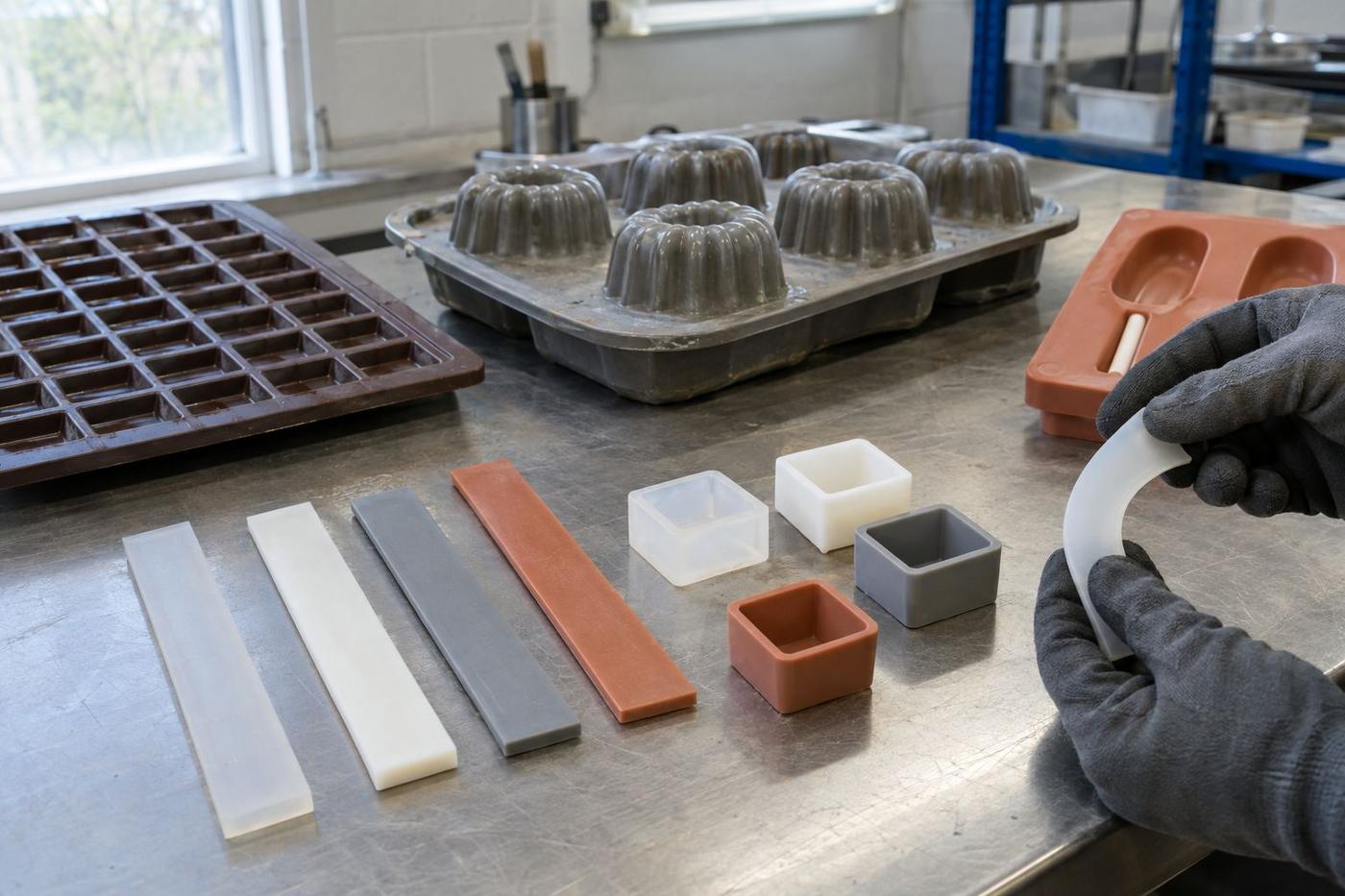
Grade selection for a bakery running a caustic wash, chosen for wash tolerance not for peak oven cycle.
Read the guide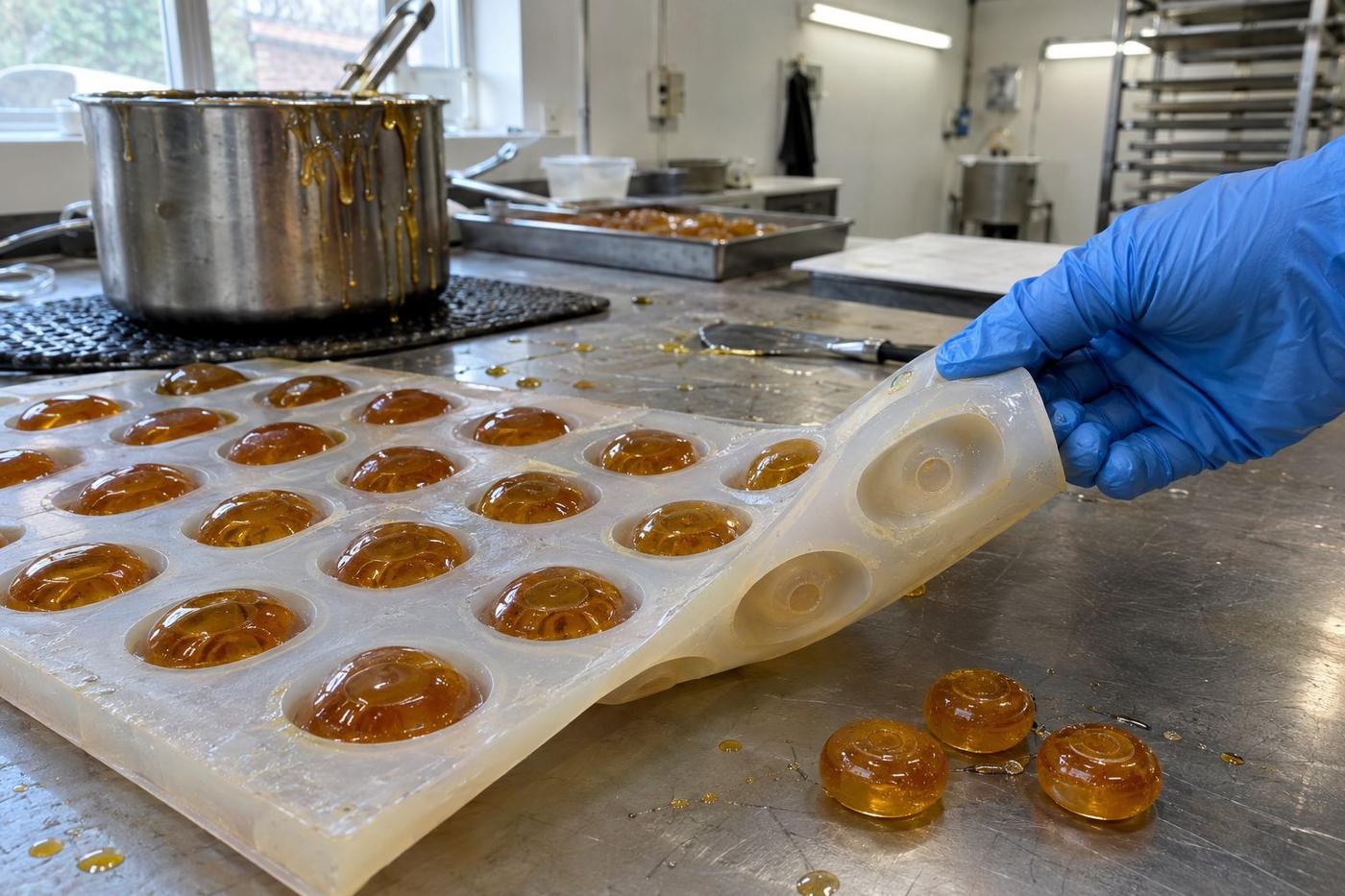
A high-temperature food-contact grade for a boiled-sugar confectioner.
See project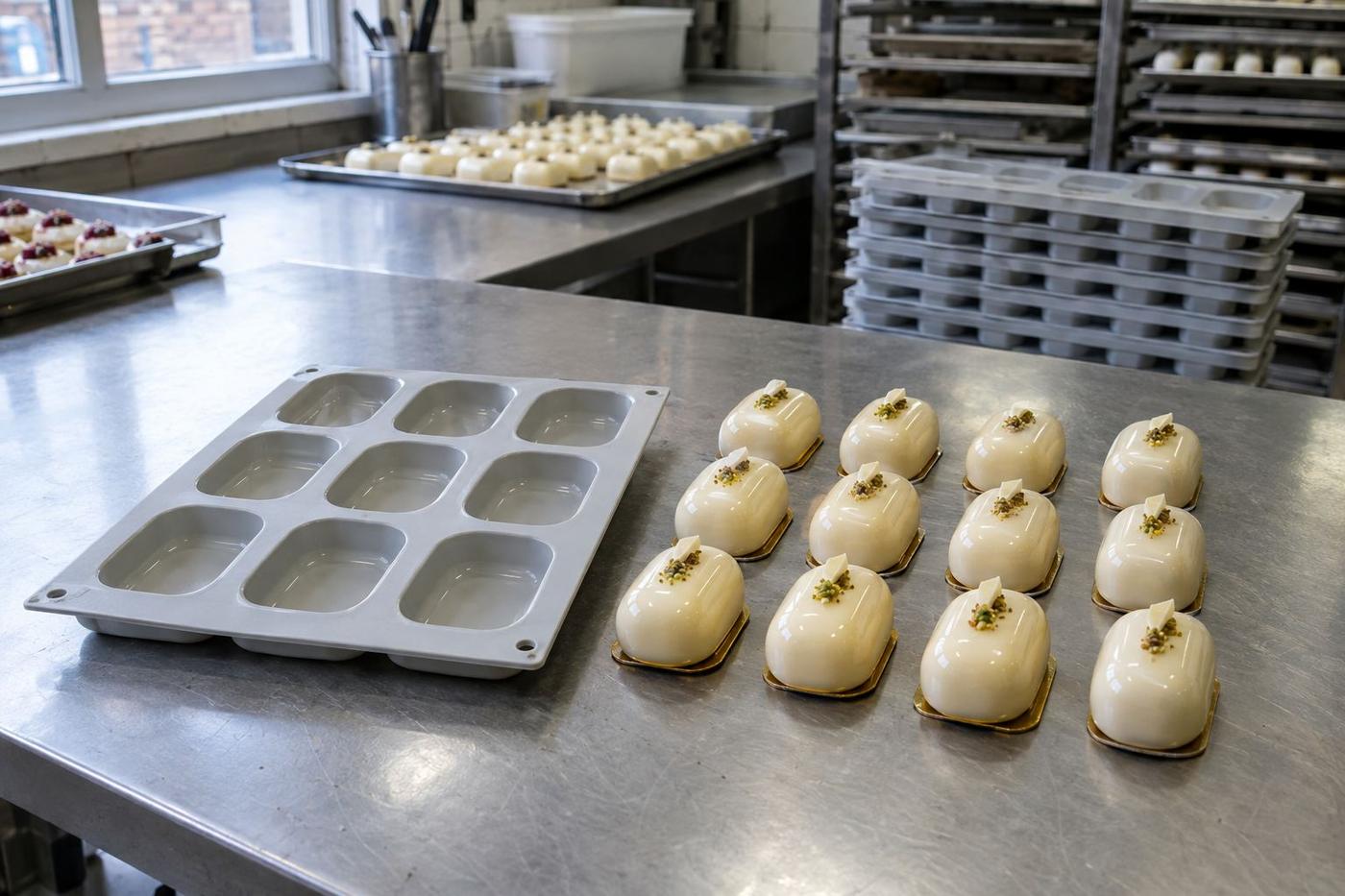
A softer food-contact grade for a chef's signature mousse entremet, selected for release not durability.
See projectAt a glance
How a food mould gets made
Swipe to see the whole diagram
Questions
Yes, when spec'd as such. We buy food-contact silicones to a defined grade, record the grade against your order, and issue a supplier declaration.
We're BRCGS certificated to the Agents and Brokers standard, Grade AA (site code 10026811), and every order comes with a material declaration for the grade used. Ask us and we'll send the certificate and talk you through the paperwork.
That depends on the product and the cleandown. We'll pick the grade after we've heard both — not before.
Yes, if the mould geometry allows it. We'll note the switch on paperwork so the audit trail stays clean.
Ready?
Send a photo, a sketch or a sample. We'll come back with a route and a quote.
Real people, a real workshop
No call centre and no middlemen. When you contact TCI Culinary, you speak to the team who design, build and check your mould.



 Thomas LaneManaging Director
 George PrestonDesign & Project Manager
 Kelly BallingerHead of Partnerships
 Jim AndertonProduction Manager
 TheodoreEmployee Welfare