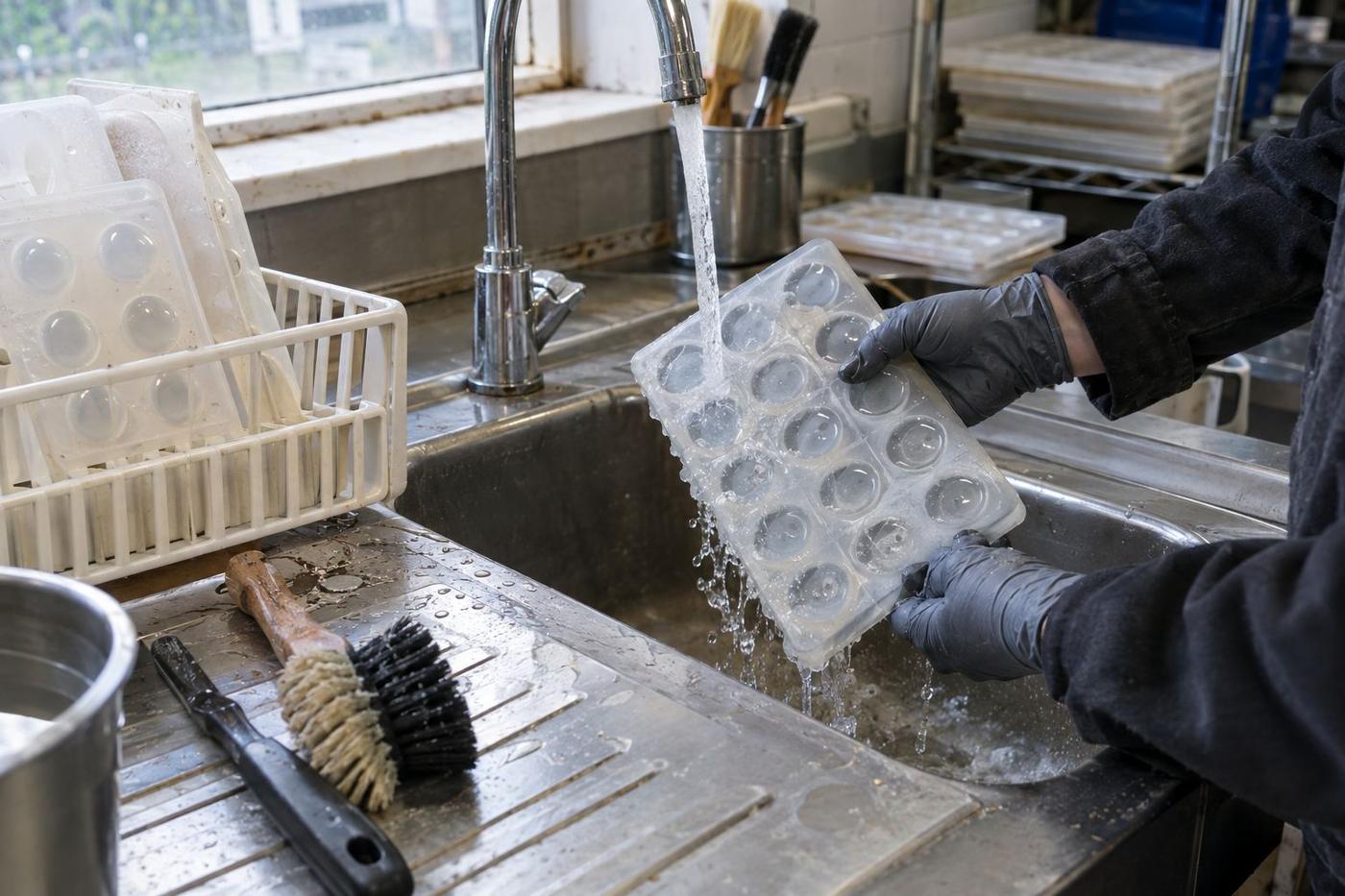
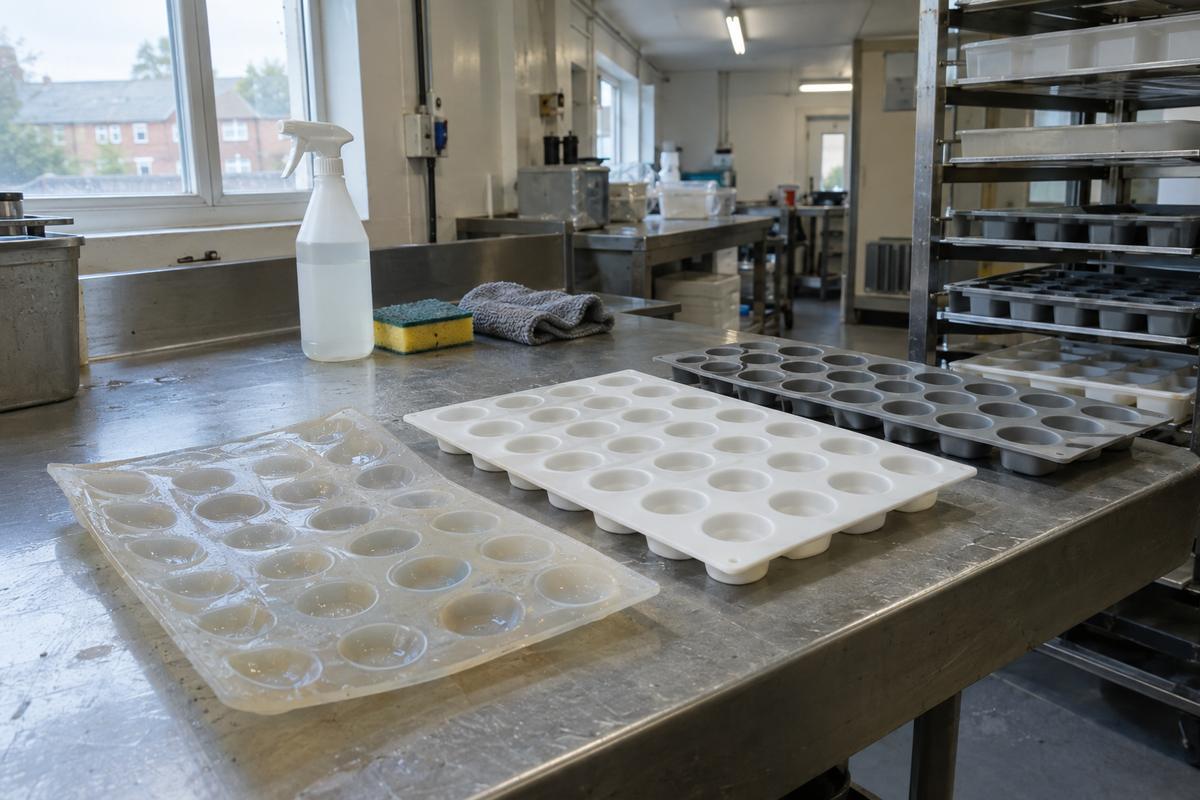
01The cleandown drives grade selection
A mould that's hand-washed on a soft cloth will outlive a mould that goes through a caustic tunnel — even if the food-contact use is identical. That's why grade selection is a cleandown conversation as much as a fill conversation.
02Caustic is silicone's adversary
Prolonged exposure to hot caustic detergent softens silicone. A mould spec'd for a hand wash will soften and lose shape on a caustic tunnel. Tell us if your line runs caustic, and how hot, and how long.
03Dishwashers vary
Domestic dishwashers are usually fine for silicone. Commercial dishwashers run hotter and use stronger detergents; they may age a mould faster. Tunnel washes are effectively a caustic exposure. Grade selection has to reflect the specific machine, not a generic "dishwasher".
04Sanitisers matter
Chlorine, peracetic acid, quat-based sanitisers — each affects silicone differently. If a mould is exposed to a specific sanitiser regularly, tell us. Grade selection accounts for it.
05Design as much as material
A cavity with sharp internal corners, deep narrow slots or thin webs will collect residue, will be harder to clean, and will develop stress cracks around those features. Good cleandown starts at the drawing, not at the wash line.
06What a normal service life looks like
For a well-designed mould in a well-run kitchen, expect a long production life. For a mould stressed by cleandown or by rough handling, expect that to shorten. We give a realistic estimate at manufacture, based on how you're using it — not a guarantee.