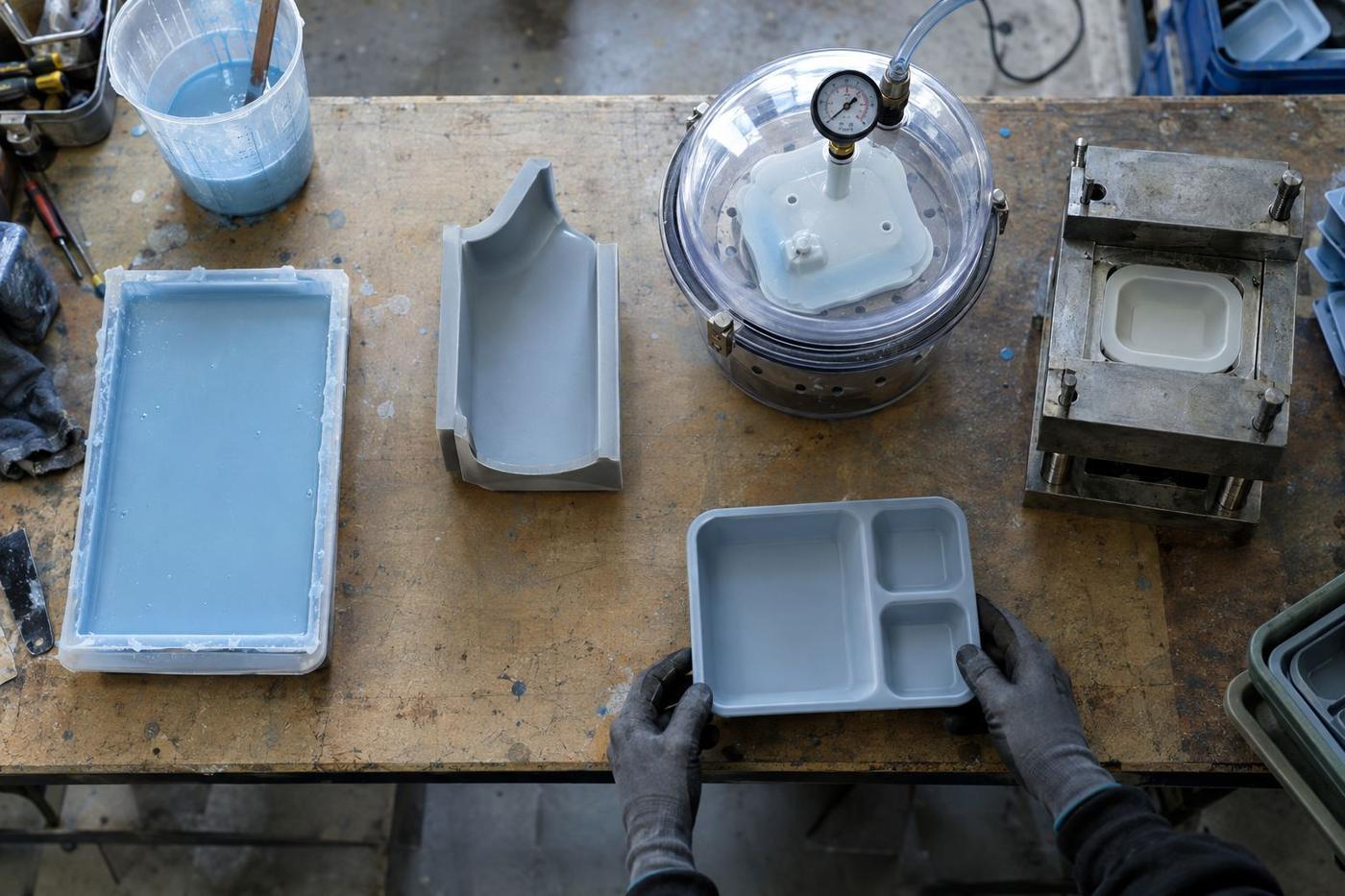
How many do you need per year?
A dozen a month, or a million a year? The answer shapes the tool spec more than any other single question.
How we work
Hand-poured, cast, vacuum-cast, compression, injection. Which one fits depends on batch size, geometry, and how the tray runs.
Processes
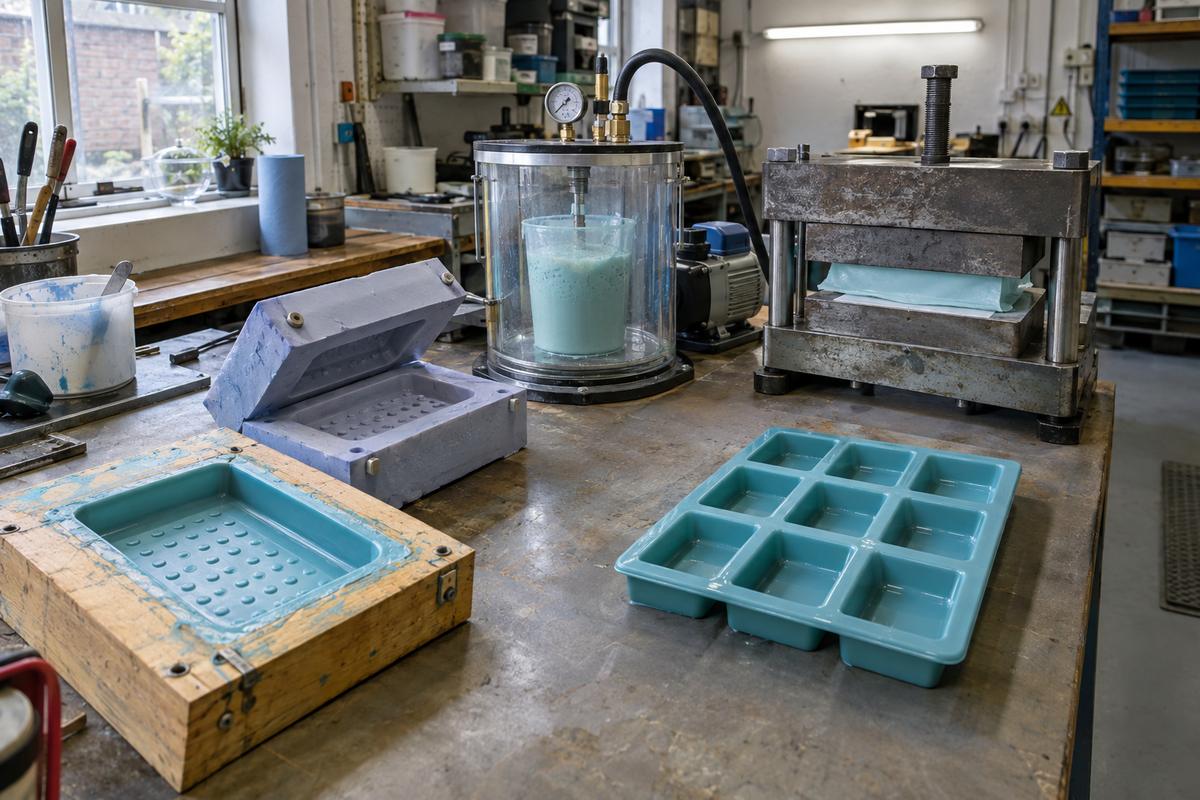
Every silicone mould is one of five routes. The right one depends on the product, the volume and the paperwork. We'll always recommend the least-tool-heavy route that hits your outcome.
The five routes
Bench-built silicone, straight onto a pattern or an existing object. Where prototyping and short-run food tooling starts. Food-contact grade from cavity one.
Two-part gravity pours around a master. One cavity or a small tray. Decent surface, sensible cost. Workhorse of food-mould work.
Degassed pours for parts that can't carry a single trapped bubble — high-detail chocolate or fine confectionery cavity work.
Solid silicone pressed and cured under heat in a steel tool. Thousands of parts per tool. Right for scaled dessert or confectionery production.
Liquid silicone rubber injected at volume. Unit cost dropping as volume rises. Right for national-supply food manufacturing.
Picking a route
A dozen a month, or a million a year? The answer shapes the tool spec more than any other single question.
Flex-and-pop, tap-and-catch, invert-onto-belt, warm-water dip. Each drives silicone hardness and cavity geometry.
Hand wash, dishwasher, tunnel, caustic. Cleandown drives grade selection more than fill does.
One dish on one menu, or a range across ten sites. That governs whether one bench tray is enough or a matched fleet is needed.
At a glance
How a food mould gets made
Swipe to see the whole diagram
Not sure which route fits?
Tell us the product, the volume and the wash. We'll route it.
Real people, a real workshop
No call centre and no middlemen. When you contact TCI Culinary, you speak to the team who design, build and check your mould.



 Thomas LaneManaging Director
 George PrestonDesign & Project Manager
 Kelly BallingerHead of Partnerships
 Jim AndertonProduction Manager
 TheodoreEmployee Welfare