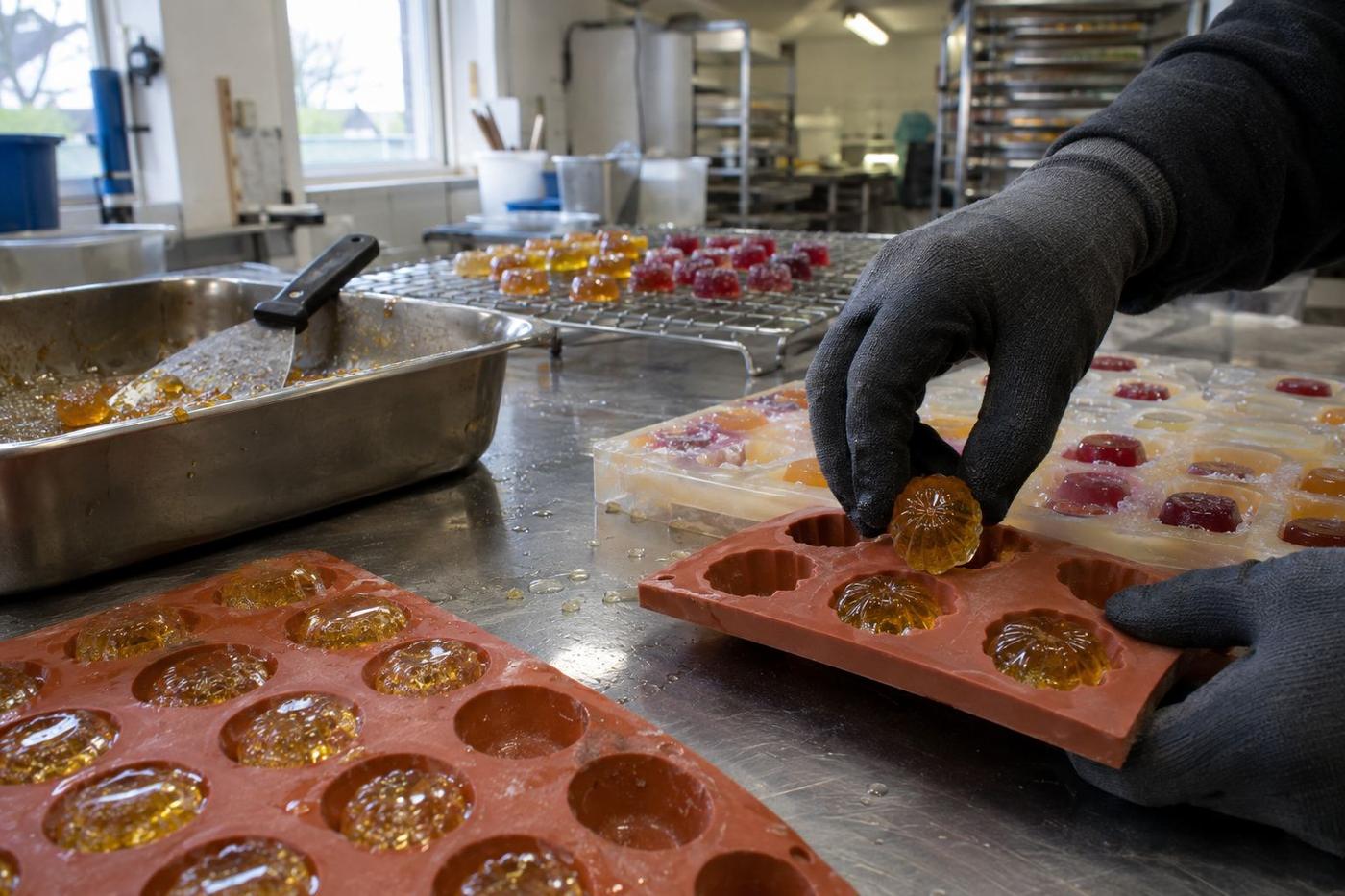
What temperature the fill arrives at
Hot-poured boiled sugar attacks silicone differently from a warm gelatine mass. We spec accordingly.
Service · confectionery
Confectionery is a heat game. Boiled sugar goes in at 130°C, sets to something you can drop, and the mould has to release without pulling detail off the sweet.
Overview
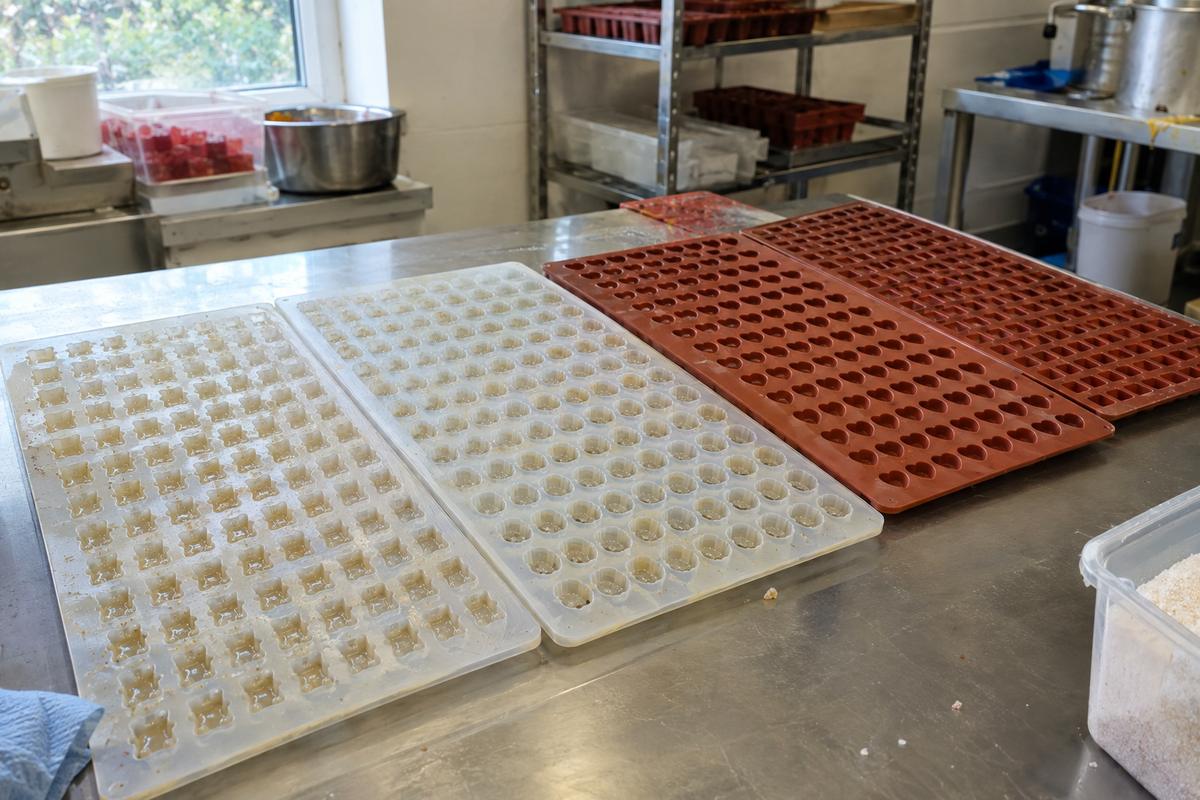
Confectionery production is a cavity-count discipline. Every extra cavity is one more sweet per tray, one less pour, and one less demould. We design tooling with that arithmetic in mind.
We build silicone moulds for gummies, jellies, pastilles, hard-boiled sweets and pressed confectionery formats. Cavity count, spacing and cavity floor detail are all worked around your depositor and your finishing method.
What we make
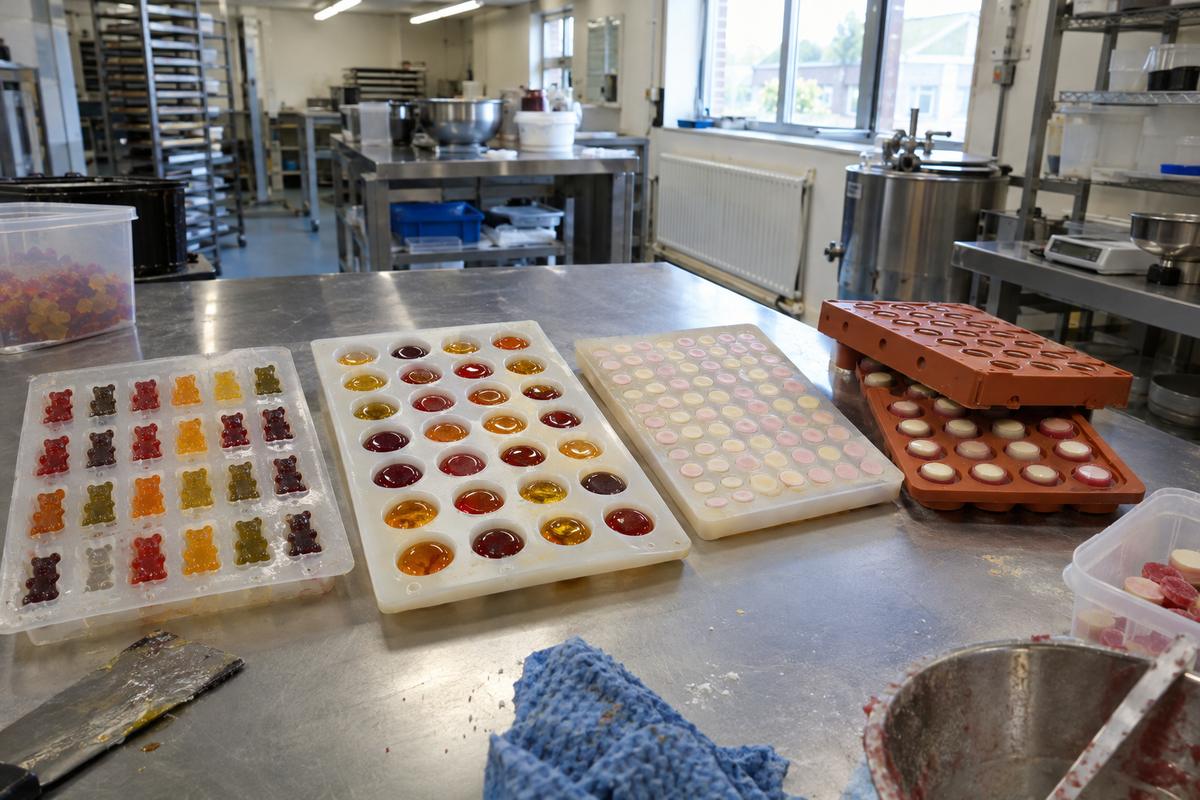
Multi-cavity trays for pectin or gelatine gummies, sized to your depositor or your hand-fill jig.
Cavities for hot-poured boiled sugar, with a cavity floor detail that reads through the finished glass surface.
Shallow trays for pastilles and pressed sweets, with the top-edge profile that lands clean in packaging.
Cavity work for filled or centre-liqueur formats — inner cavity, outer shell, closing method worked out around the line.
Recessed logo or embossed shape in the cavity floor, sized around your line rate.
How it gets made
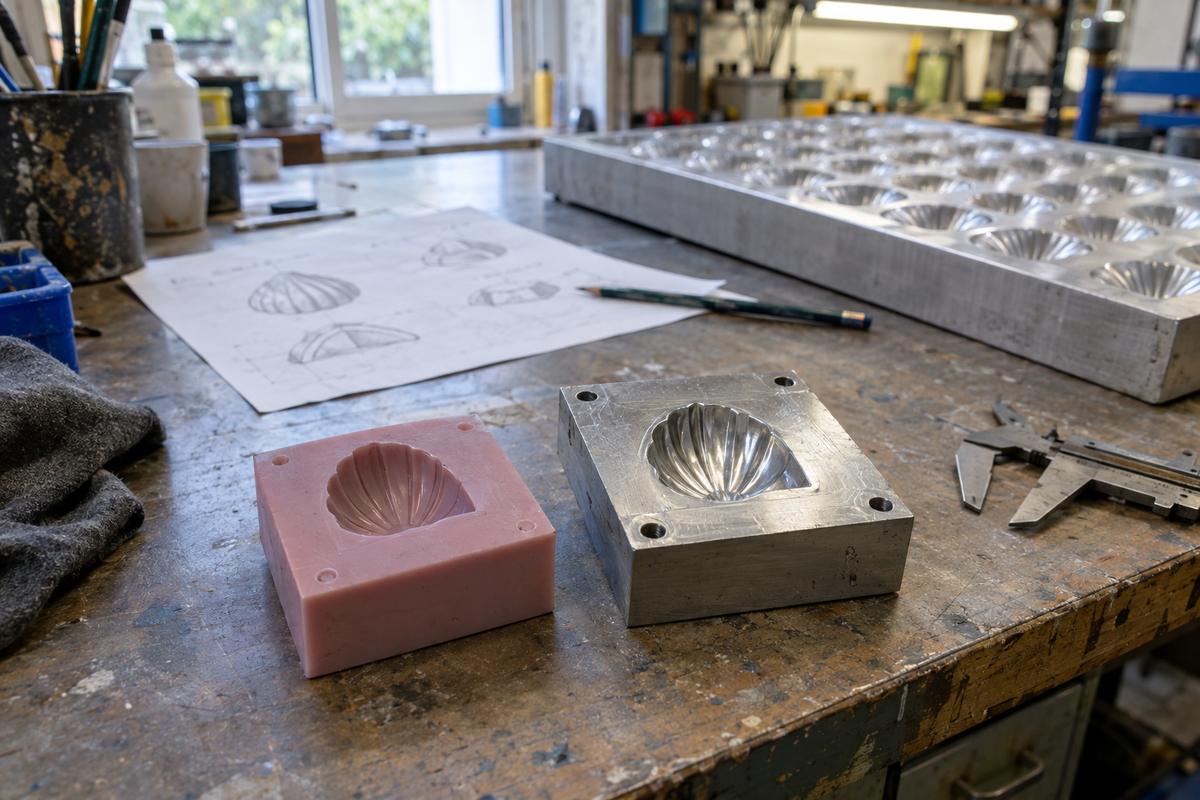
Every confectionery mould starts as a drawing we agree with you. We make a master, pour a single proof cavity in PFAS-free platinum-cure food-grade silicone and let you test it with your own recipe.
Once you are happy, we pour or press the full tray, record the grade against your order and keep the drawing on file for reorders.
What we ask up front
Hot-poured boiled sugar attacks silicone differently from a warm gelatine mass. We spec accordingly.
Ambient, chilled, or through-drying. That drives wall thickness and cavity spacing.
Tip-and-catch, invert-onto-belt, or hand-lift. Silicone hardness sits around the actual extraction motion.
A hand-pour operation and a 20-tray-a-minute depositor line want different tooling. We size the tray to the rate.
Typical work
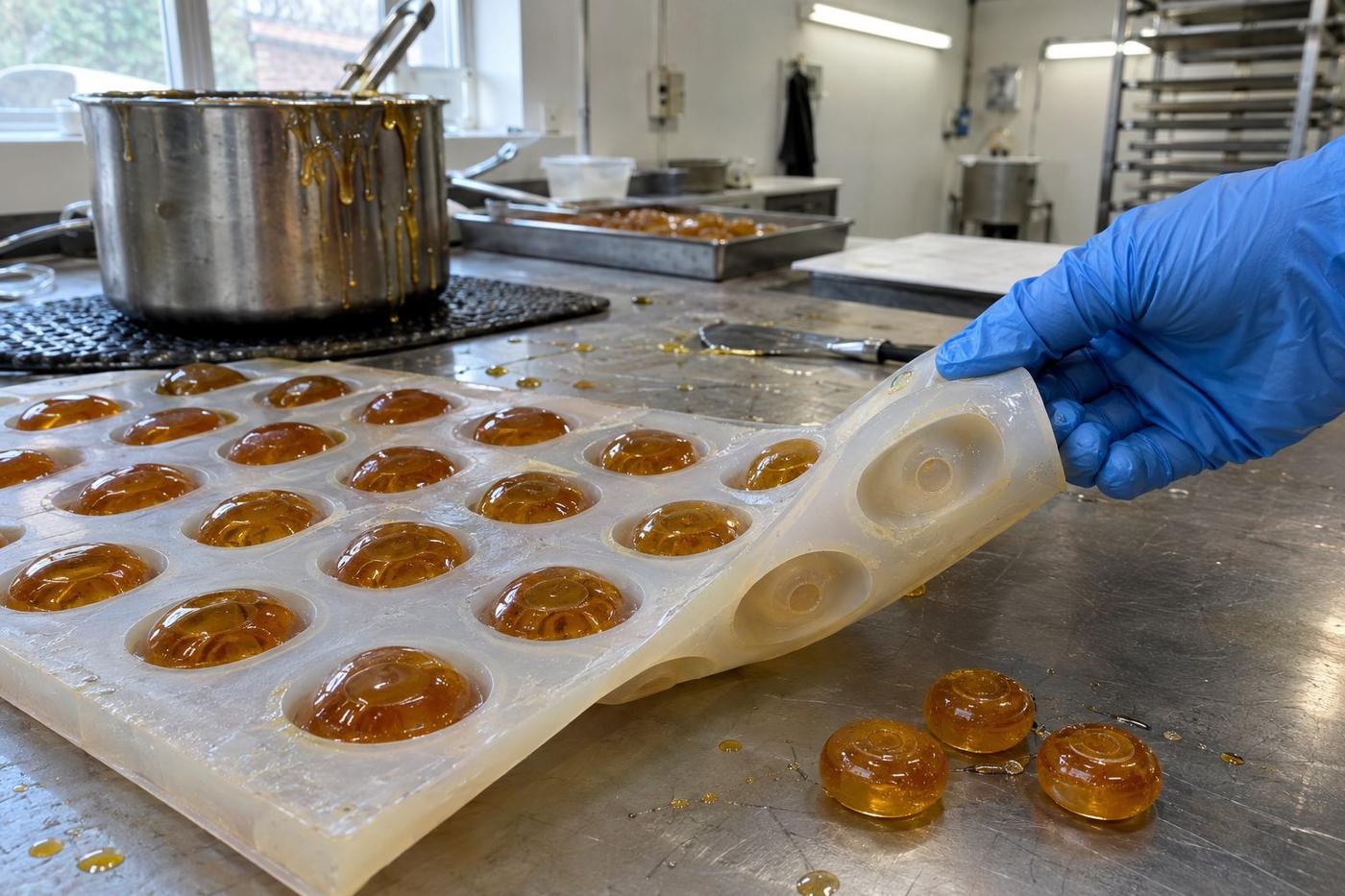
A cavity mould for a confectionery producer's boiled-sweet range with a recessed shape in each cavity floor.
See projectA 60-cavity gummy tray featuring a bespoke branded shape as the cavity form.
See project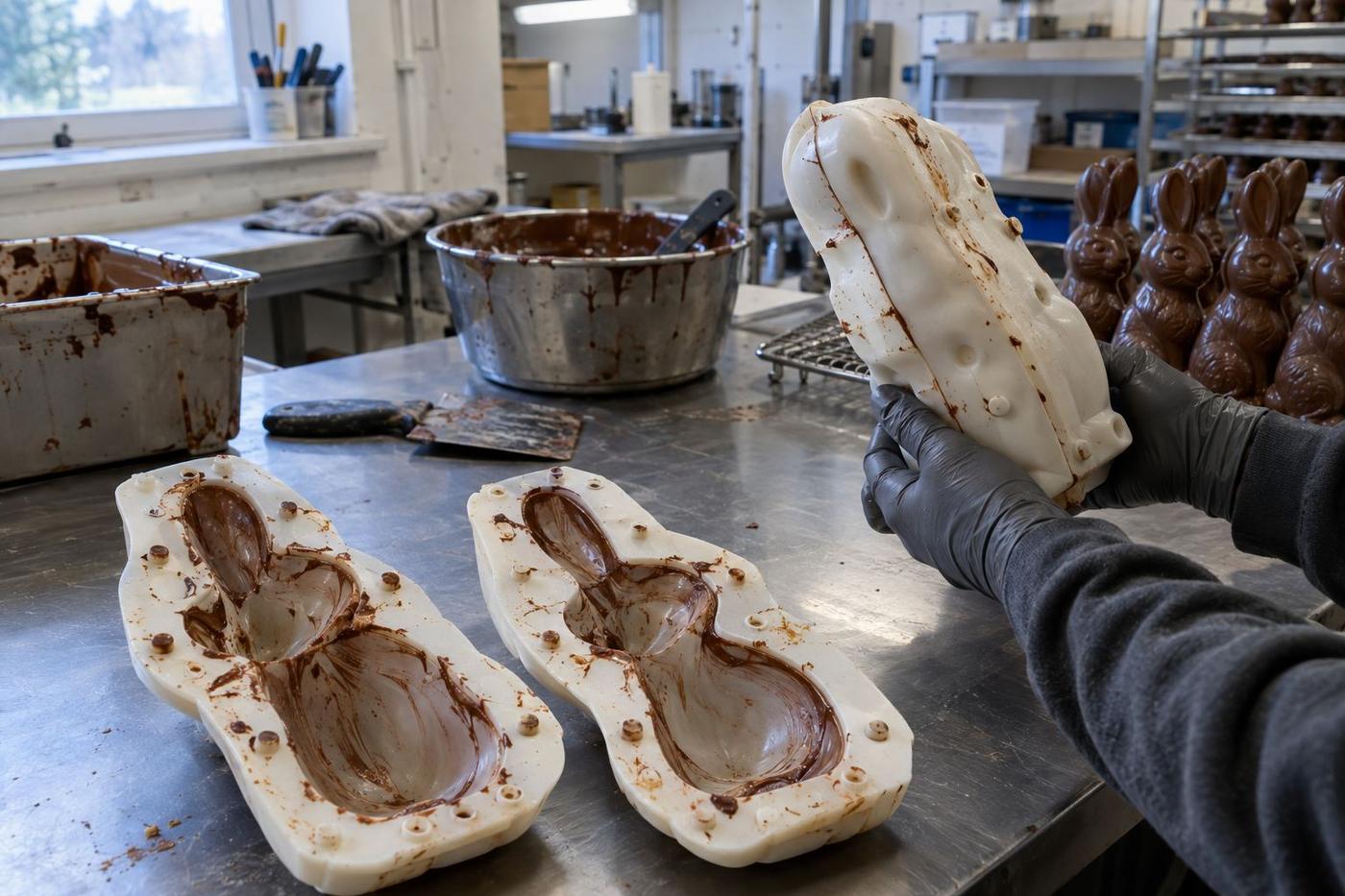
A two-part cavity for a centre-liqueur sweet, with the fill sequence detailed on the drawing.
See projectAt a glance
How a production tray is laid out
Swipe to see the whole diagram
How a food mould gets made
Swipe to see the whole diagram
Questions
Not if it's the right grade. We spec high-temperature food-contact silicones for boiled-sugar work. Tell us your pour temperature at enquiry stage.
Yes. Cavity-floor detail is standard. Send us the logo file and we'll advise on the smallest feature that reads reliably.
Yes. Send depositor plate dimensions and we'll match the mould to the plate.
Depends on line rate and cleaning. With a proper cleandown regime, several thousand cycles is normal. Replacement is straightforward — the drawing and grade stay on file.
Ready?
Send a photo, a sketch or a sample. We'll come back with a route and a quote.
Real people, a real workshop
No call centre and no middlemen. When you contact TCI Culinary, you speak to the team who design, build and check your mould.



 Thomas LaneManaging Director
 George PrestonDesign & Project Manager
 Kelly BallingerHead of Partnerships
 Jim AndertonProduction Manager
 TheodoreEmployee Welfare