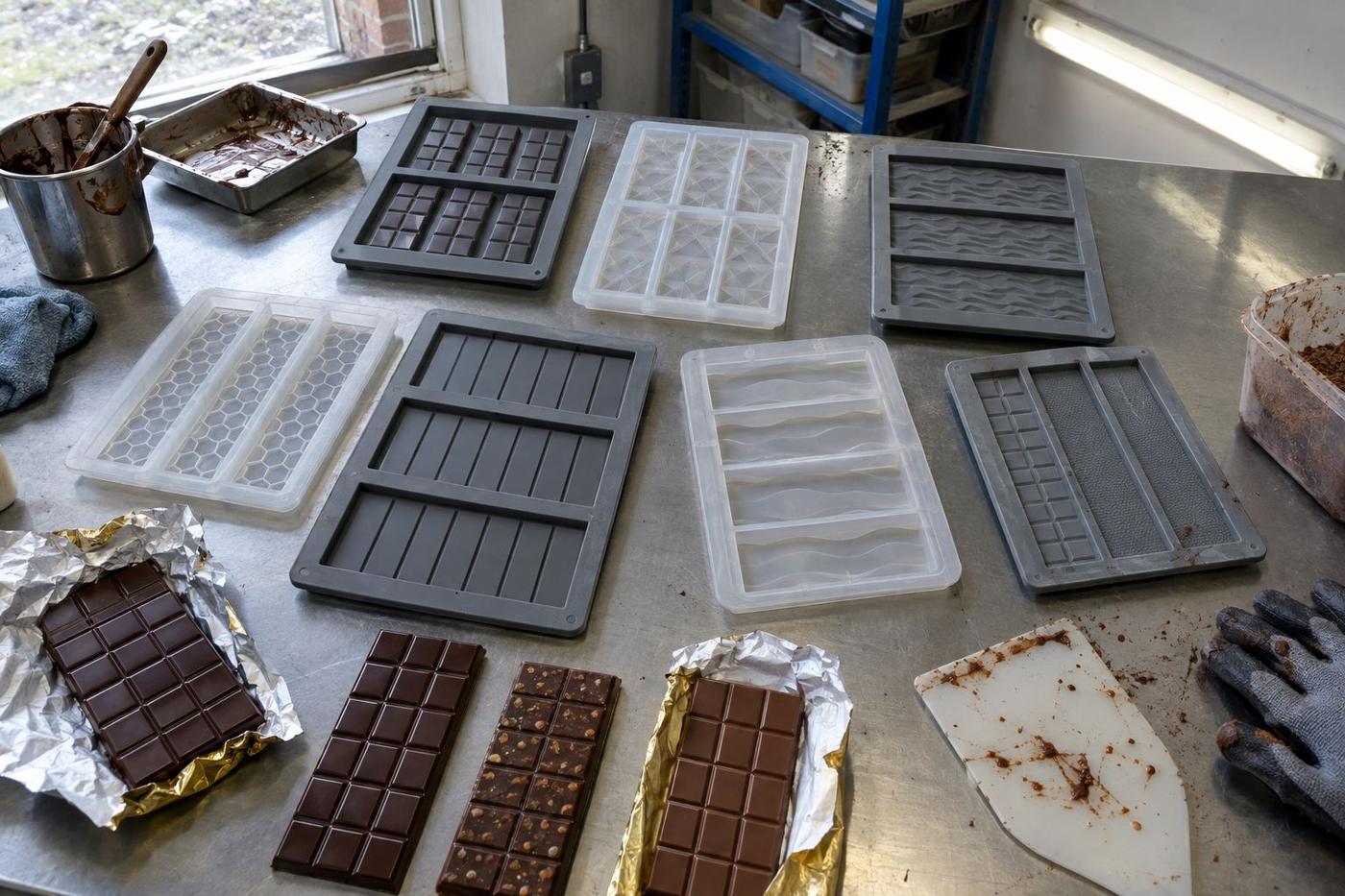
Target weight
Tell us the net weight on the wrapper. We set cavity volume from it and your chocolate's density.
Service · chocolate bars
A bar is the most looked-at thing a chocolatier sells. The face, the snap lines, the edge and the back all come from the mould, so the mould deserves as much thought as the recipe.
Overview
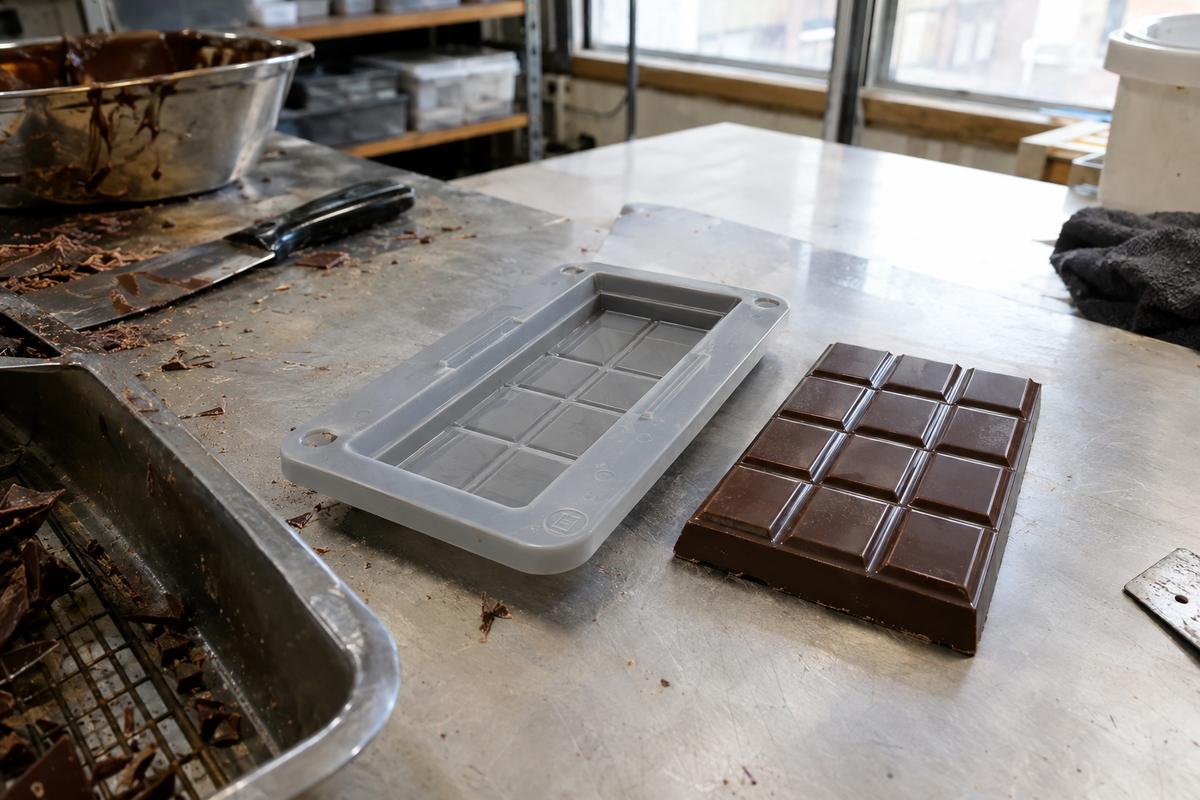
Most chocolatiers start on stock polycarbonate bar moulds and then want something that is theirs: their mark on the face, their own segment pattern, their bar weight. That is where a custom silicone bar mould earns its place.
We design bar and tablet moulds around your weight, your wrapper and your knock-out. Snap lines, a maker's mark and a clean chamfer are all drawn up and proofed on a single cavity before the full tray is poured.
What we make
Snap-line patterns designed so the bar breaks where you want it to, not along a weak corner.
A recessed mark, a pattern or a texture across the bar face, sized so it reads on tempered chocolate.
Deeper cavities and softer corners for bars carrying nuts, fruit or crumble on the back.
Cavity volume set against your target bar weight so you can print it on the wrapper with confidence.
Bar outline drawn to your wrapper or flow-wrap film, so packing is quick and nothing overhangs.
How it gets made
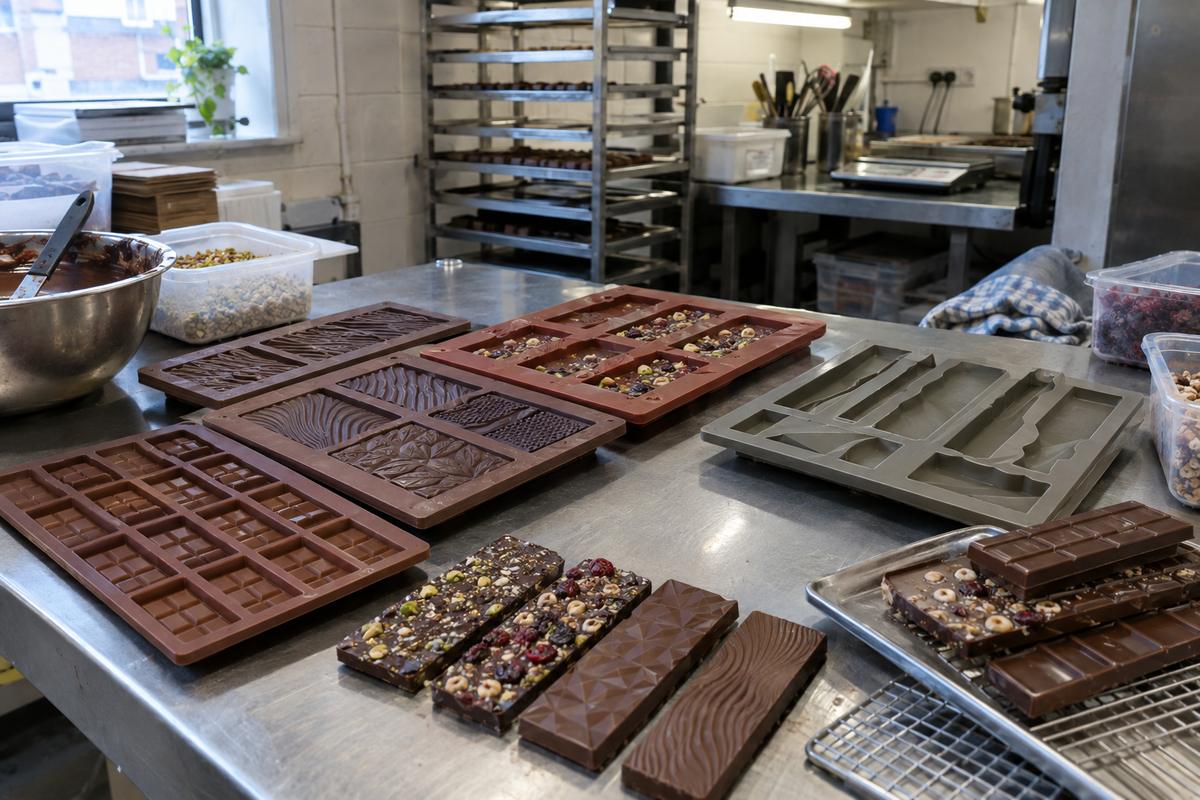
Every chocolate bar mould starts as a drawing we agree with you. We make a master, pour a single proof cavity in PFAS-free platinum-cure food-grade silicone and let you test it with your own recipe.
Once you are happy, we pour or press the full tray, record the grade against your order and keep the drawing on file for reorders.
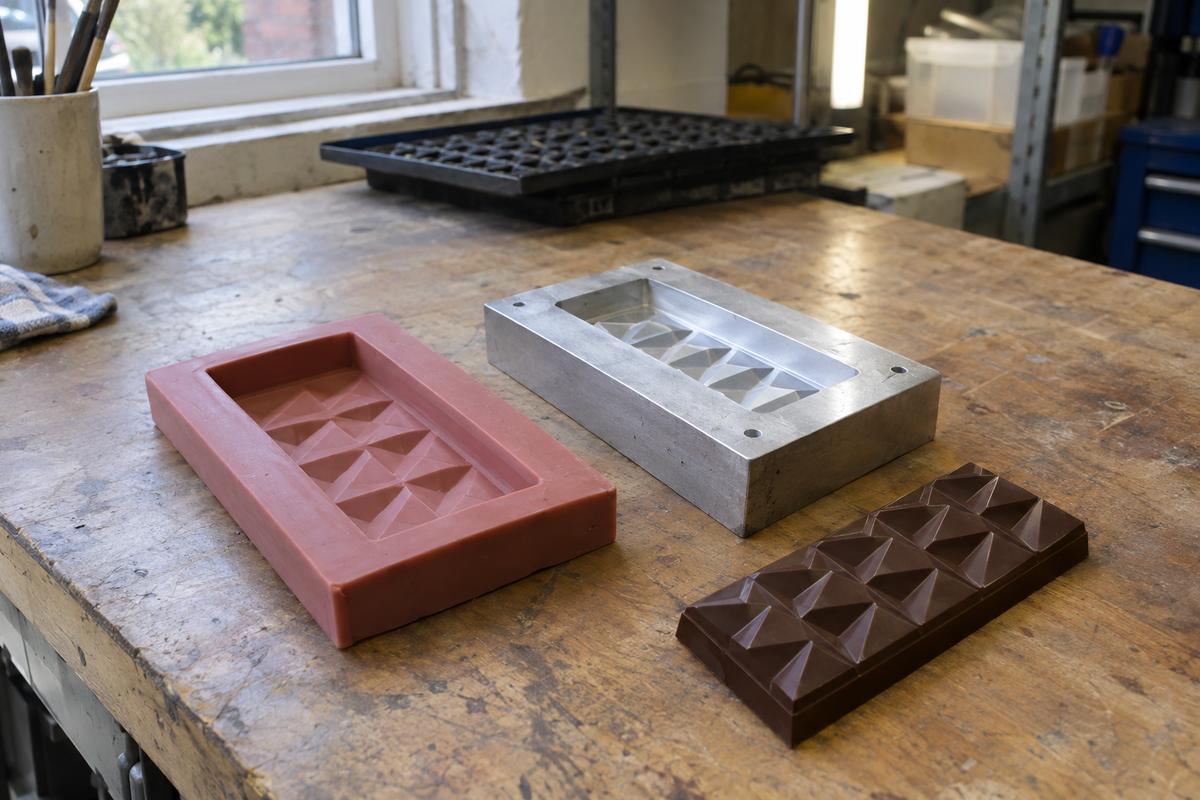
What we ask up front
Tell us the net weight on the wrapper. We set cavity volume from it and your chocolate's density.
How many pieces, and how clean the break needs to be. That drives snap-line depth and profile.
Bench tap, flex-and-push or invert. We match silicone hardness to it.
Send the vector file early. We check the finest feature will read on a tempered bar.
Typical work
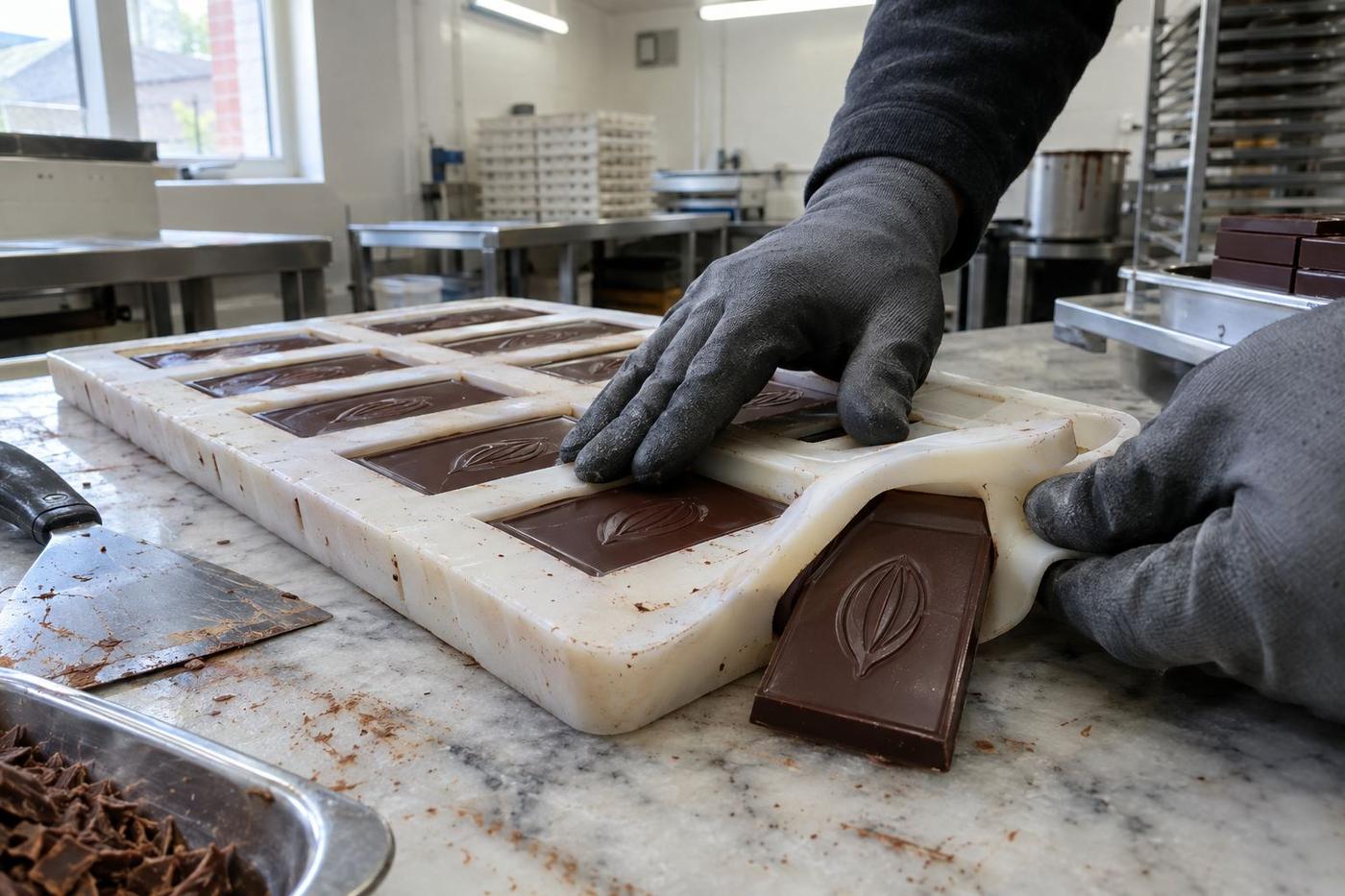
A six-cavity bar tray with a recessed mark, proofed on one cavity first.
See project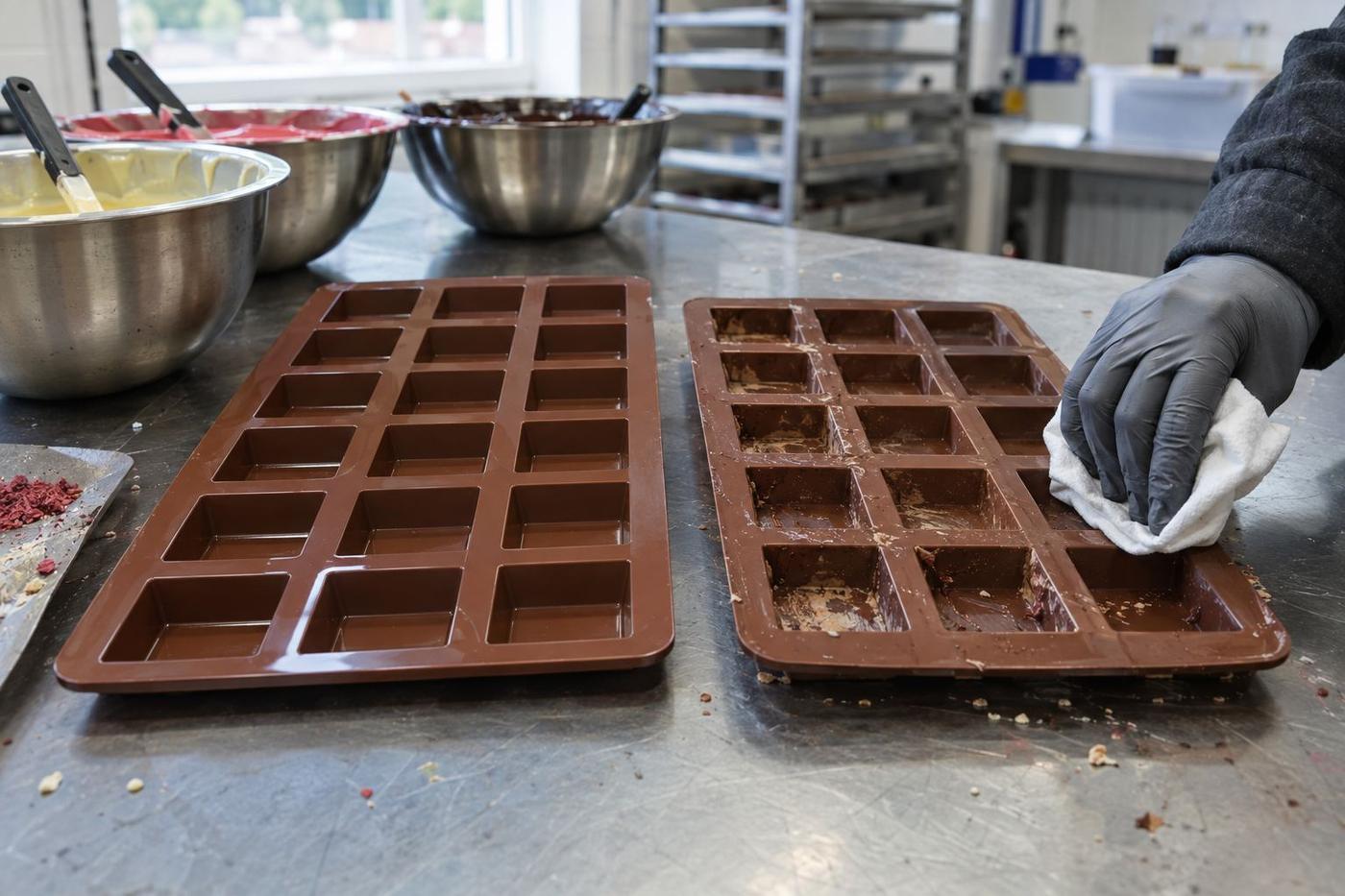
Why cocoa butter build-up changes gloss, and how to clean a bar mould without dulling it.
Read the guide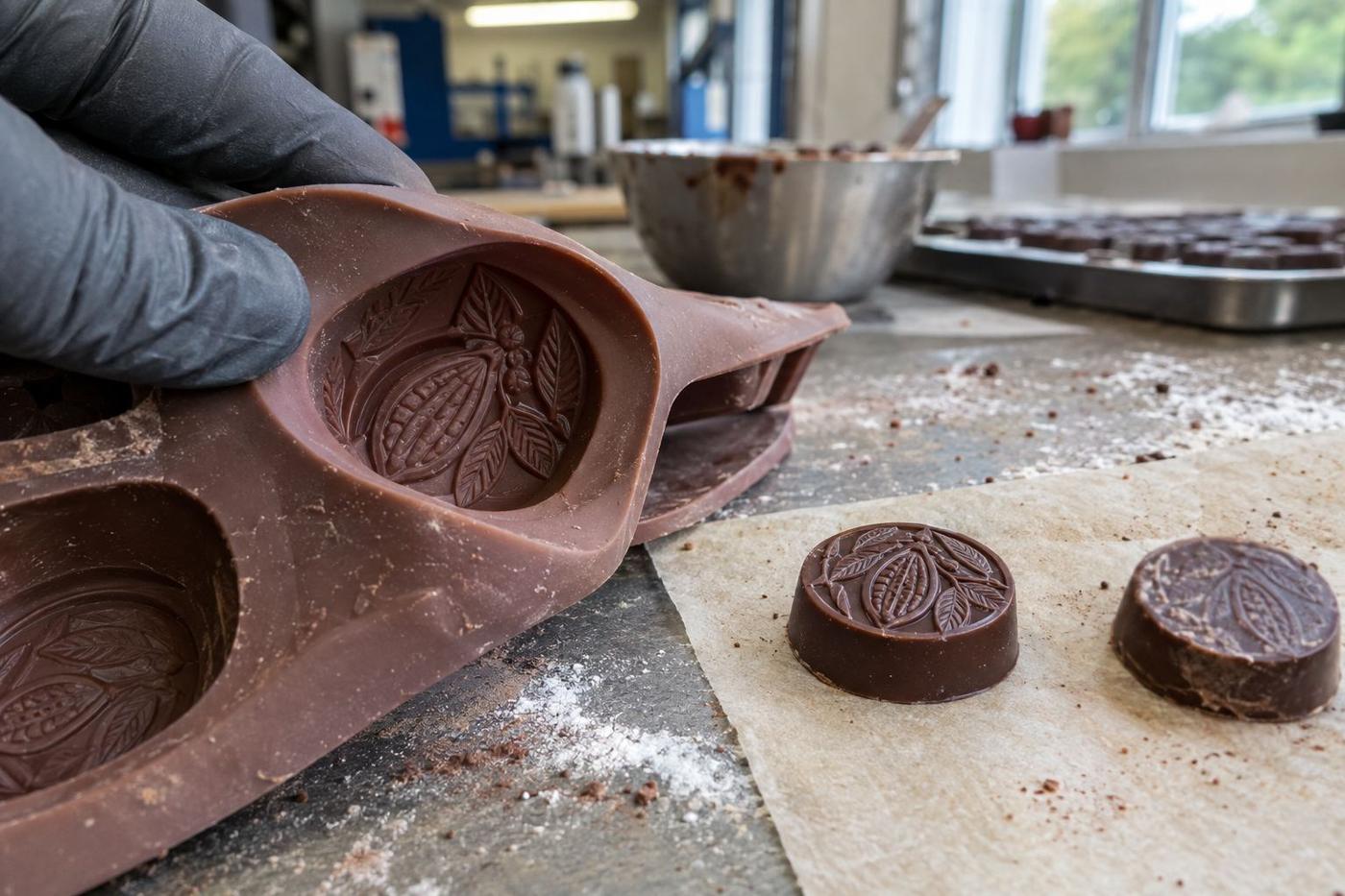
What depth, draft and line weight a logo needs to read on chocolate.
Read the guideAt a glance
Solid pieces and shelled pieces
Swipe to see the whole diagram
How a food mould gets made
Swipe to see the whole diagram
Questions
Polycarbonate gives the hardest gloss at high volume. Silicone gives easier release, cheaper iteration and more freedom on shape. We will tell you honestly which suits your bar.
We set cavity volume from your target weight and chocolate density and check it at manufacture. Fill level on your line still matters.
Yes. We cut it into the cavity floor and proof it on a single cavity first.
That depends on your chiller shelf and how you knock out. See our guide on choosing cavity count.
Ready?
Send a photo, a sketch or a sample. We'll come back with a route and a quote.
Real people, a real workshop
No call centre and no middlemen. When you contact TCI Culinary, you speak to the team who design, build and check your mould.



 Thomas LaneManaging Director
 George PrestonDesign & Project Manager
 Kelly BallingerHead of Partnerships
 Jim AndertonProduction Manager
 TheodoreEmployee Welfare