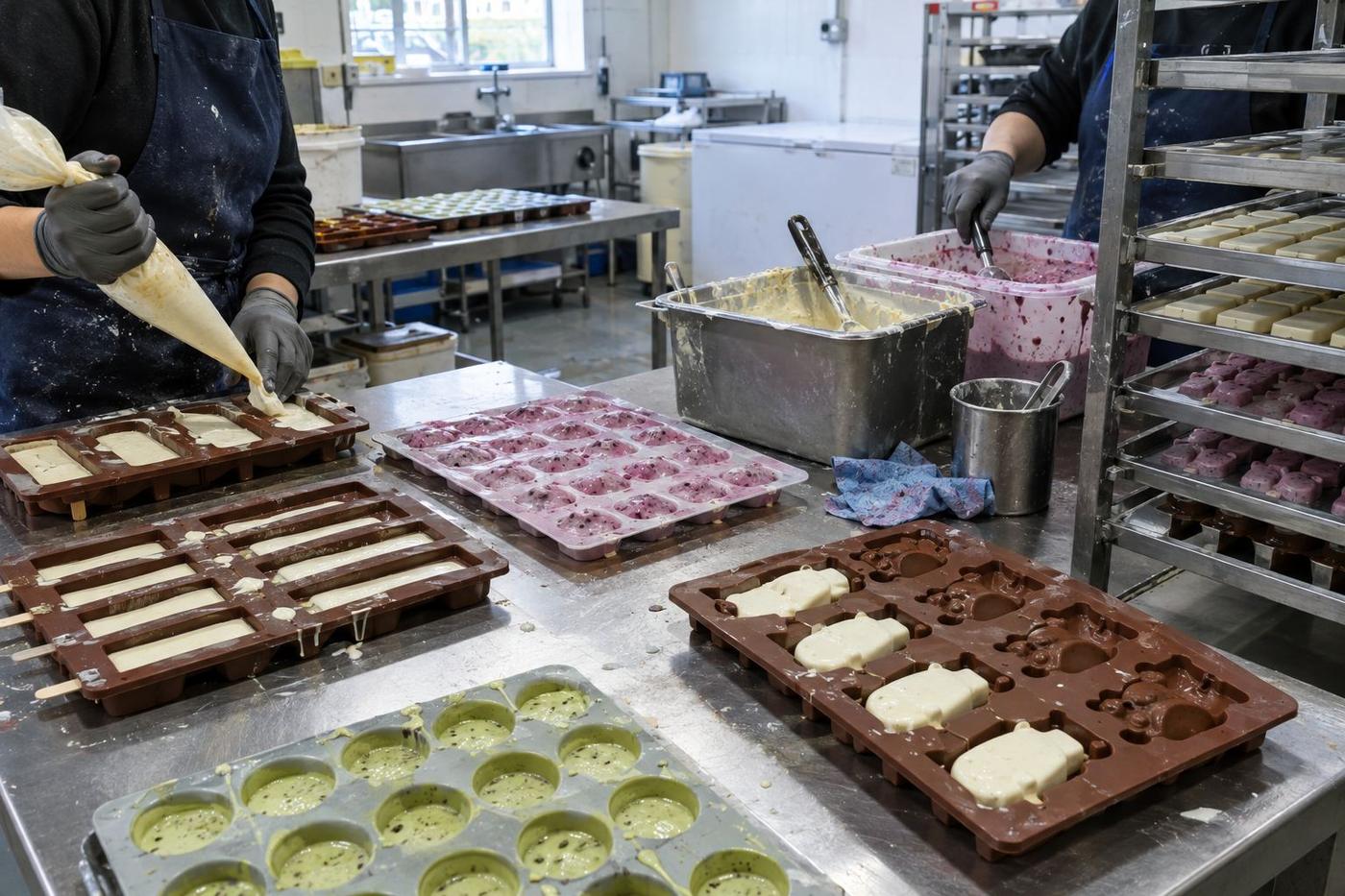
Your hardening method
Hardening cabinet, blast freezer or a shelf in the display freezer. Each sets the mass at a different rate and changes the wall we design.
Service · gelato
Gelato is denser, warmer-served and lower in air than ice-cream. That changes how it fills a cavity, how it hardens and how it lets go. The mould has to be designed for gelato, not borrowed from a lolly line.
Overview
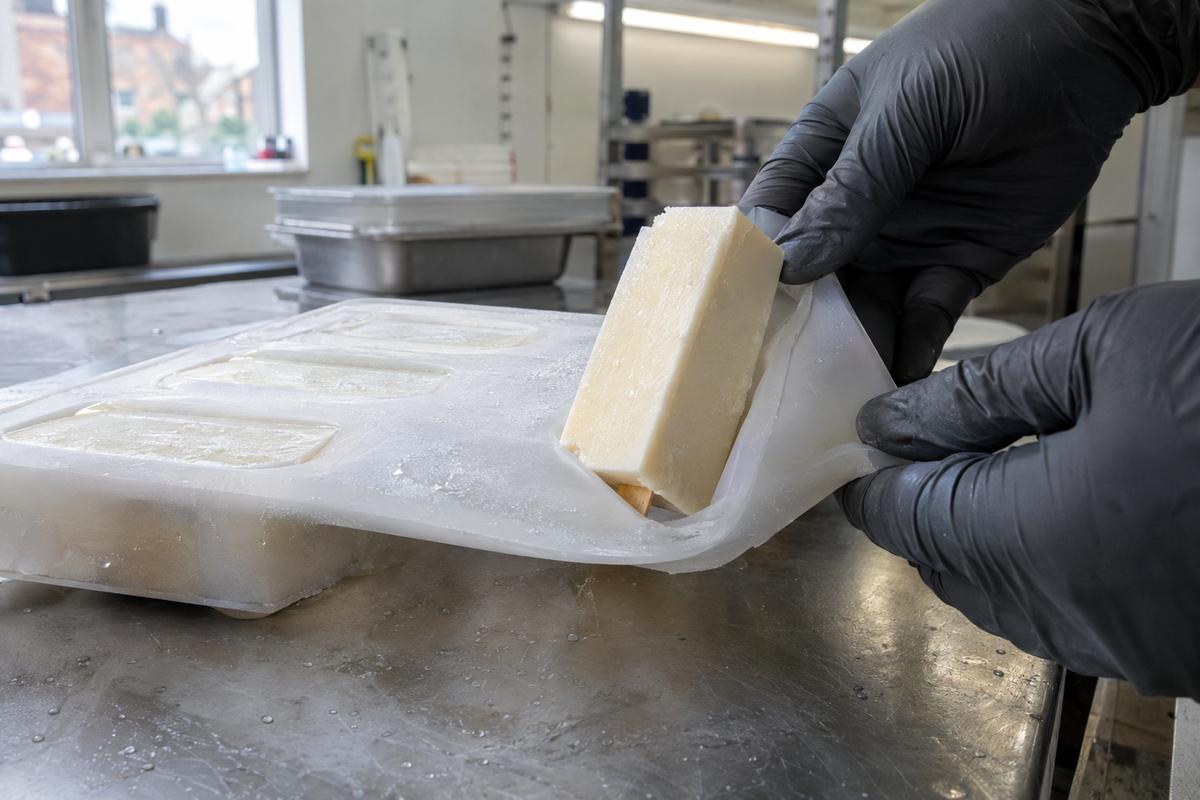
A gelato bar that tears at the corner or a gelato cake that comes out with a soft shoulder is usually a mould problem, not a recipe problem. Lower overrun means the mass is heavier and grips the cavity harder as it hardens.
We make silicone moulds for gelaterias, gelato cake makers and gelato producers moving into retail formats. Every mould is PFAS-free platinum-cure food-grade silicone, sized to your hardening cabinet or blast freezer, with the paperwork to go with it.
What we make
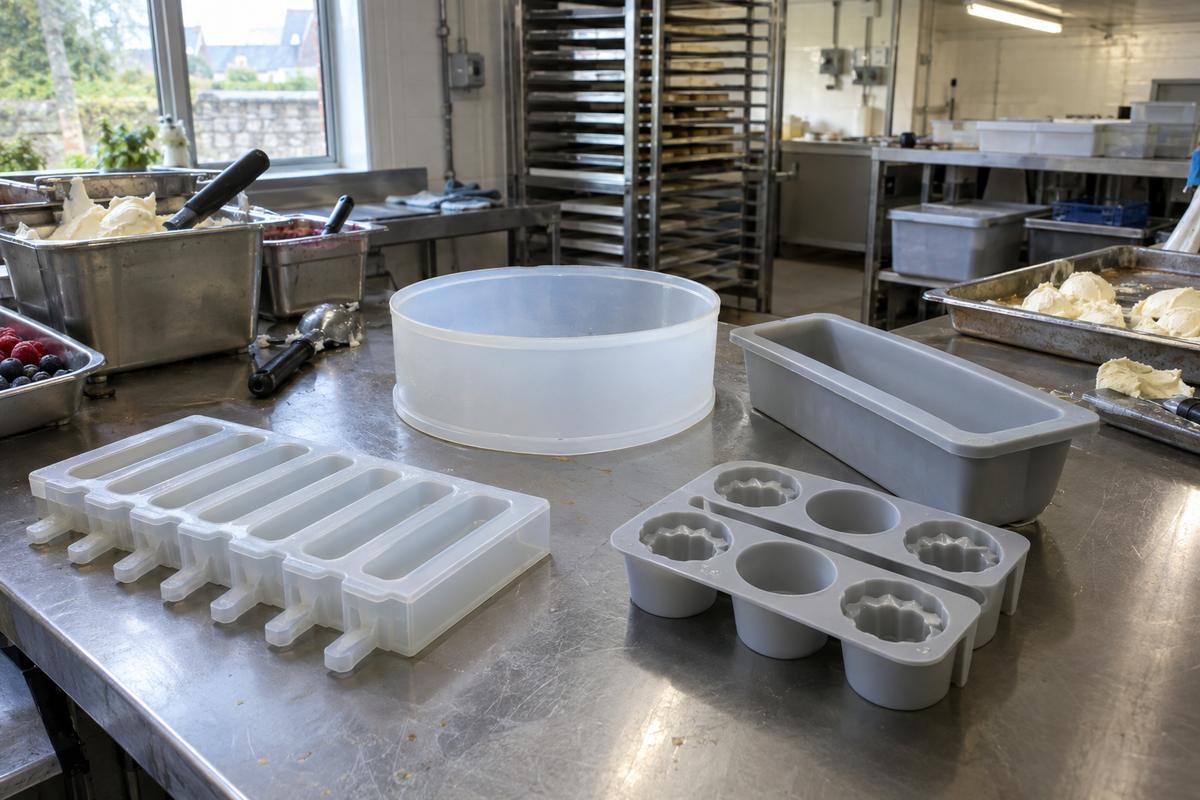
Bar cavities with a stick channel sized to your sticks, and a draft that lets a dense gelato slide out after a short warm dip.
Larger single-cavity moulds for layered gelato cakes, with a flat base that sits level in the cabinet and walls that hold a crisp edge.
Loaf, dome and log forms for semifreddo, where the release has to leave a clean surface for glazing or crumb.
Individual cavities for plated gelato desserts in restaurants and hotel banqueting.
Short-run cavities for a summer launch, a local festival or a flavour of the month.
How it gets made
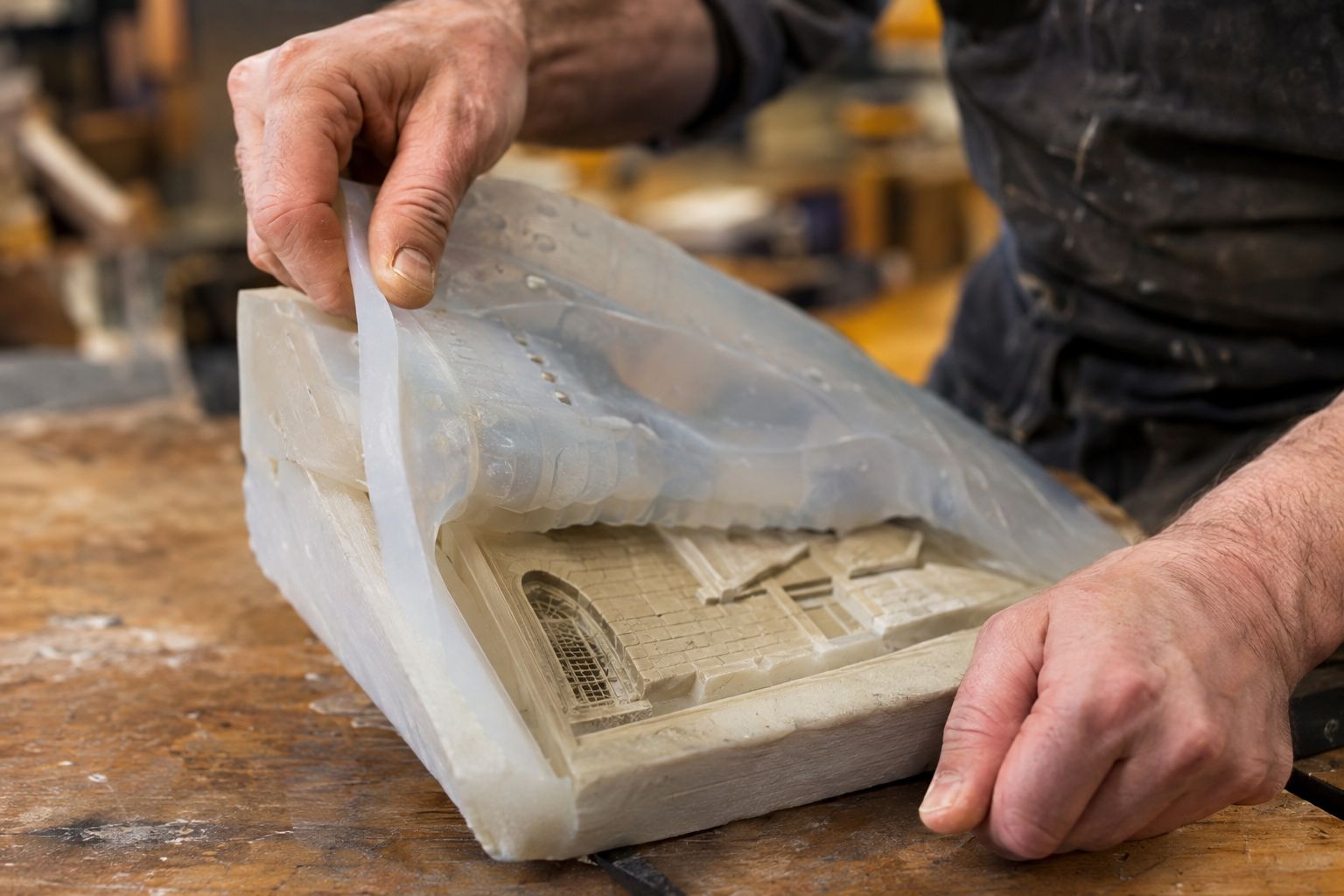
Every gelato mould starts as a drawing we agree with you. We make a master, pour a single proof cavity in PFAS-free platinum-cure food-grade silicone and let you test it with your own recipe.
Once you are happy, we pour or press the full tray, record the grade against your order and keep the drawing on file for reorders.
What we ask up front
Hardening cabinet, blast freezer or a shelf in the display freezer. Each sets the mass at a different rate and changes the wall we design.
Warm dip, warm cloth or flex-and-push. The softer the release motion, the softer the silicone we specify.
Chocolate dip, glaze, crumb or nothing. A dipped bar needs a different surface and edge from a plain one.
A gelateria making thirty cakes a week wants a different tray from a producer filling a retail order.
Typical work
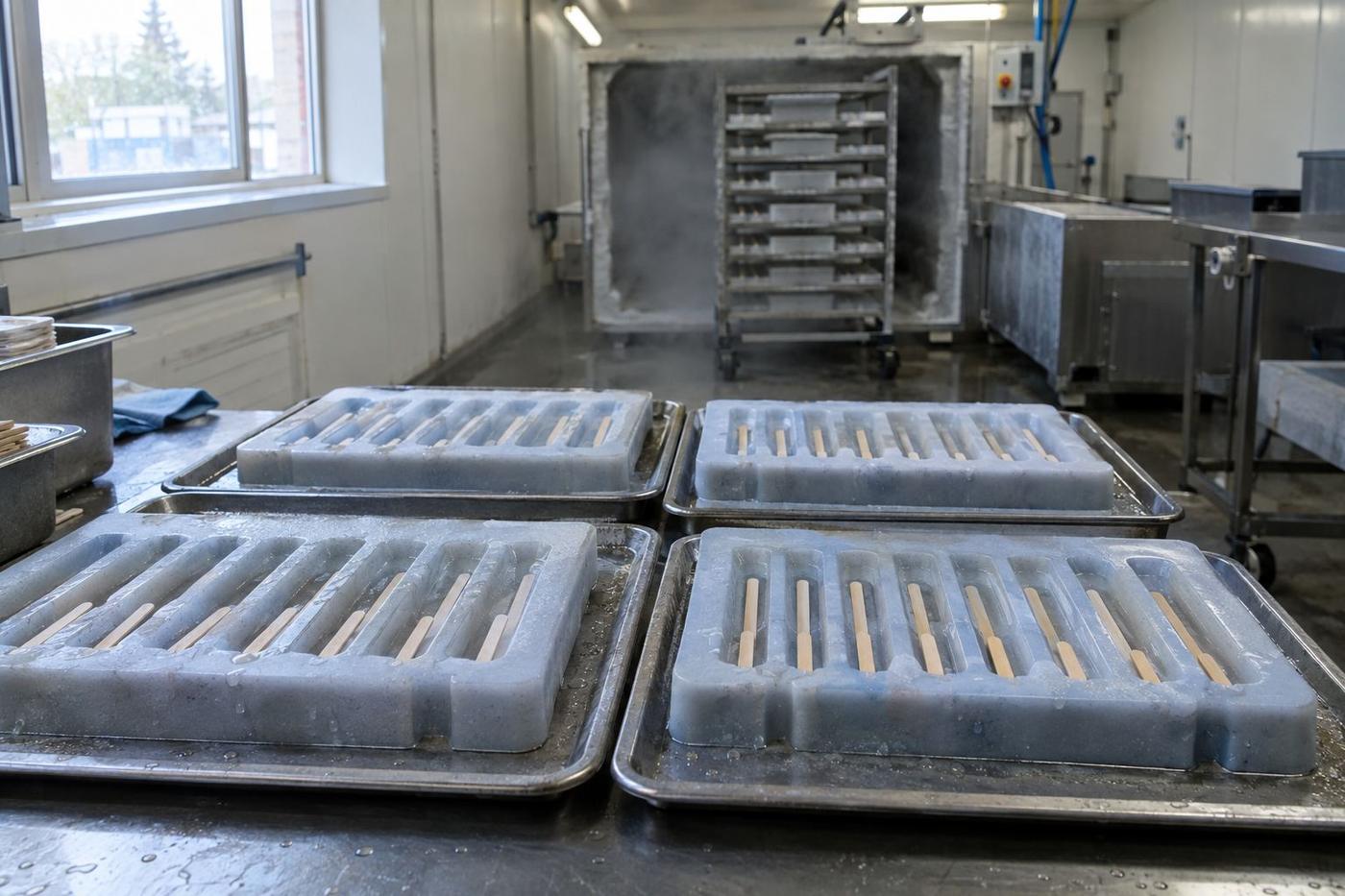
A matched set of stick-bar trays for a gelato maker scaling up to national retail.
See project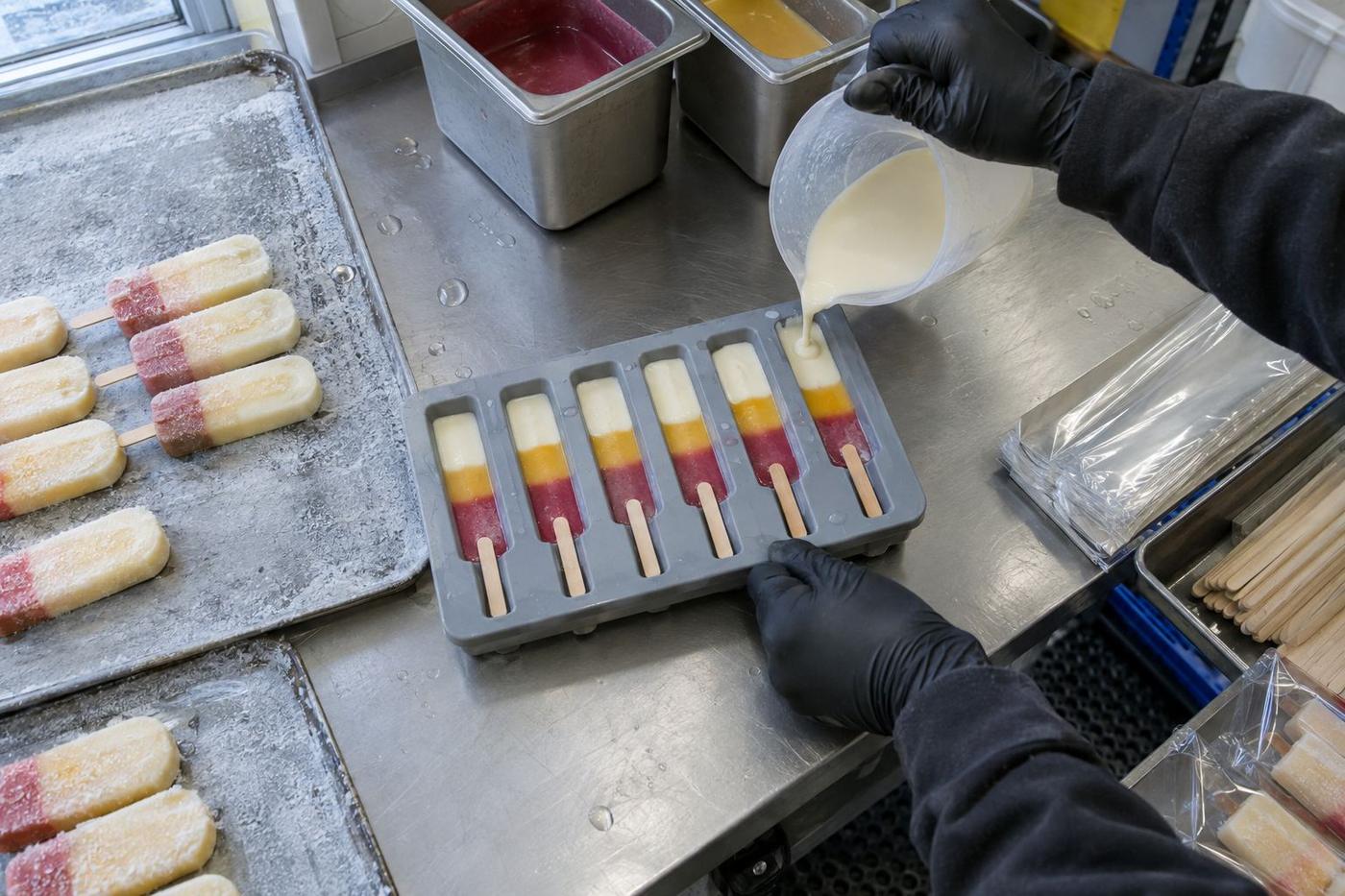
Sequenced three-colour fill, a stick central in every lolly, blast-frozen and dipped out.
See project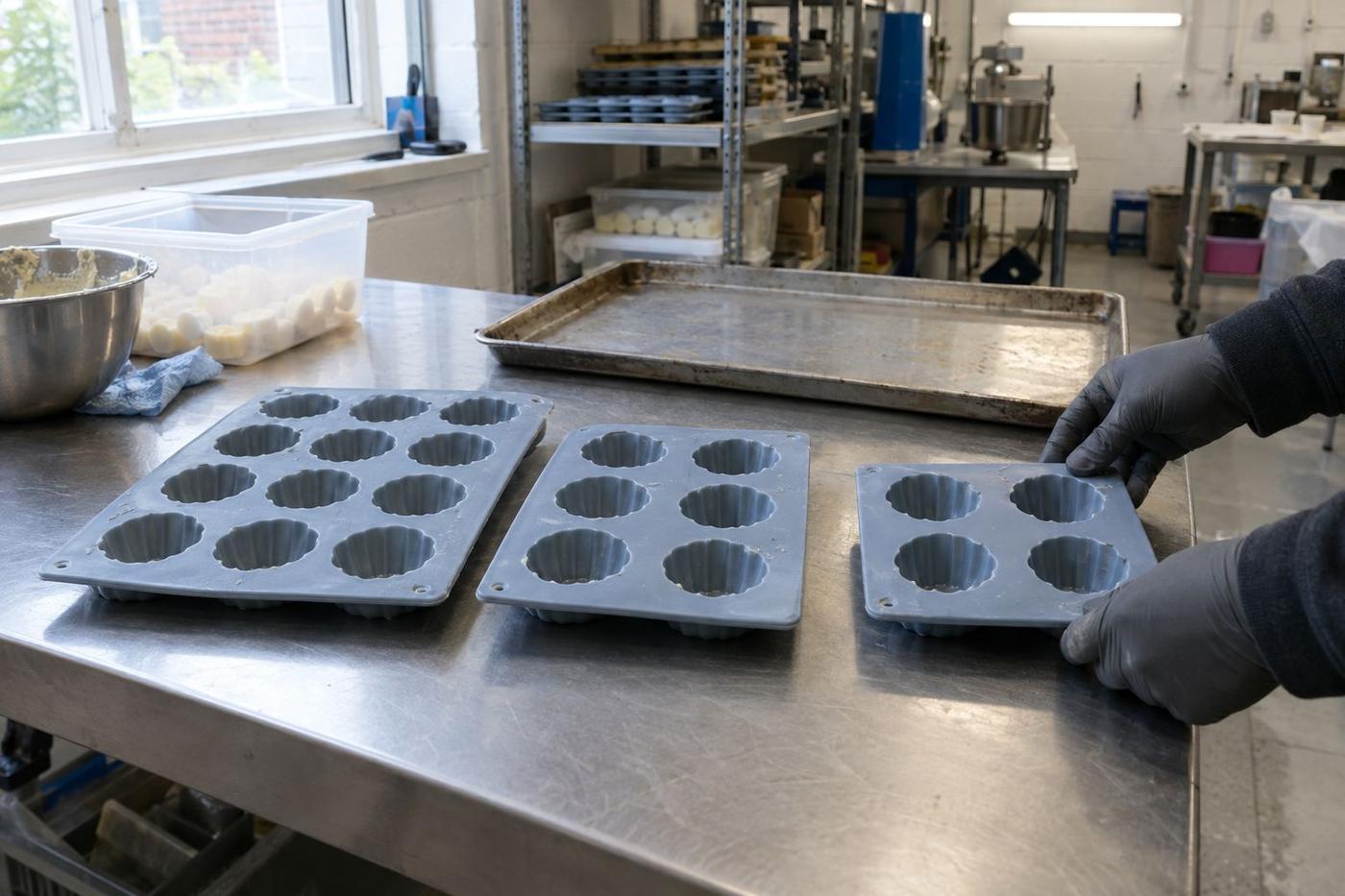
How to size a gelato tray to your cabinet shelf, your team and your day.
Read the guideAt a glance
Where food-grade silicone is used
Swipe to see the whole diagram
Questions
Often, yes. Lower air content means a denser mass that grips the cavity. We allow for that with draft, a slightly softer silicone and radiused corners.
Yes. Platinum-cure food-grade silicone stays flexible at deep-freeze temperatures and does not go brittle.
Yes, from single-cavity cake rings to multi-cavity individual torte trays. Tell us the finished size and how you layer.
Yes. We specify PFAS-free platinum-cure food-grade silicone as standard and record the grade against your order.
Ready?
Send a photo, a sketch or a sample. We'll come back with a route and a quote.
Real people, a real workshop
No call centre and no middlemen. When you contact TCI Culinary, you speak to the team who design, build and check your mould.



 Thomas LaneManaging Director
 George PrestonDesign & Project Manager
 Kelly BallingerHead of Partnerships
 Jim AndertonProduction Manager
 TheodoreEmployee Welfare