Service
Chocolate moulds
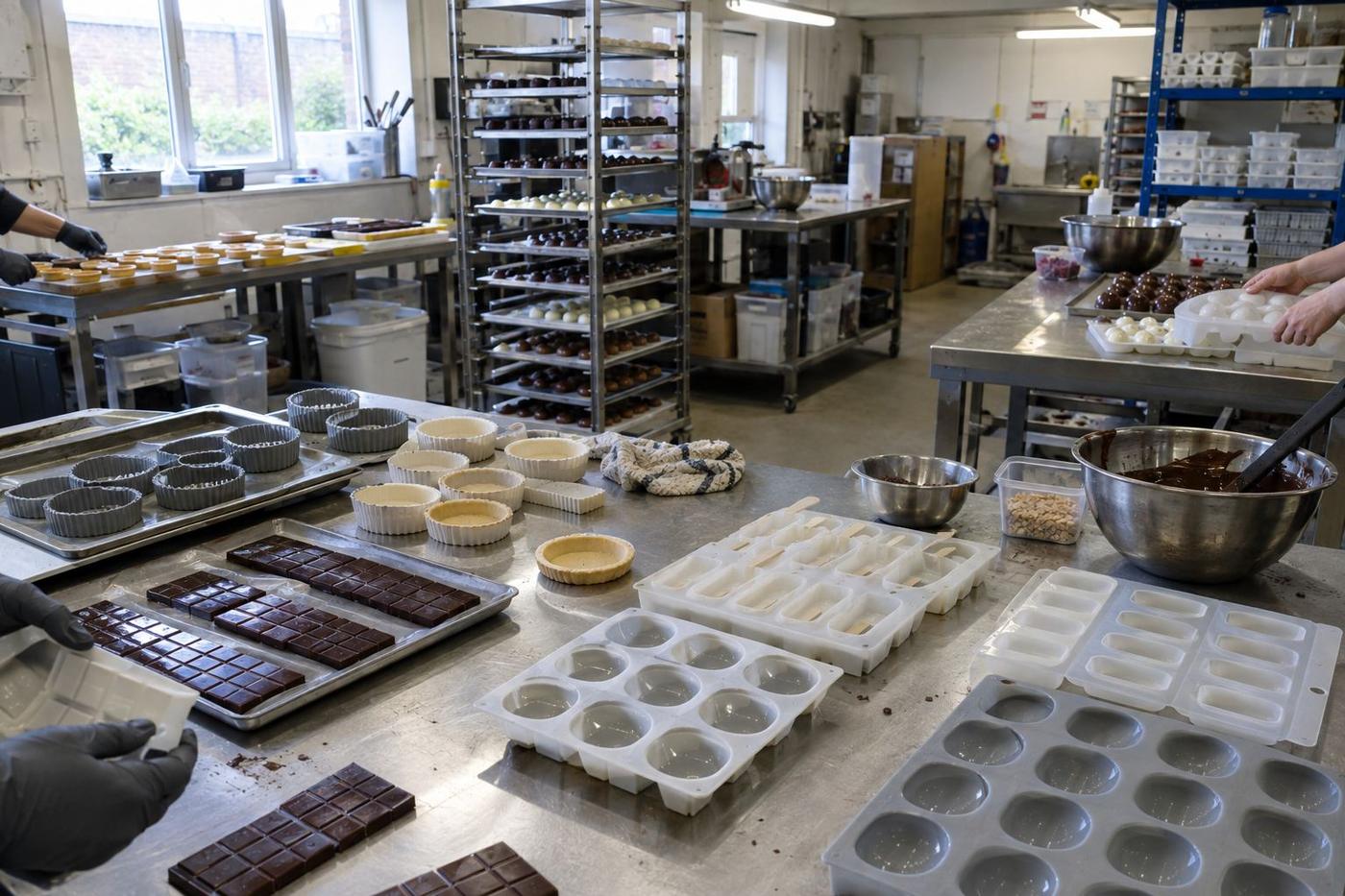
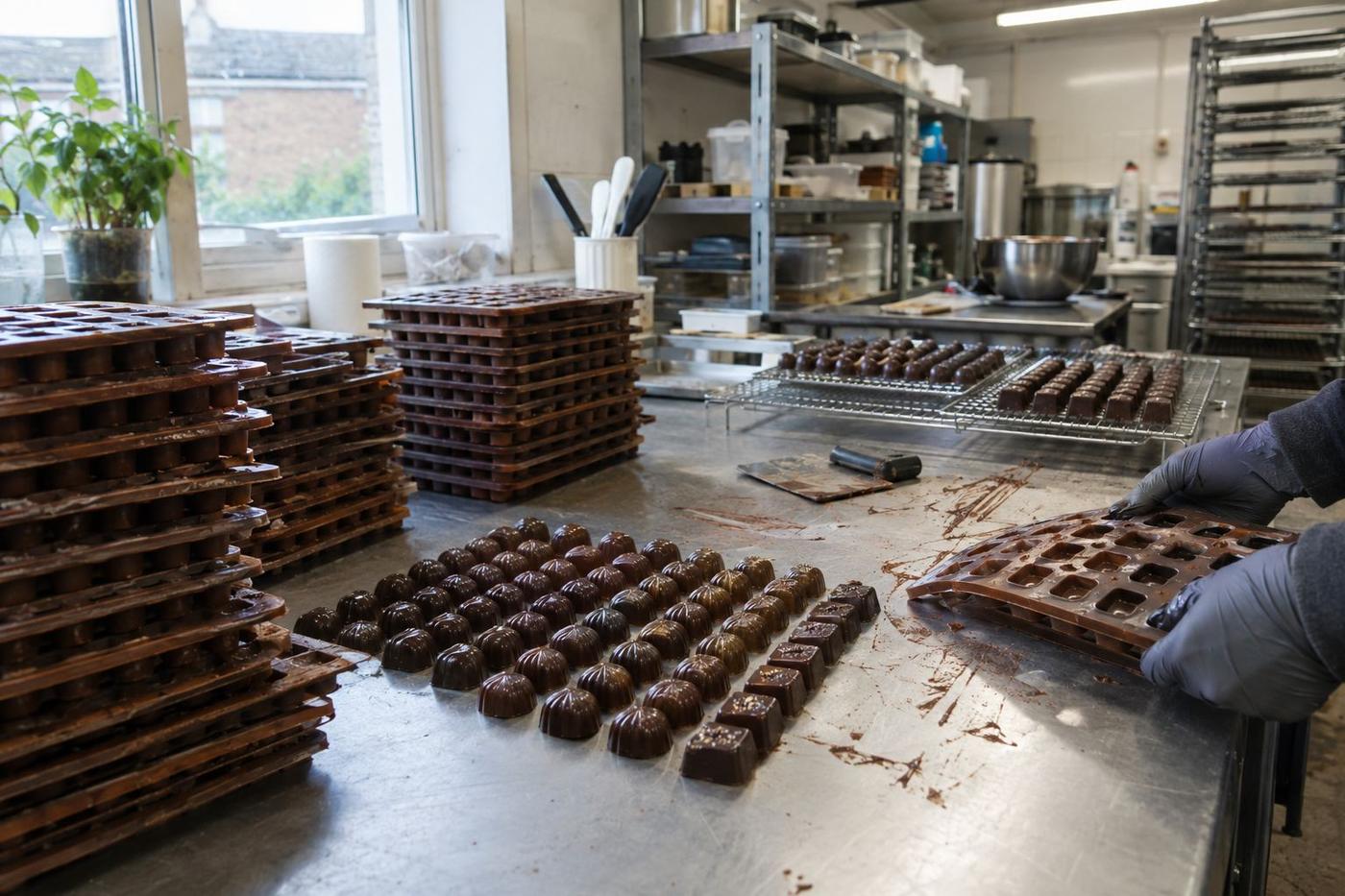
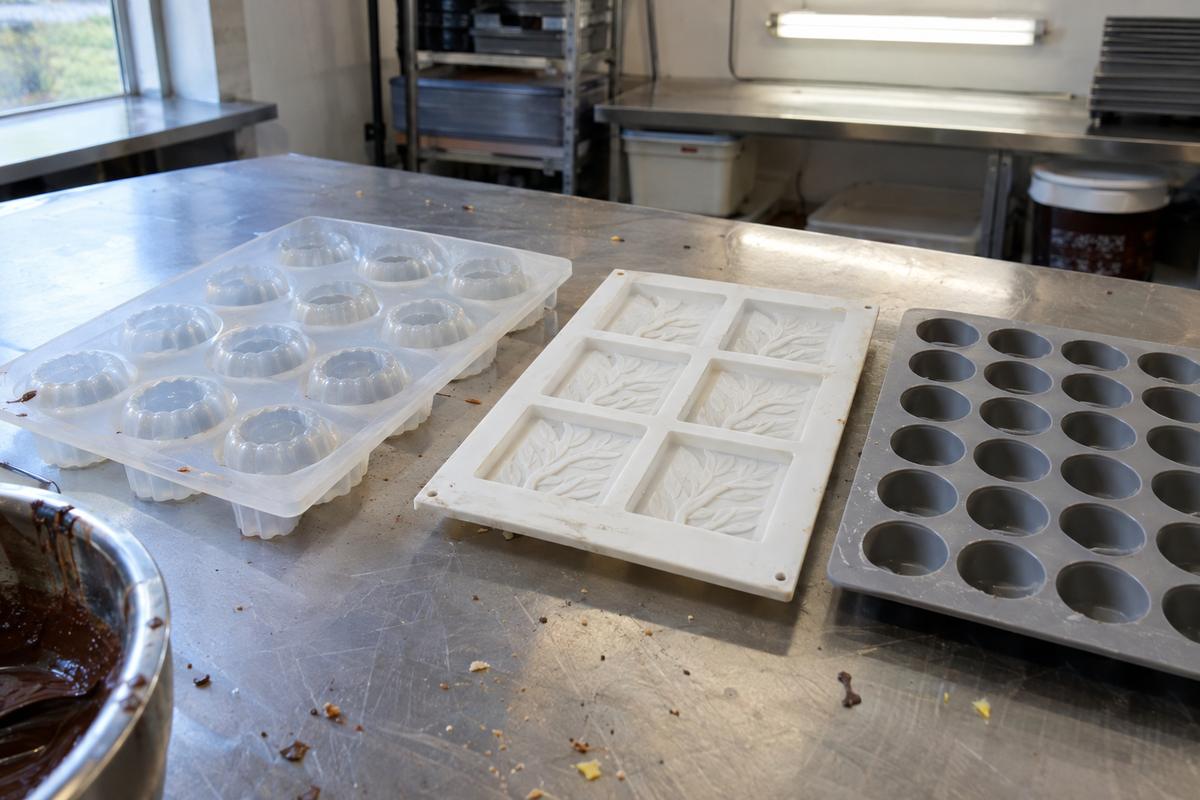
The tempered chocolate has to snap out clean, the surface has to hold gloss, and the tray has to keep flat over a run of a thousand. That is the mould brief for chocolate work.
See serviceWhat we make
Twenty services and forty-odd formats, all in PFAS-free platinum-cure food-grade silicone. Pick what you make, or the problem you need solving.
Our capability, listed
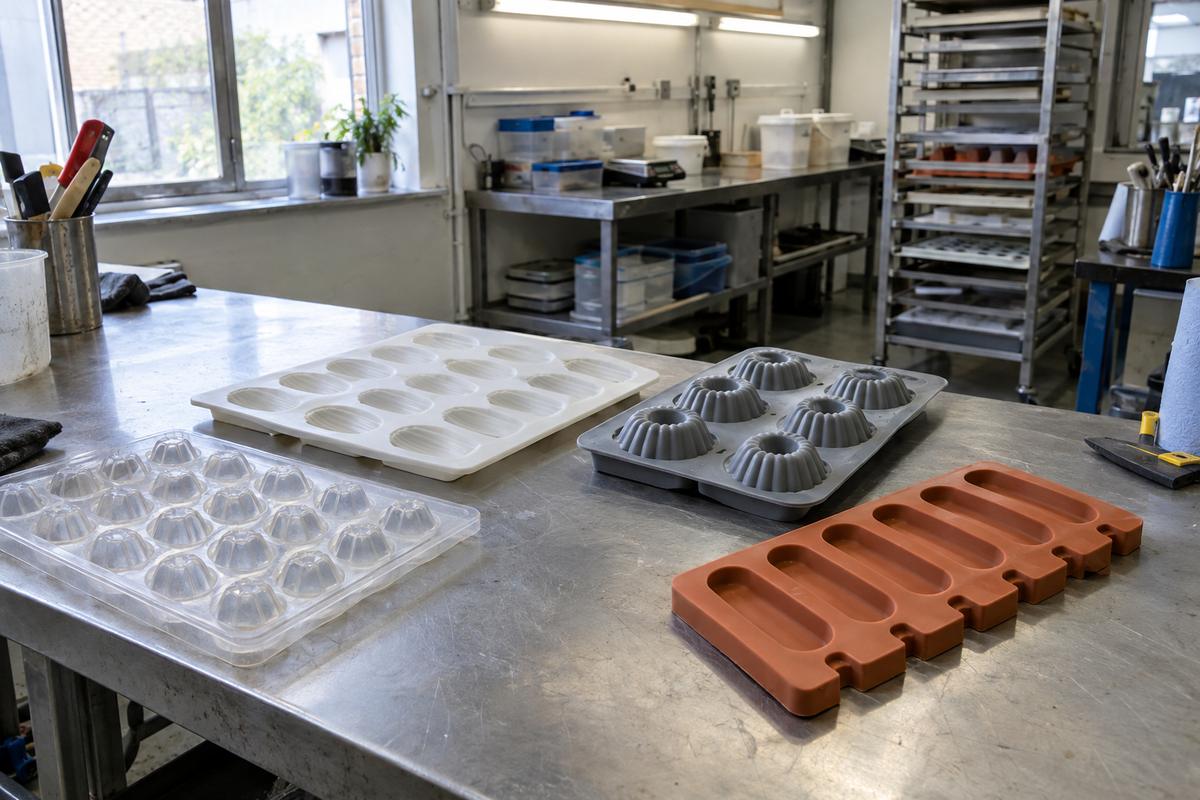
Split by what you're making, the format you need, and where you are in your product's life. Every service is delivered by the same team from the same workshop.
By product
The tempered chocolate has to snap out clean, the surface has to hold gloss, and the tray has to keep flat over a run of a thousand. That is the mould brief for chocolate work.
See service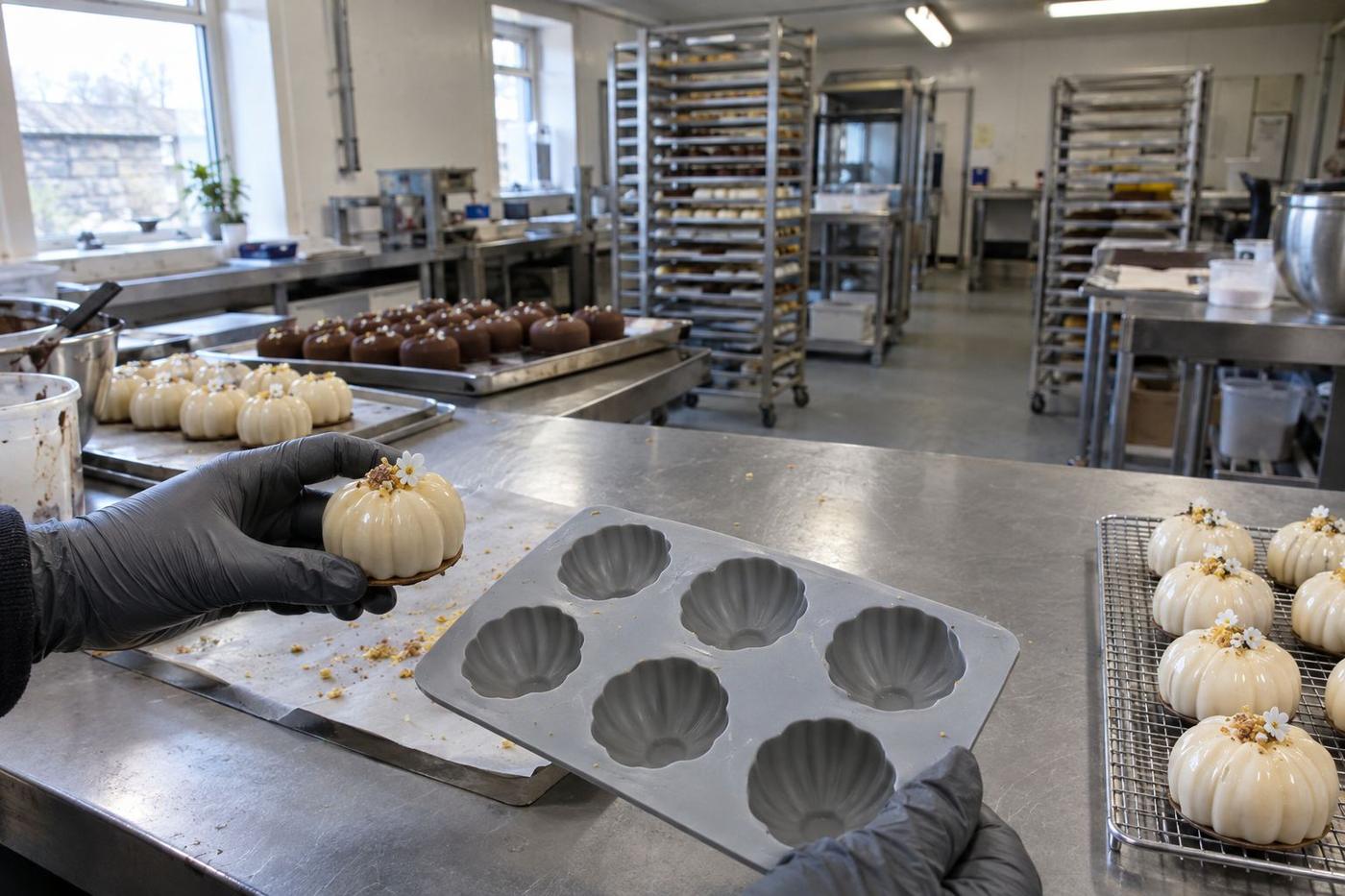
A patisserie mould has to hold a delicate shape, release without a dent, and repeat that a hundred times a service. It also has to look like the chef's drawing.
See service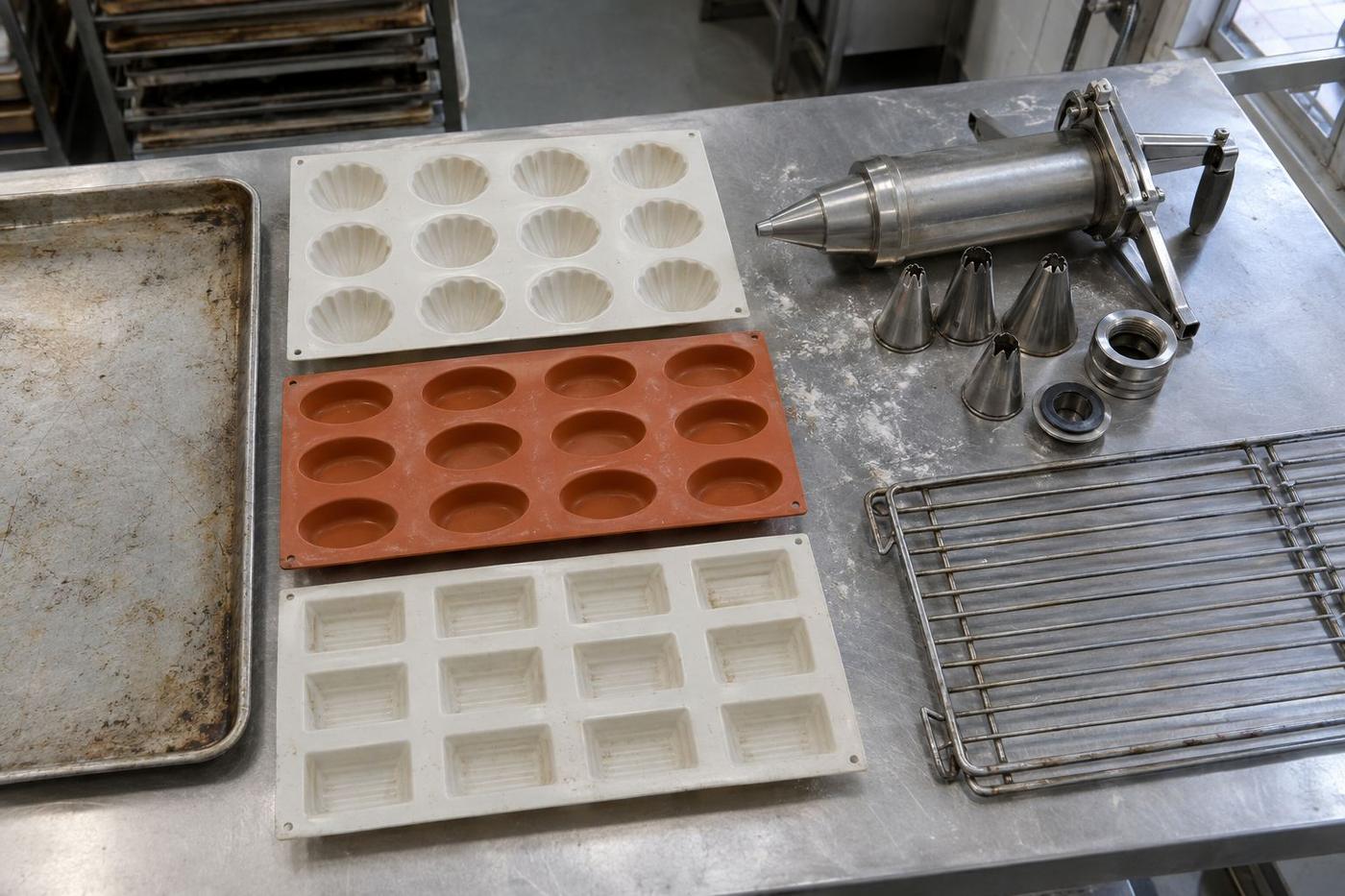
A bakery mould is oven equipment. It has to survive a bake cycle, release without a tear, and drop into the tray you already have. That is the brief.
See service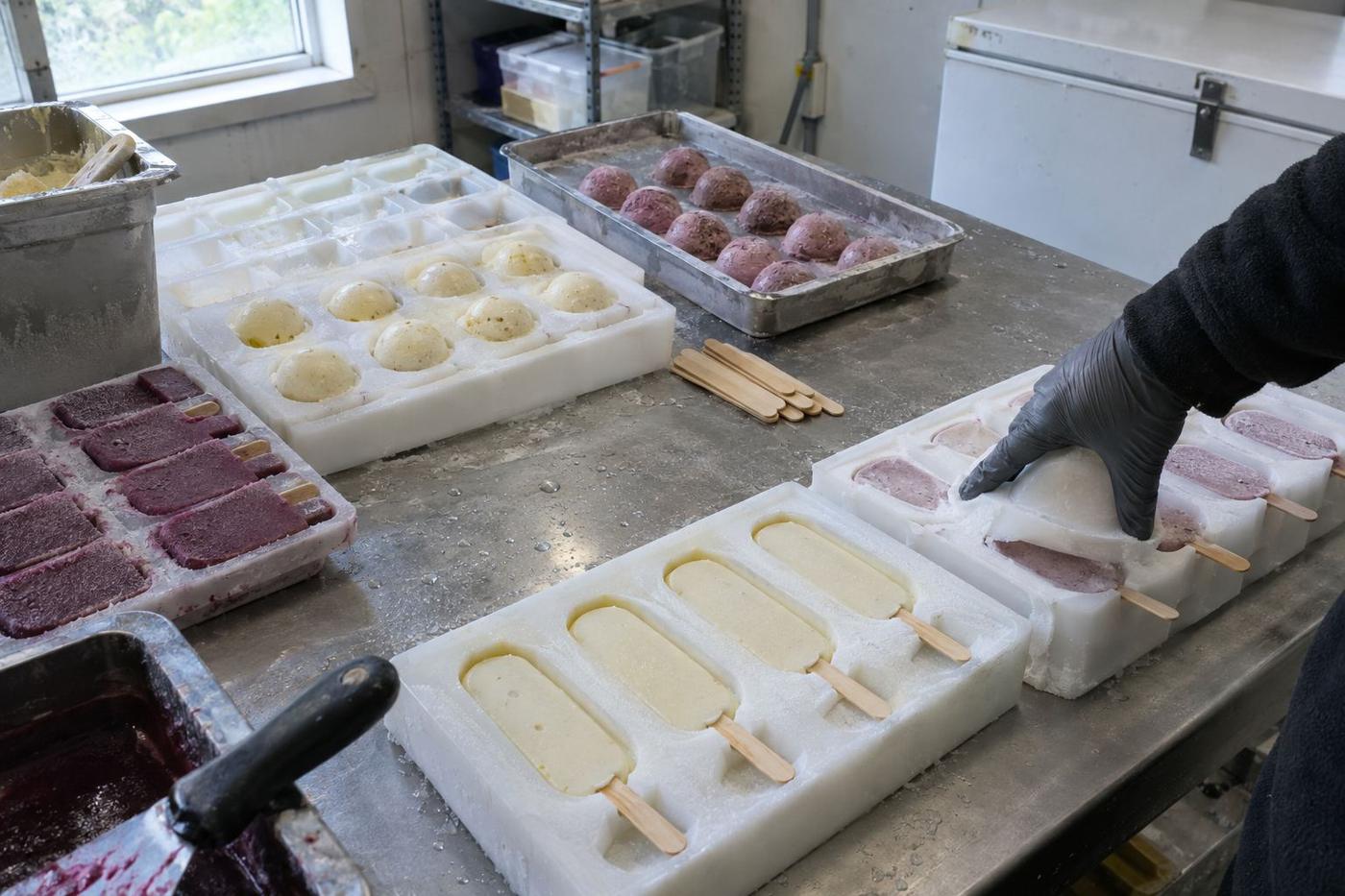
Frozen product wants a mould that holds its geometry down to -25°C and pops without a fracture. It also wants a stick or a wrap that lands right every time.
See service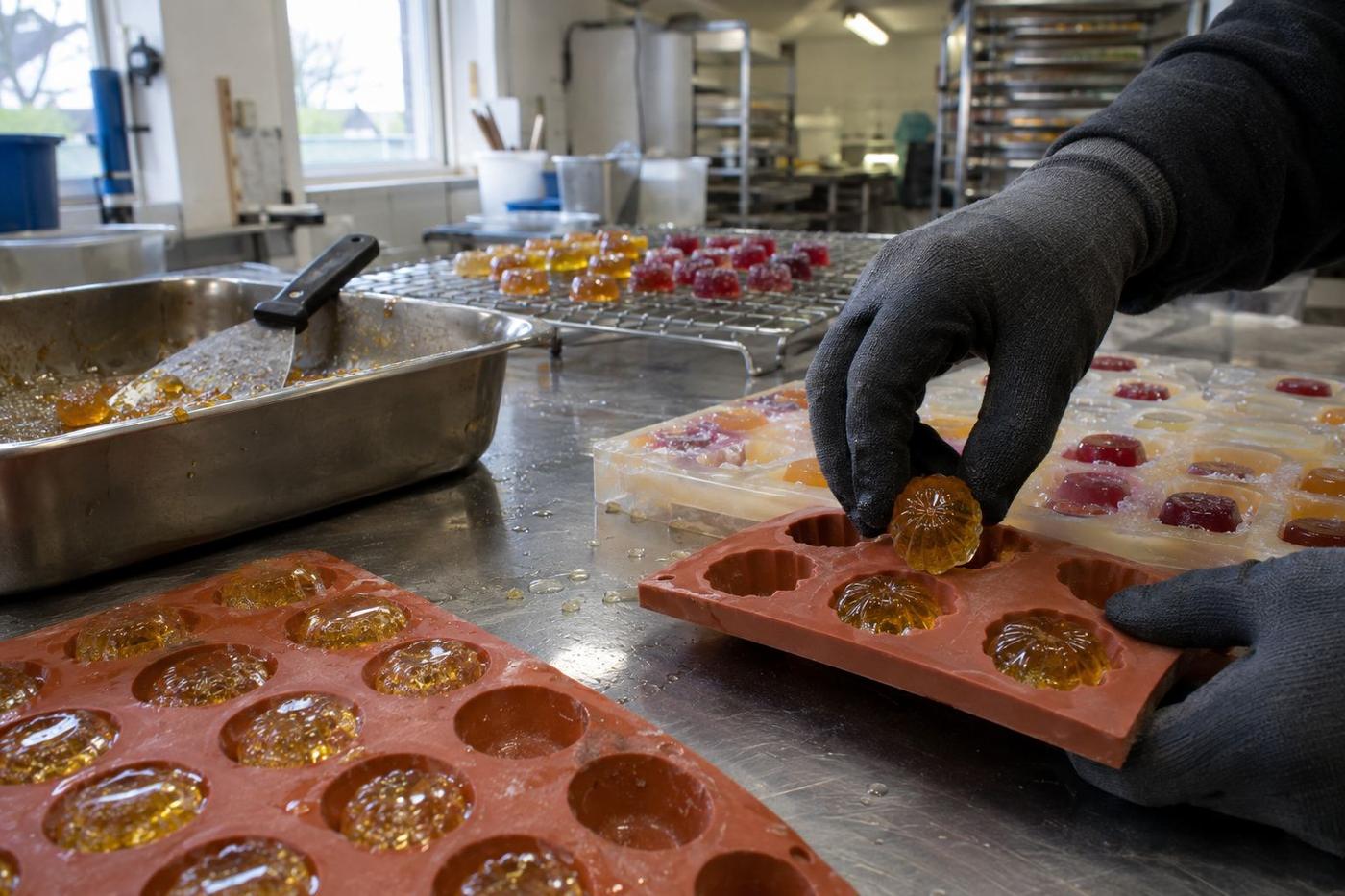
Confectionery is a heat game. Boiled sugar goes in at 130°C, sets to something you can drop, and the mould has to release without pulling detail off the sweet.
See service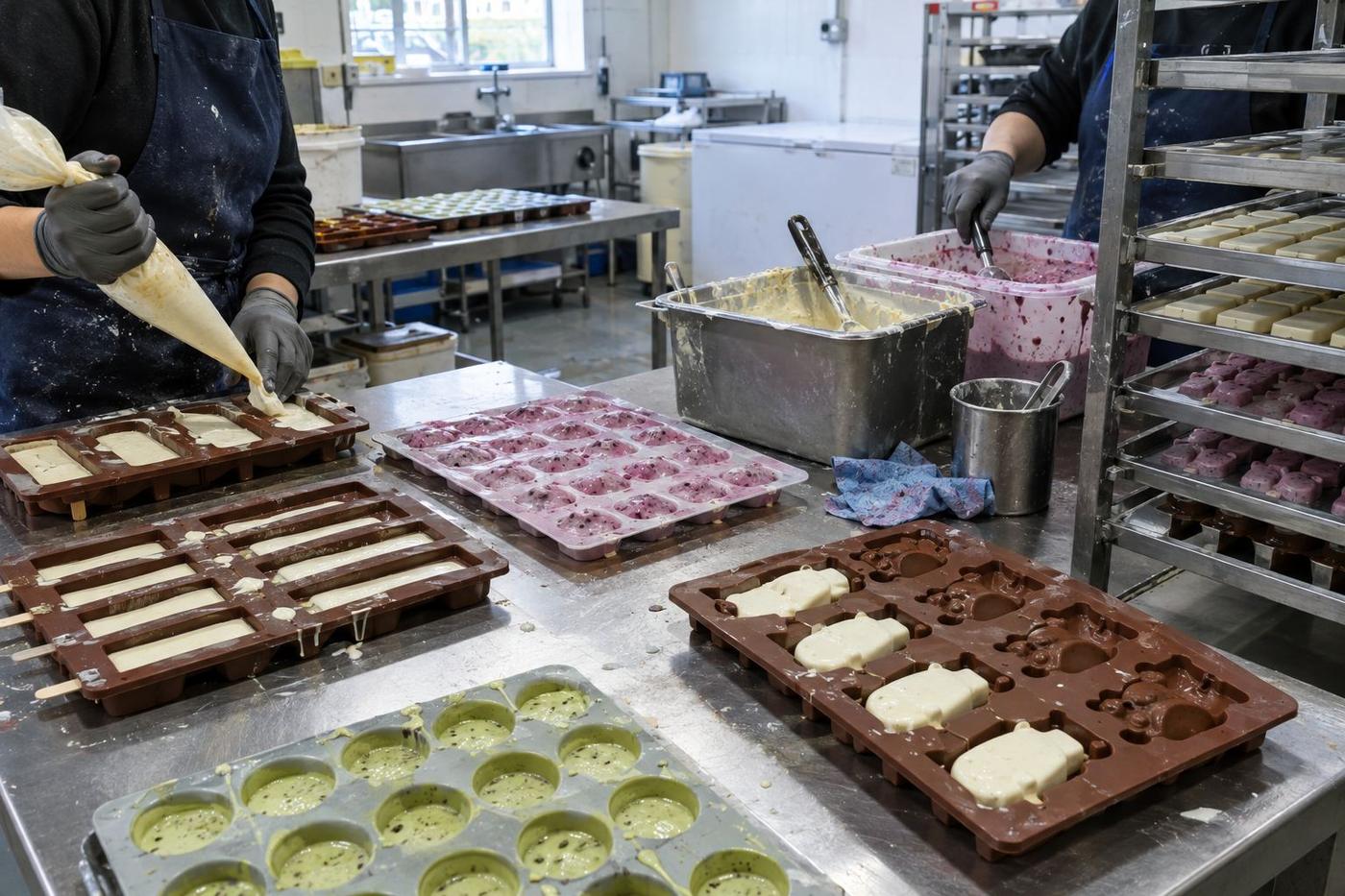
Gelato is denser, warmer-served and lower in air than ice-cream. That changes how it fills a cavity, how it hardens and how it lets go. The mould has to be designed for gelato, not borrowed from a lolly line.
See serviceSpecialist formats
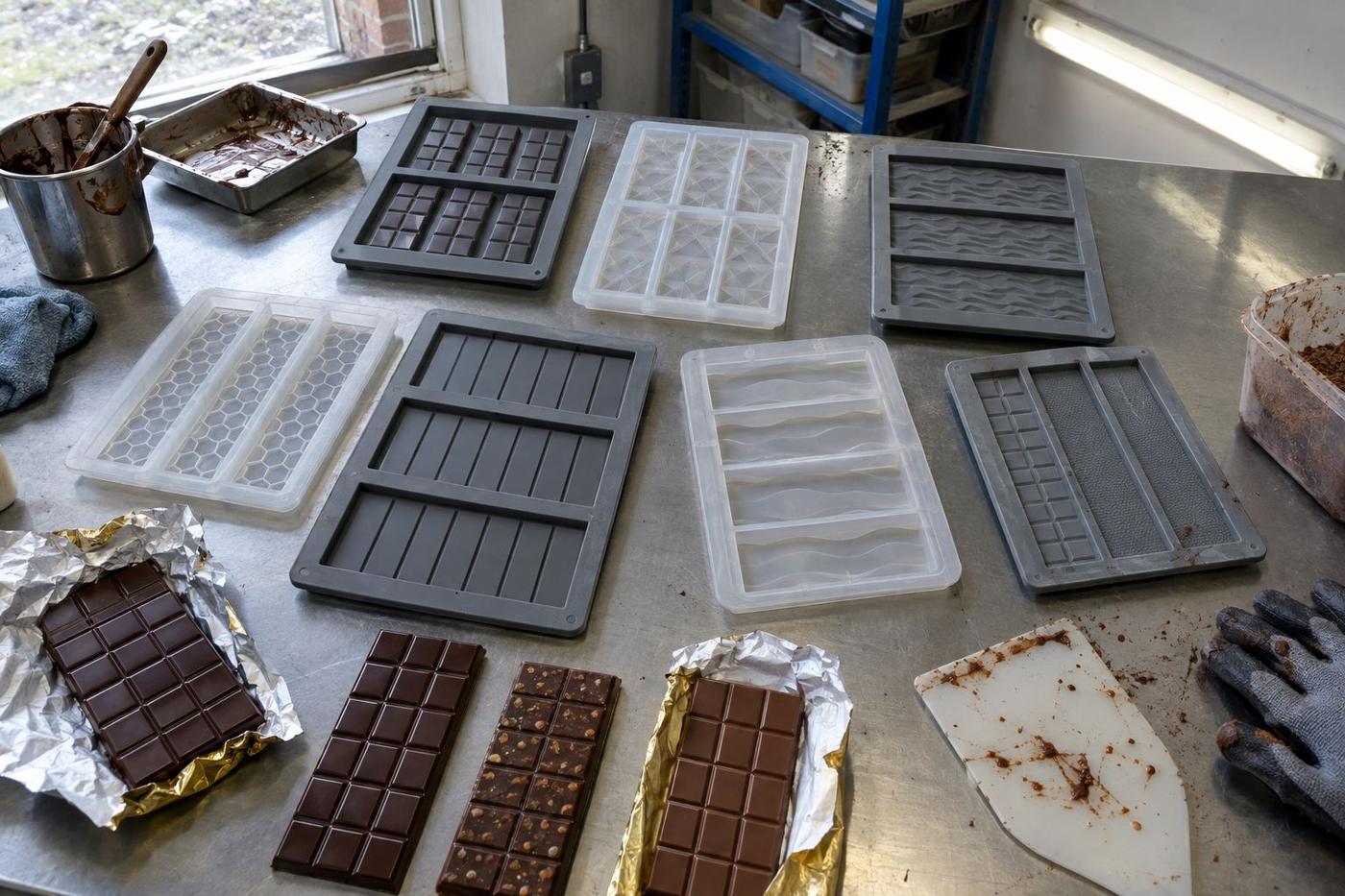
A bar is the most looked-at thing a chocolatier sells. The face, the snap lines, the edge and the back all come from the mould, so the mould deserves as much thought as the recipe.
See service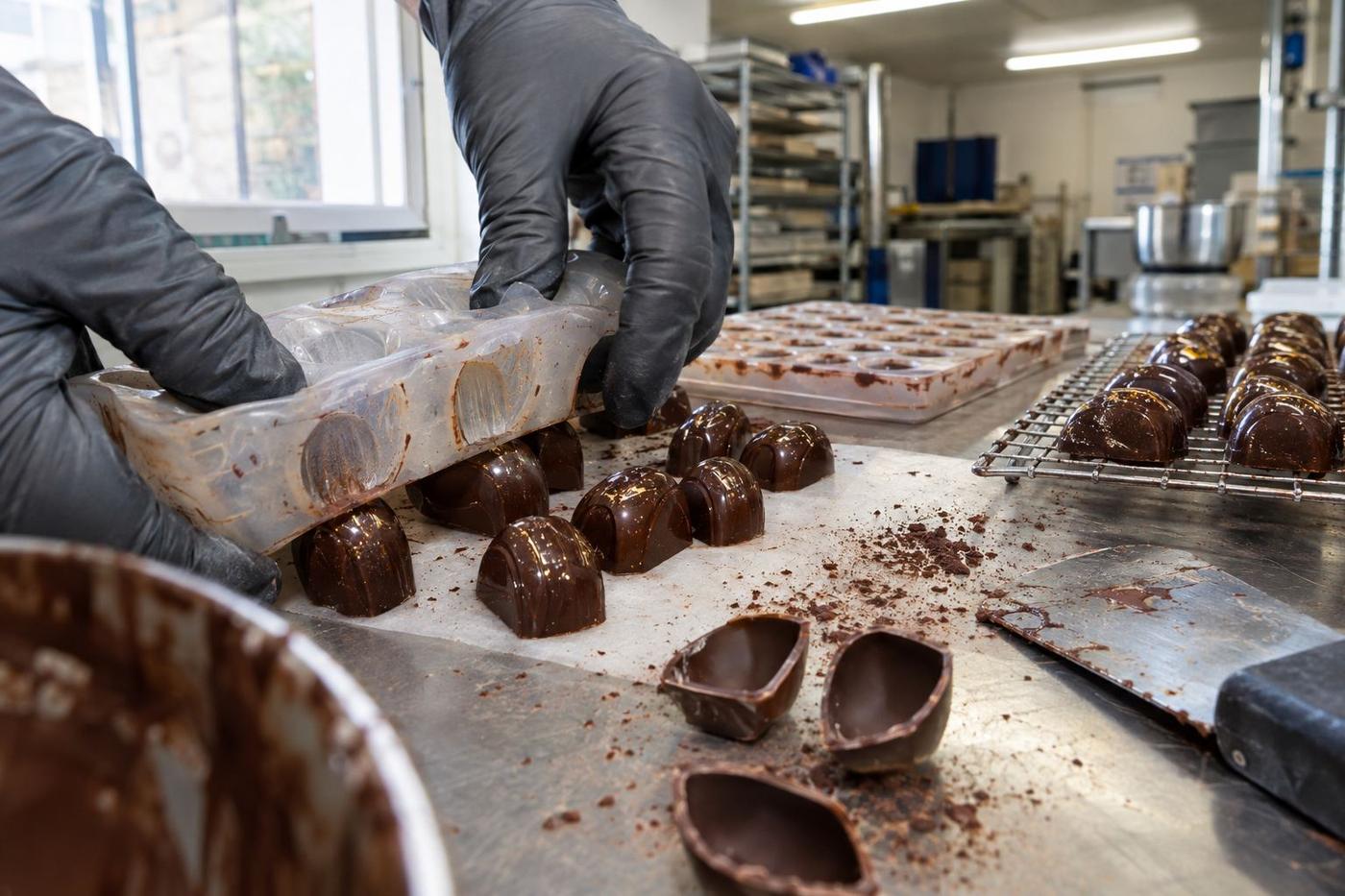
A praline is small, so every flaw is large. The shell has to be thin and even, the cap has to seal flat, and the detail has to read at the size of a thumbnail.
See service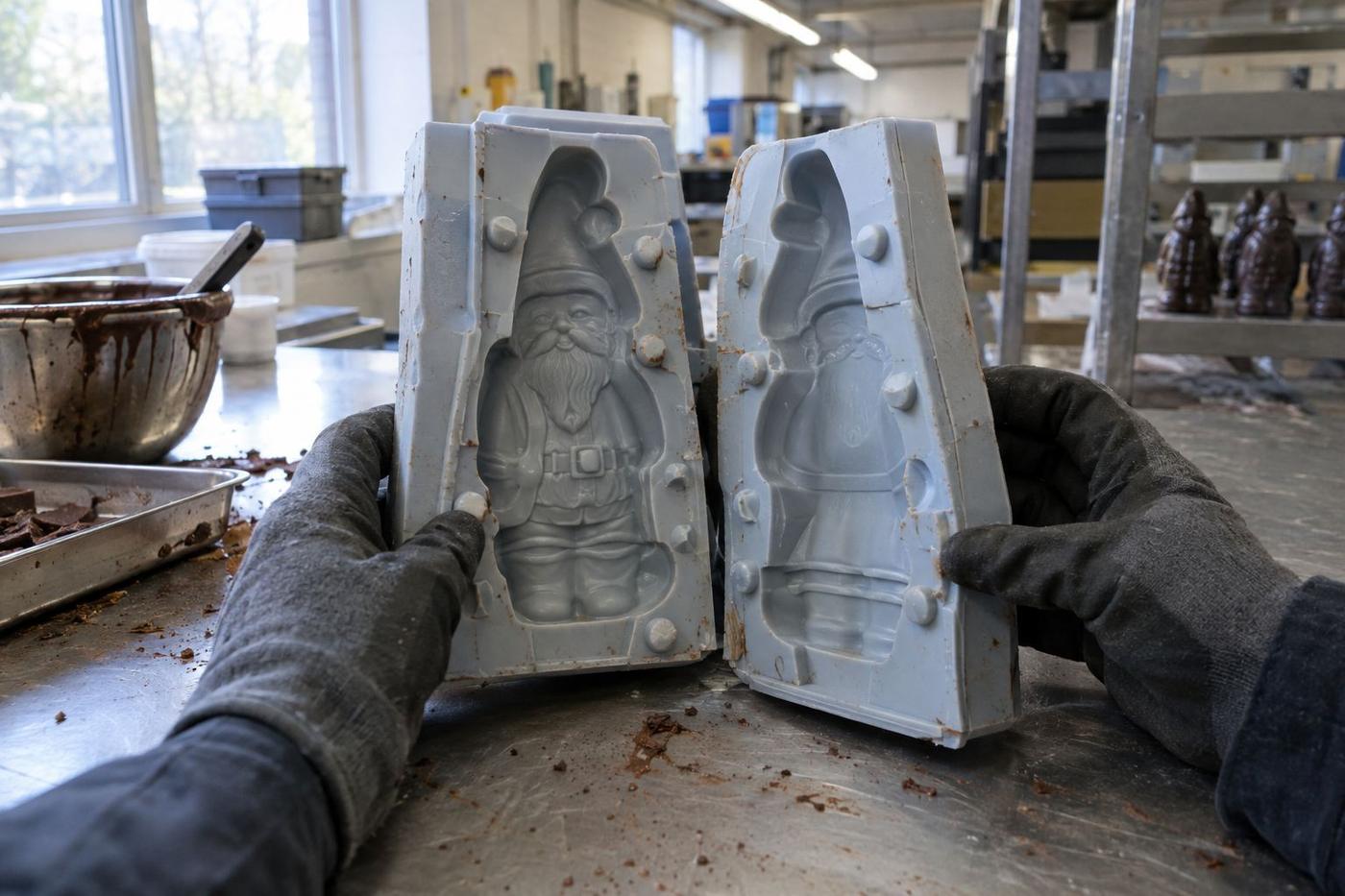
Eggs, bunnies, Father Christmas, a local landmark. Hollow work lives or dies on the seam, and the seam lives or dies on how the two halves register.
See service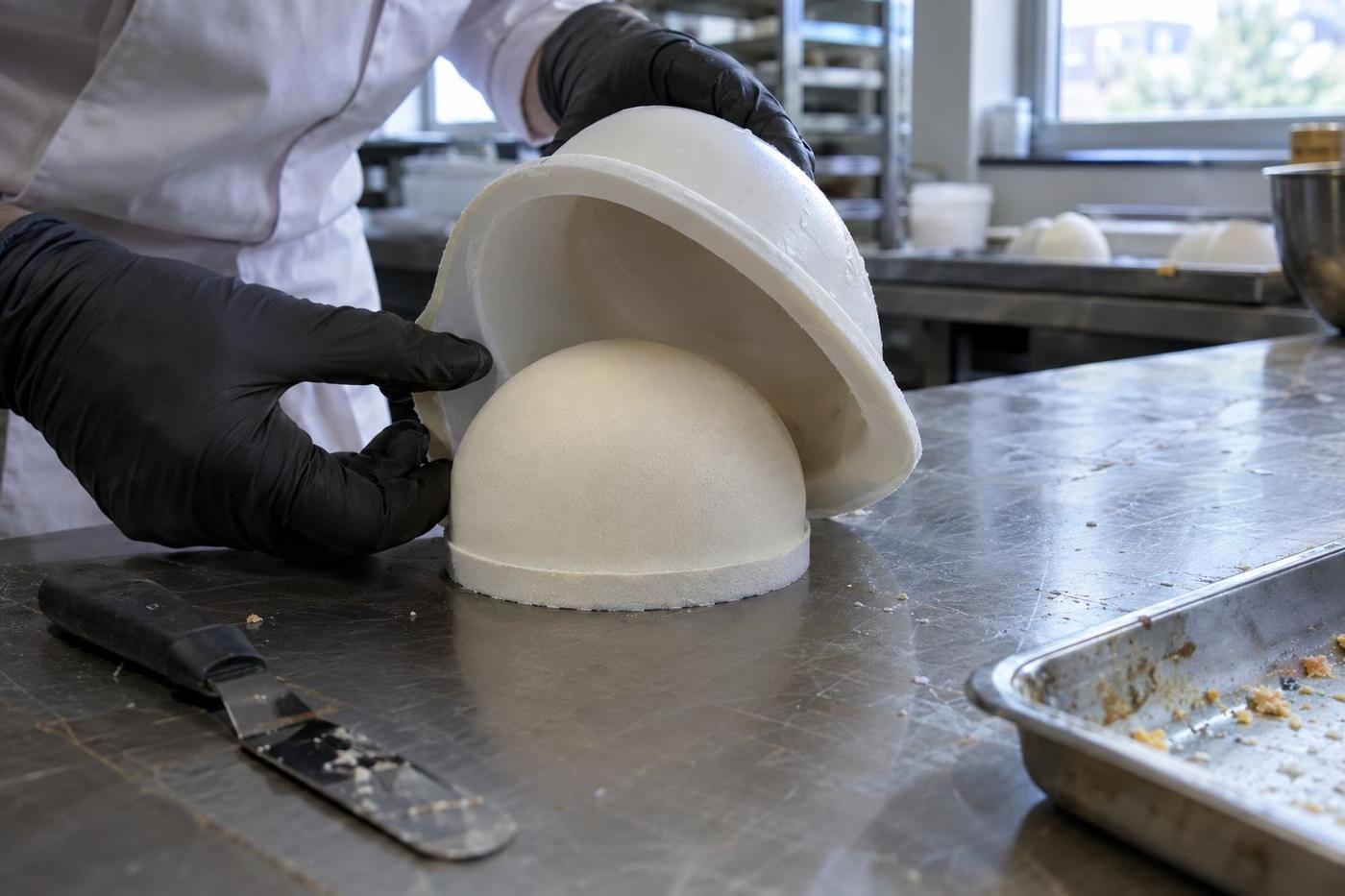
An entremet is judged the moment the mirror glaze goes on. Any dent, air mark or soft edge from the mould shows up under the shine.
See serviceBy capability and stage
Portion control is a mould problem. If every cavity holds the same volume, every dessert weighs the same and every tray hits the same… See service
A moulded logo on a chocolate bar or a jelly is a manufacturing detail, not just a graphic. The mould has to render it and the finished product has… See service
The economics of food production are cavity economics. Every extra cavity per tray is a pour saved and a demould saved. We design tooling with that… See service
A mould that's too stiff tears delicate work. Too soft, it distorts under the fill. Choosing the flex is a specification decision, not a… See service
A food-contact mould is only as good as the material spec behind it. We choose the grade around your product and your cleandown, then document it on… See service
Every silicone mould starts as a positive. That positive — the master pattern — decides how good the mould can… See service
If a catalogue mould covered every dish, chefs wouldn't need us. Bespoke cavity work is what we do most… See service
Not every food mould needs a steel tool. A hand-poured silicone mould is where scaling starts, and for many artisan producers, where it… See service
There's a point where a hand-poured tray stops making sense. That's the point we build you a production tool. We help you find that… See service
A worn tray is a shift-stopper. A matched replacement is a phone call, not a redesign — if the paperwork is still on… See service
Every format
Process, materials, quality
Hand-poured, cast, compression, injection. Read the processes
The grades we work with, in plain English. Read the materials
What we check and what we send with every mould. See quality
At a glance
Where food-grade silicone is used
Swipe to see the whole diagram
Ready?
The first conversation is quick: what the mould has to hold, how you demould it, how you clean it.
Real people, a real workshop
No call centre and no middlemen. When you contact TCI Culinary, you speak to the team who design, build and check your mould.



 Thomas LaneManaging Director
 George PrestonDesign & Project Manager
 Kelly BallingerHead of Partnerships
 Jim AndertonProduction Manager
 TheodoreEmployee Welfare