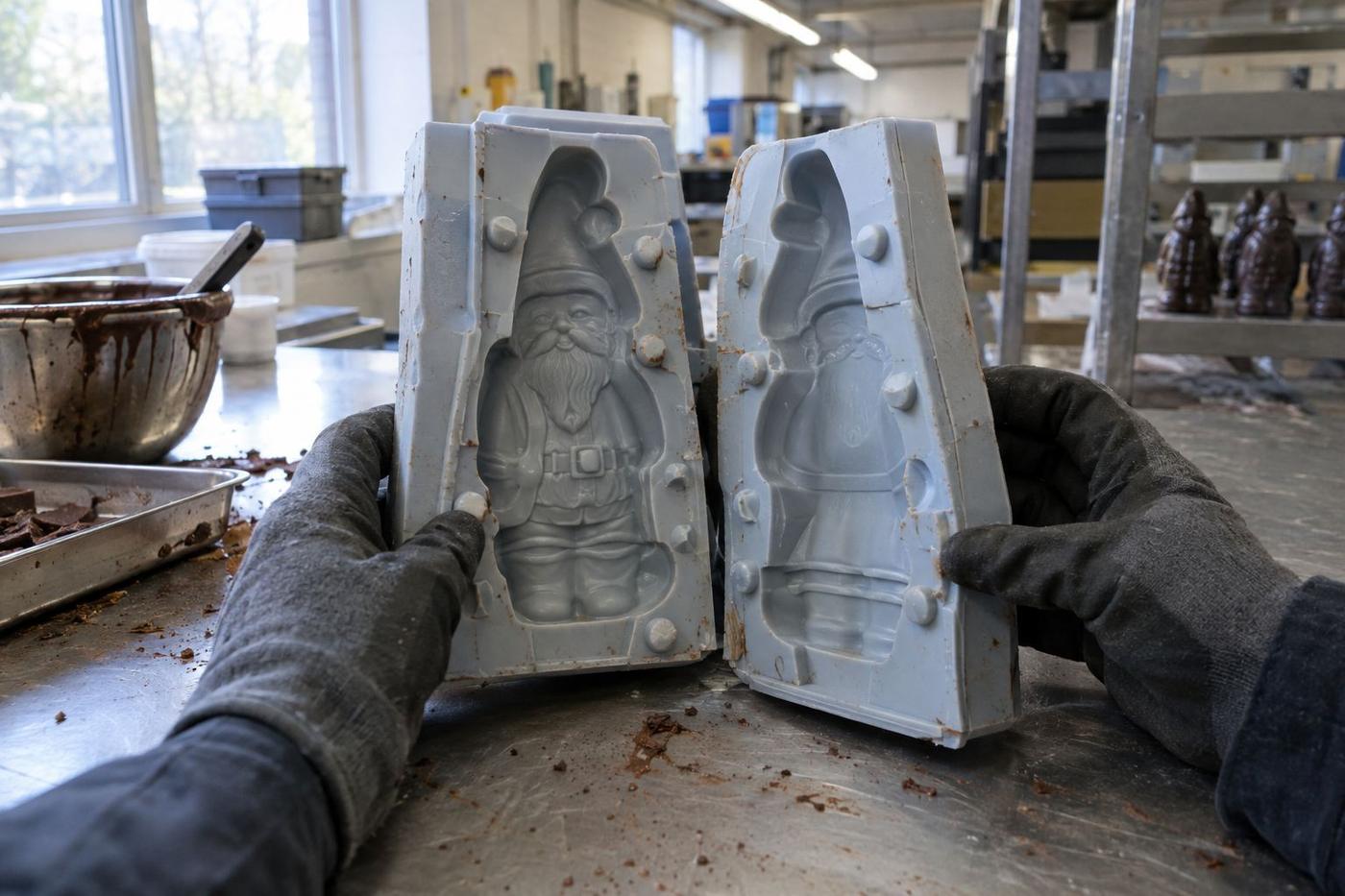
Your closing method
Clips, bands, magnets or hands. We design registration around it.
Service · hollow figures
Eggs, bunnies, Father Christmas, a local landmark. Hollow work lives or dies on the seam, and the seam lives or dies on how the two halves register.
Overview
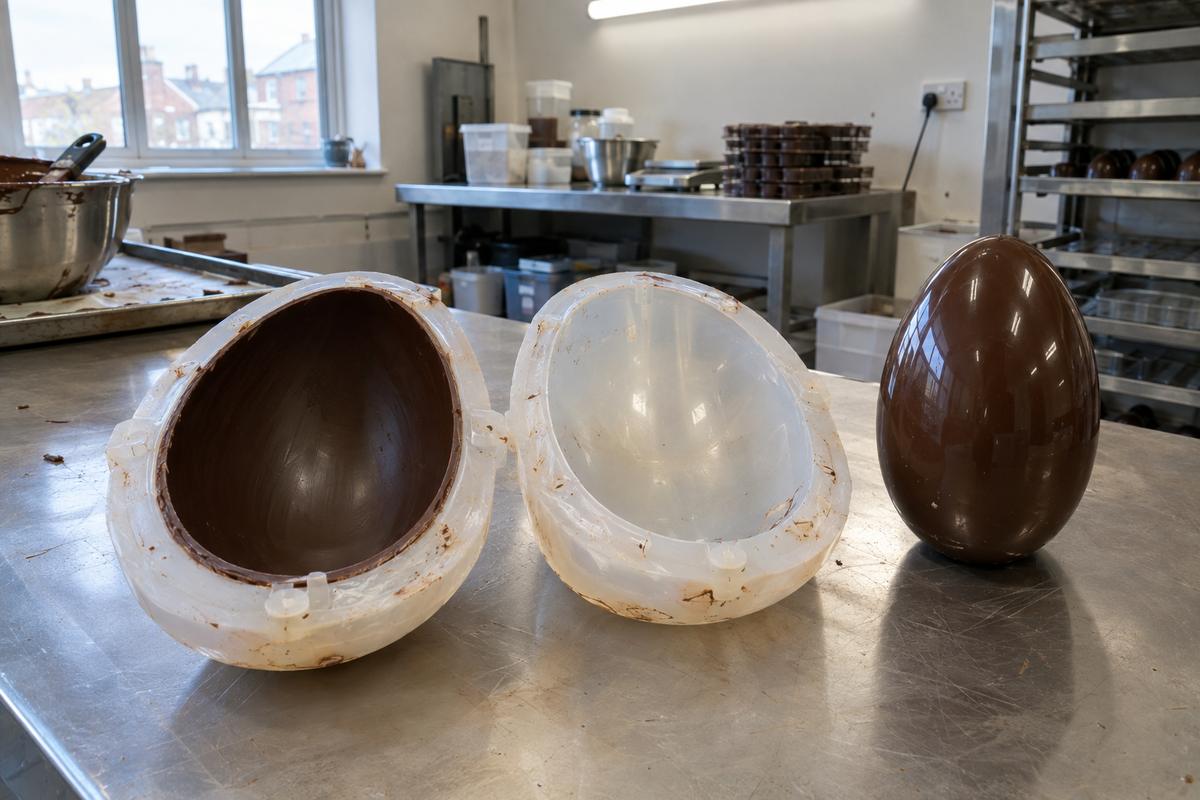
A hollow figure is poured, closed, turned and chilled. Every one of those steps pulls on the two halves of the mould. If the registration is loose, the seam shows. If the walls are too soft, the figure goes out of shape.
We build two-part and multi-part silicone moulds for hollow chocolate, isomalt and sugar work. Registration keys, seam placement and wall stiffness are all designed around how your team actually closes and turns the tool.
What we make
Matched halves with keyed registration so the tool only closes one way.
We put the parting line along a natural edge of the figure so it disappears on the finished piece.
Moulds stiff enough to hold shape while your team turns them to spread the shell.
High-temperature food-contact silicone for poured sugar and isomalt display work.
A family of figures sharing one closing method, so a new shape does not need new habits on the bench.
How it gets made
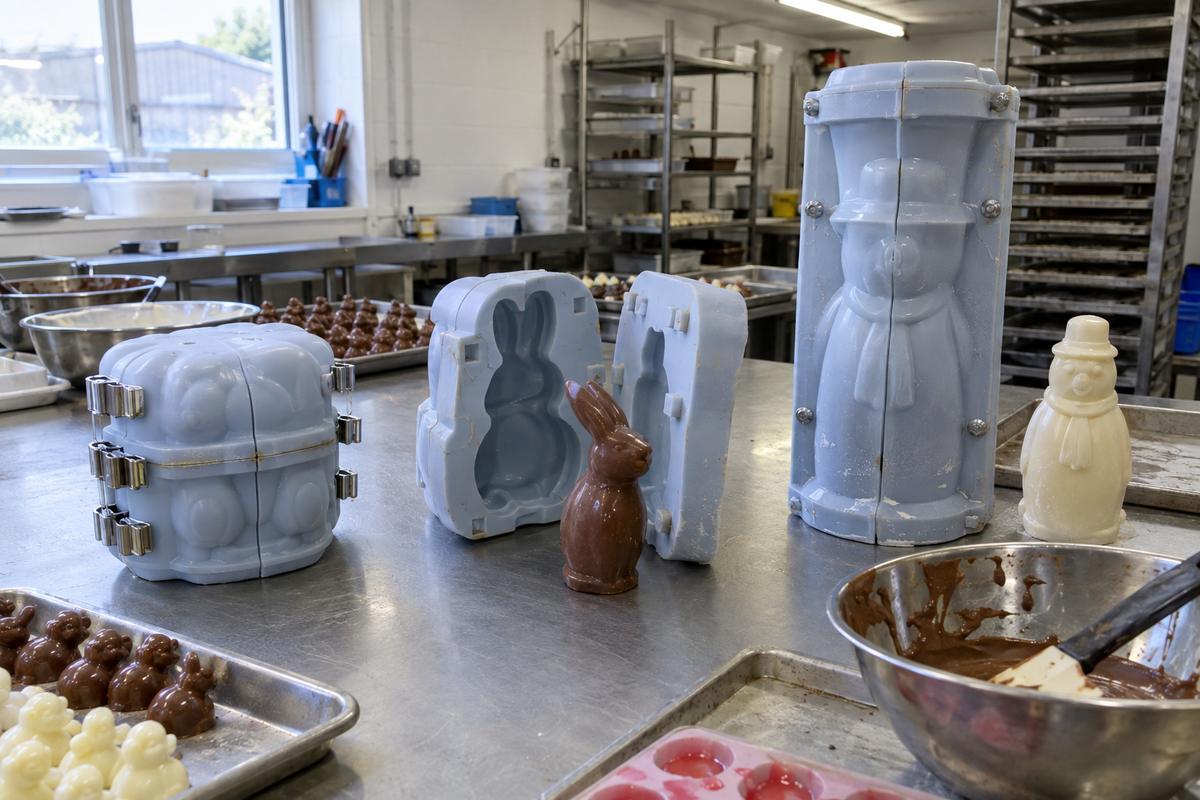
Every hollow figure mould starts as a drawing we agree with you. We make a master, pour a single proof cavity in PFAS-free platinum-cure food-grade silicone and let you test it with your own recipe.
Once you are happy, we pour or press the full tray, record the grade against your order and keep the drawing on file for reorders.
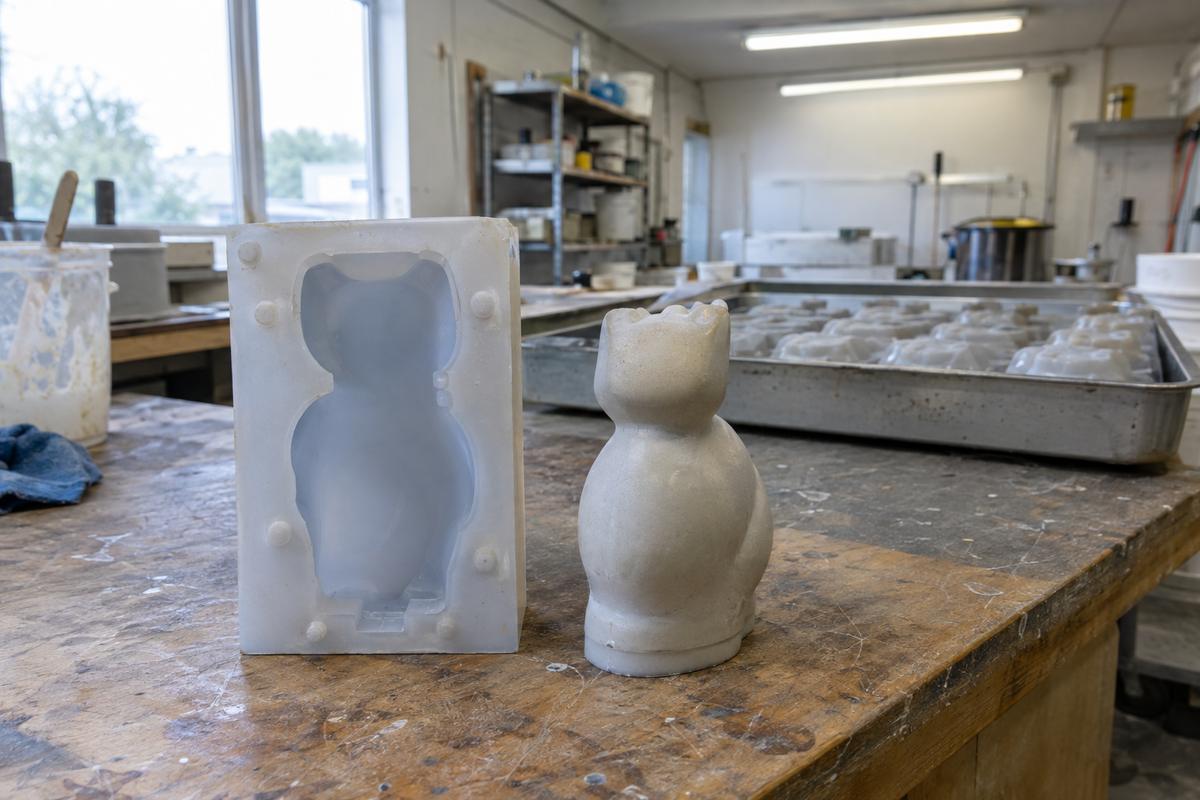
What we ask up front
Clips, bands, magnets or hands. We design registration around it.
By hand, on a spinner or by slush-and-drain. It changes wall stiffness.
Show us which side is the face. We keep the seam away from it.
Chocolate, isomalt or pulled sugar. Hot sugar needs a high-temperature grade.
Typical work
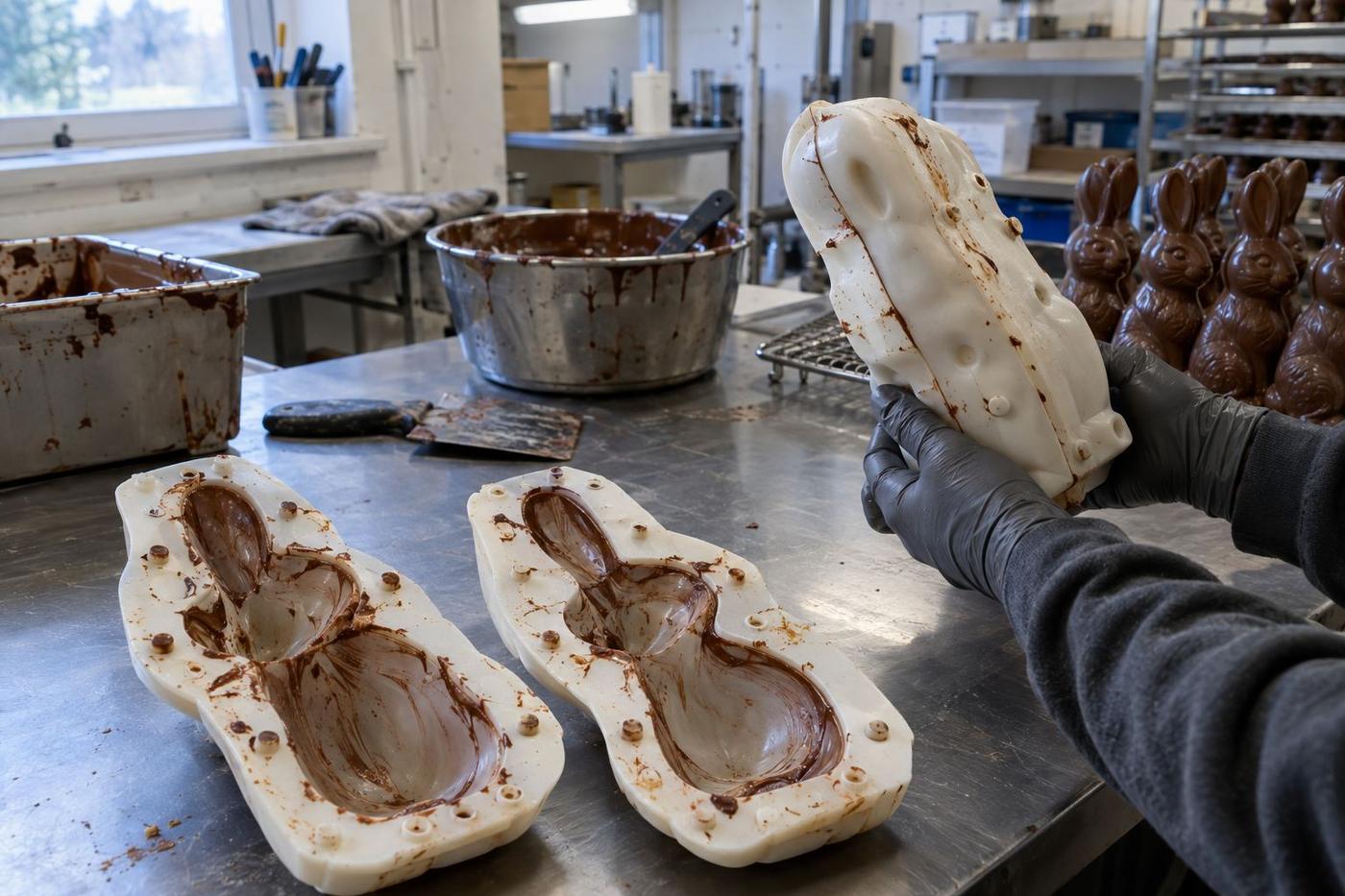
Asymmetric registration keys and a seam hidden in the fur texture.
See project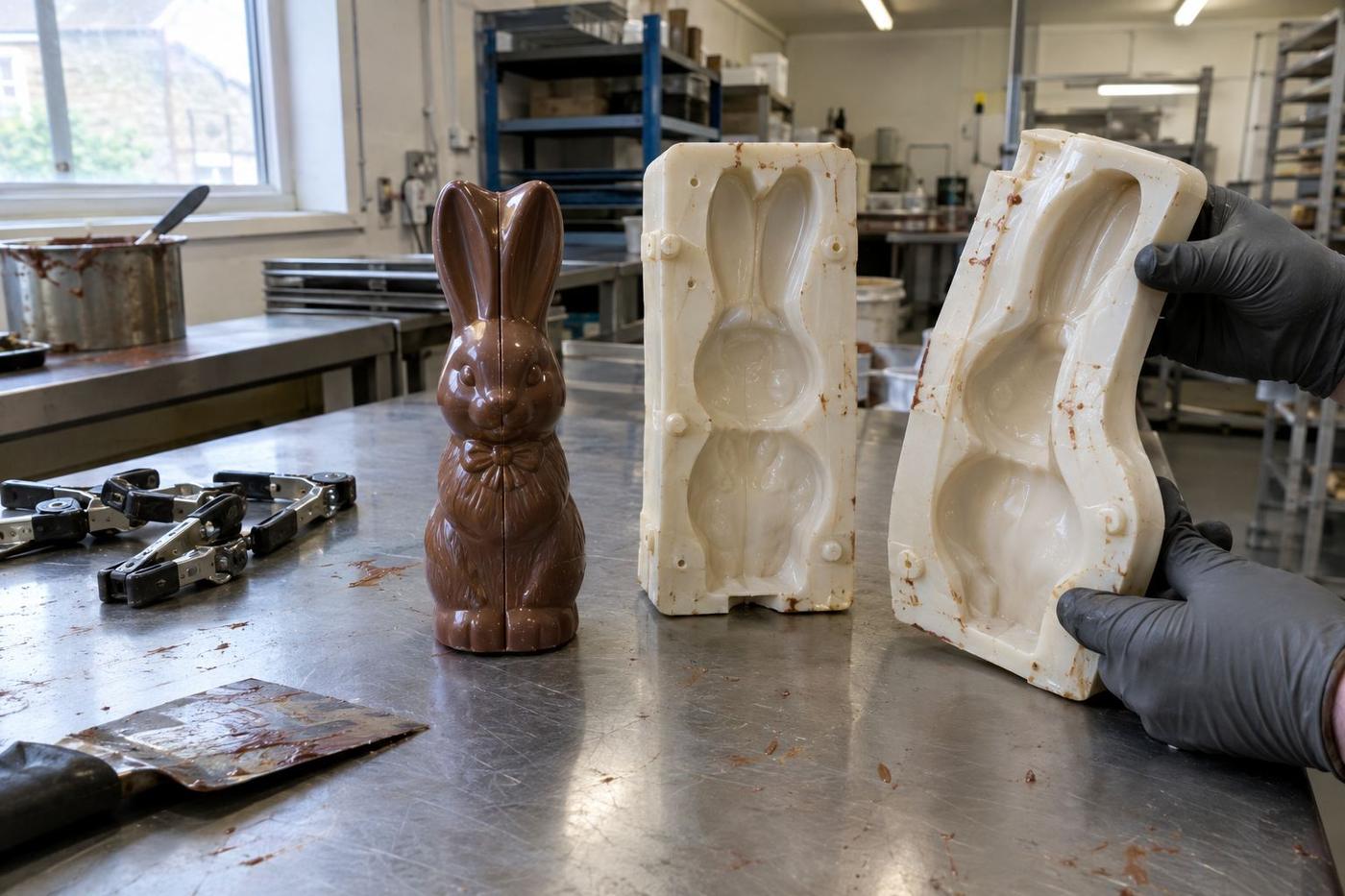
Our drill-down page on seasonal chocolate figures specifically.
See service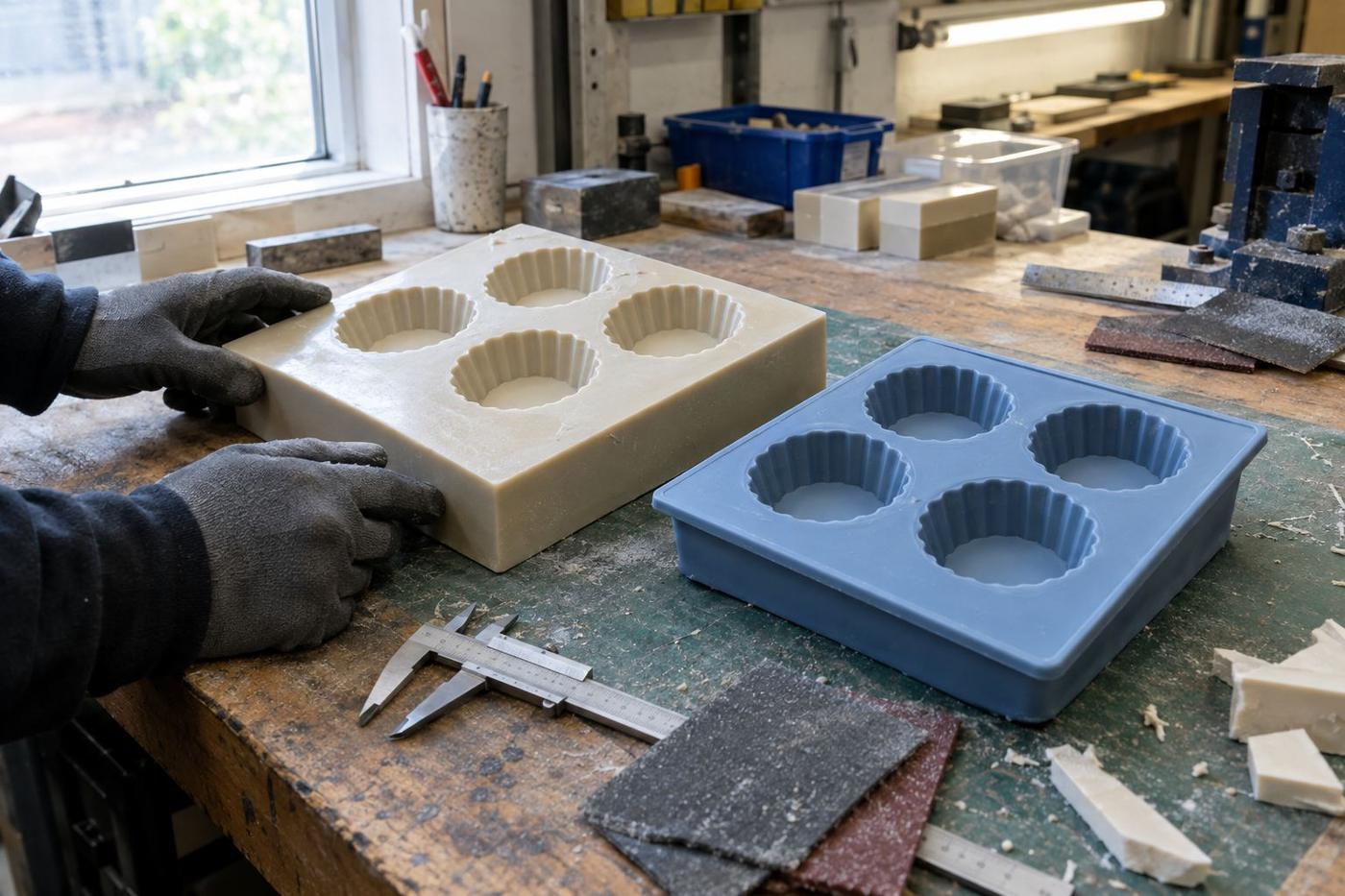
Every hollow mould starts with a well-finished master. Here is how we make them.
See serviceAt a glance
Solid pieces and shelled pieces
Swipe to see the whole diagram
Questions
Not if the parting line sits on a natural edge and the halves register tightly. We place it at drawing stage.
Yes. Tell us which and we design the flange and keys to suit.
Yes, in a high-temperature food-contact grade. Tell us your pour temperature.
Yes. We can scale the master and keep the same closing method across both.
Ready?
Send a photo, a sketch or a sample. We'll come back with a route and a quote.
Real people, a real workshop
No call centre and no middlemen. When you contact TCI Culinary, you speak to the team who design, build and check your mould.



 Thomas LaneManaging Director
 George PrestonDesign & Project Manager
 Kelly BallingerHead of Partnerships
 Jim AndertonProduction Manager
 TheodoreEmployee Welfare