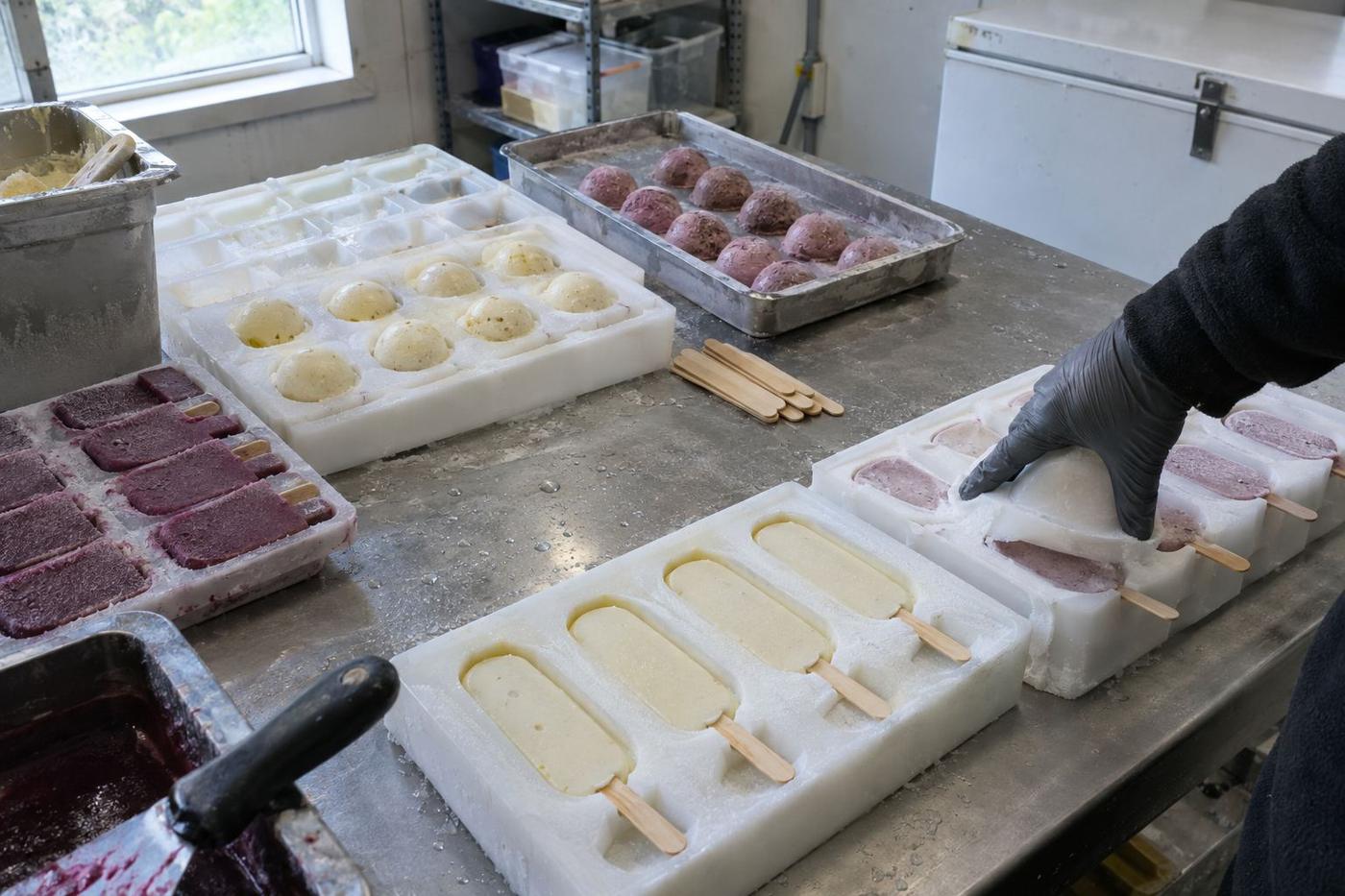
The freeze method
Blast, brine tunnel, or hardening room. Each one drives a different wall-thickness and hardness spec.
Service · frozen
Frozen product wants a mould that holds its geometry down to -25°C and pops without a fracture. It also wants a stick or a wrap that lands right every time.
Overview
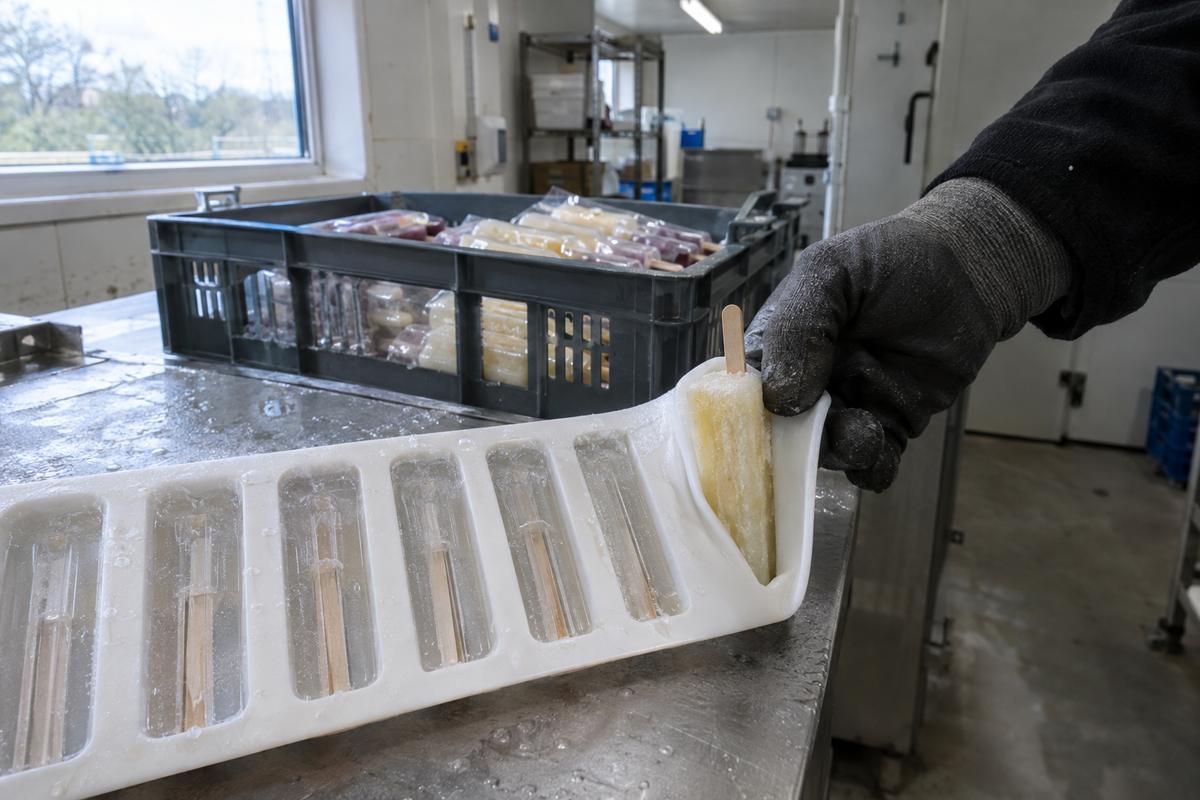
Ice-cream, gelato and lolly production is a repeat-cycle job. Fill, freeze, extract, wrap. If any of those steps snags on the tooling, the whole shift slows down.
We build silicone moulds for stick lollies, ice-cream sandwich formats, gelato bar tooling, sorbet cavities, and branded shapes for seasonal launches. Grade is food-contact silicone, sized to the freezer or brine tank you already run.
What we make
Cavity moulds with a defined stick channel so the wooden or plastic stick lands central every fill.
Slab moulds for cutting or portioning between two biscuits, with edge profiles that keep the crumb clean.
Bar-format silicone for stick or hand-held gelato, sized to your dipping tank or wrap machine.
Deeper cavities for filled sorbets or centres, worked out around your freezer cycle.
One-off cavity work for a seasonal launch — a flag, a landmark, a mascot. Prototyped and signed off before production.
How it gets made
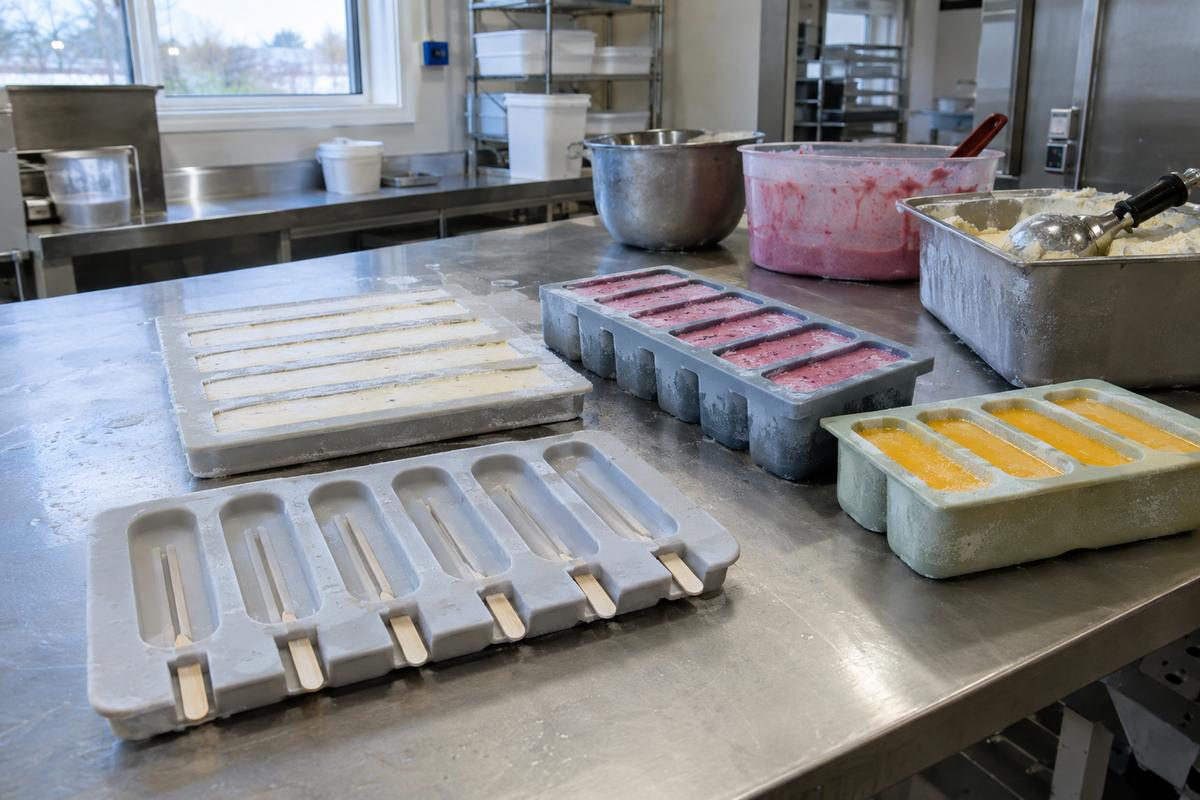
Every ice-cream mould starts as a drawing we agree with you. We make a master, pour a single proof cavity in PFAS-free platinum-cure food-grade silicone and let you test it with your own recipe.
Once you are happy, we pour or press the full tray, record the grade against your order and keep the drawing on file for reorders.
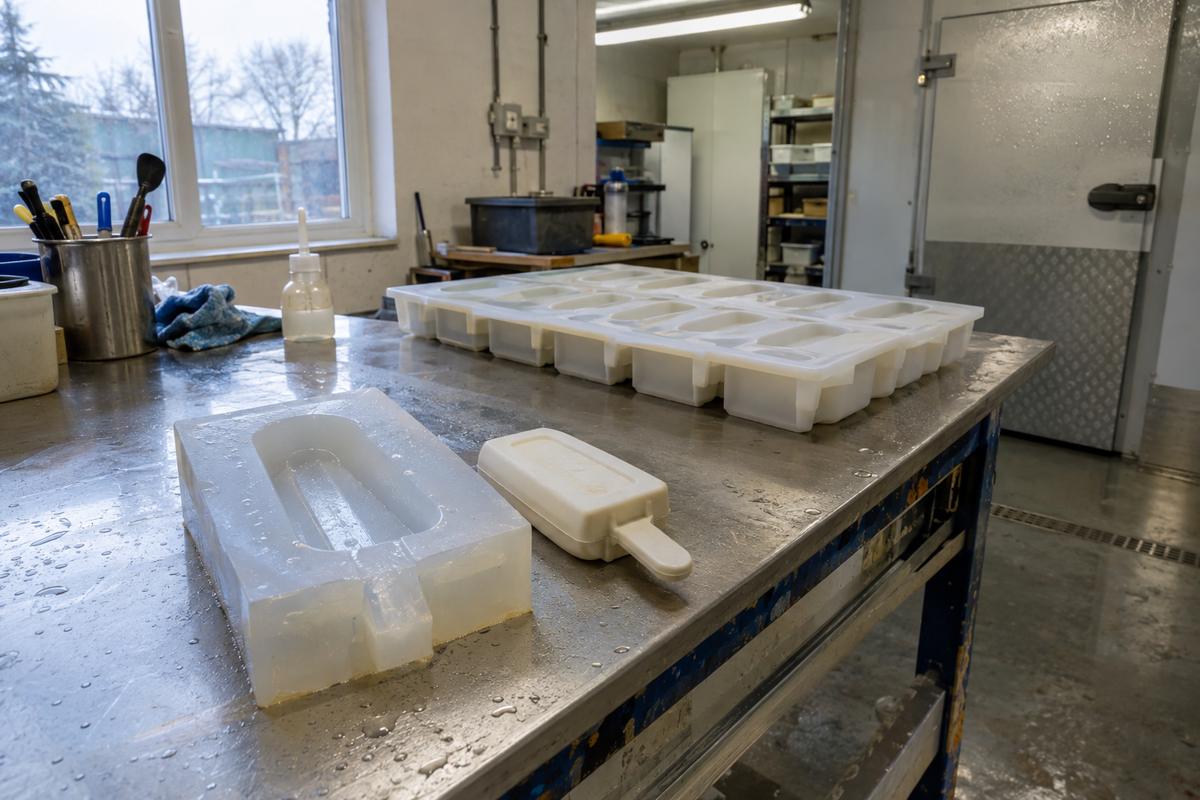
What we ask up front
Blast, brine tunnel, or hardening room. Each one drives a different wall-thickness and hardness spec.
Warm water dip, air knife, or invert-and-tap. Silicone hardness is set around how the extraction actually happens on your line.
If it is a stick lolly, we detail the stick channel so a single-stroke insertion is reliable. We also handle centre-fill designs.
Wrapper, foil, biscuit. If the lolly needs a specific edge profile to sit clean in packaging, we build to that.
Typical work
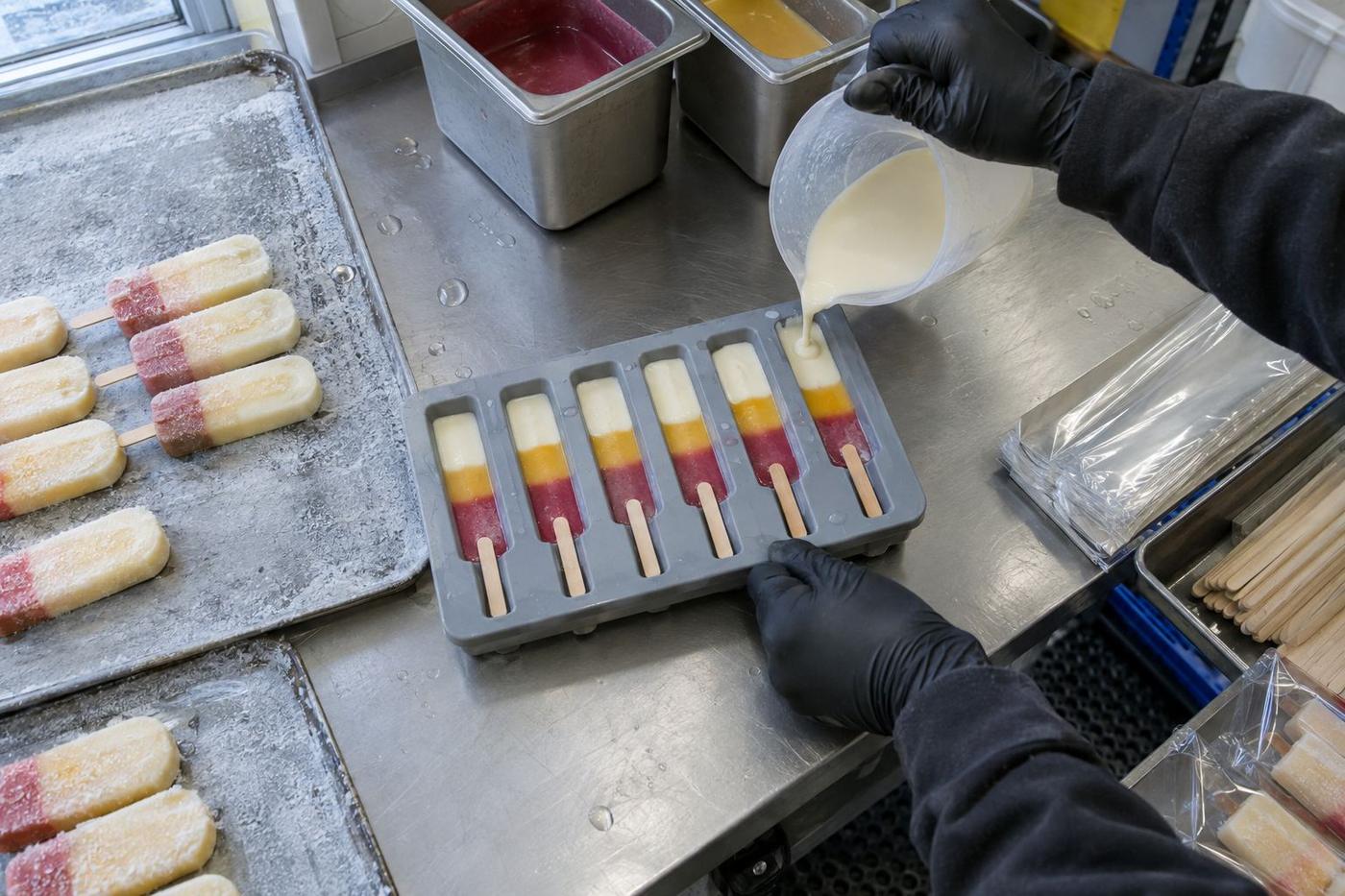
A three-colour Union Jack lolly mould with a defined stick channel, prototyped from a chef sketch.
See project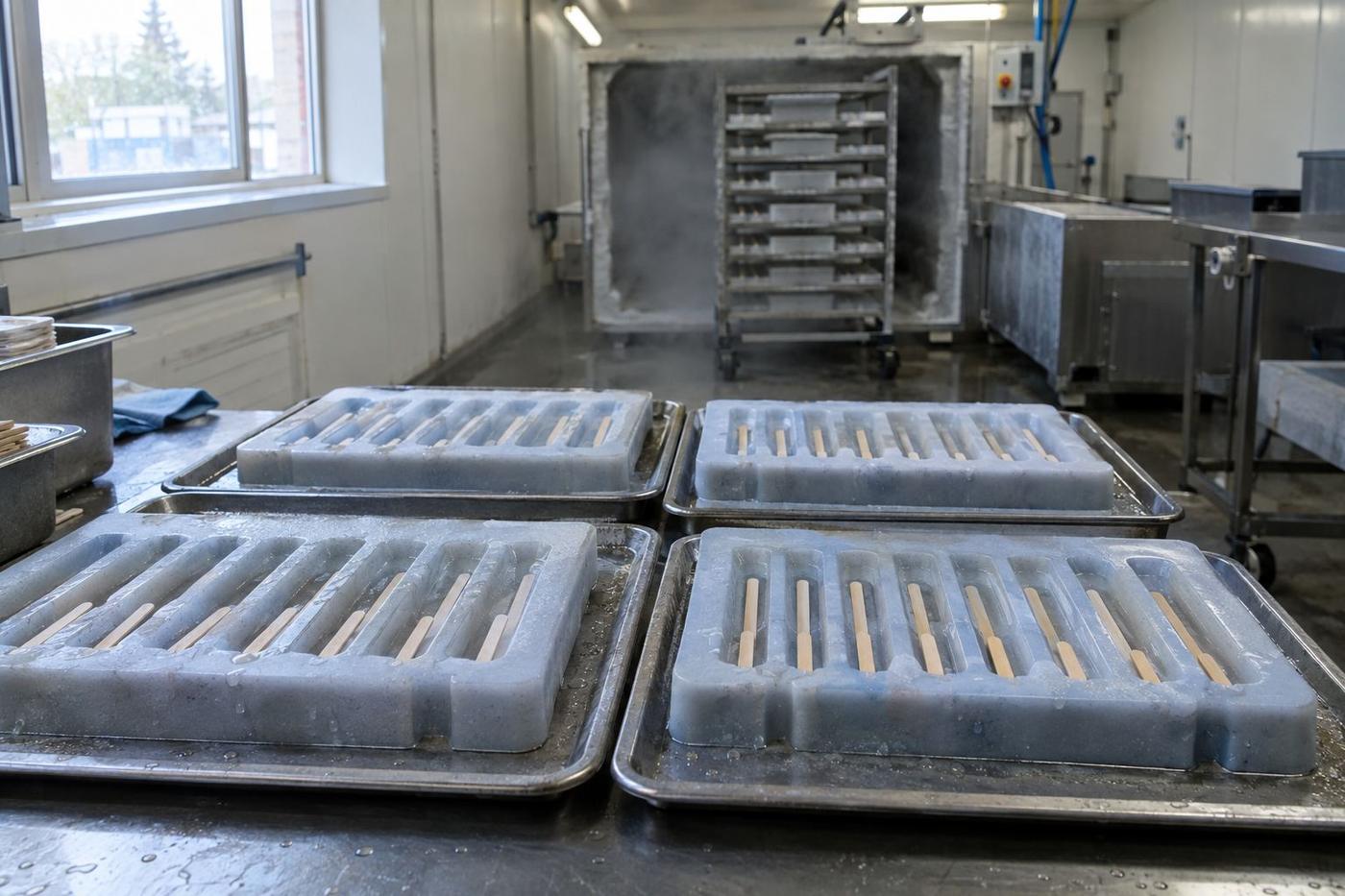
A production-run tooling set for a gelato maker's stick-bar line.
See projectA limited-run cavity mould for a filled sorbet dessert, chilled through a blast cycle.
See projectAt a glance
Where food-grade silicone is used
Swipe to see the whole diagram
Questions
Yes — we spec brine-tolerant food-contact silicones for tunnel-freeze producers. Tell us your brine chemistry at enquiry.
Silicone stays flexible at freezer temperature. A brief warm-water dip on the outside of the mould breaks the ice contact and lets the lolly slide out.
Yes. We build the mould with the fill sequence in mind — where each layer sits, how the boundaries stay clean between fills, and how the finished lolly reads.
No, we build the mould around the stick you buy. Send us a sample and we detail the channel to it.
Ready?
Send a photo, a sketch or a sample. We'll come back with a route and a quote.
Real people, a real workshop
No call centre and no middlemen. When you contact TCI Culinary, you speak to the team who design, build and check your mould.



 Thomas LaneManaging Director
 George PrestonDesign & Project Manager
 Kelly BallingerHead of Partnerships
 Jim AndertonProduction Manager
 TheodoreEmployee Welfare