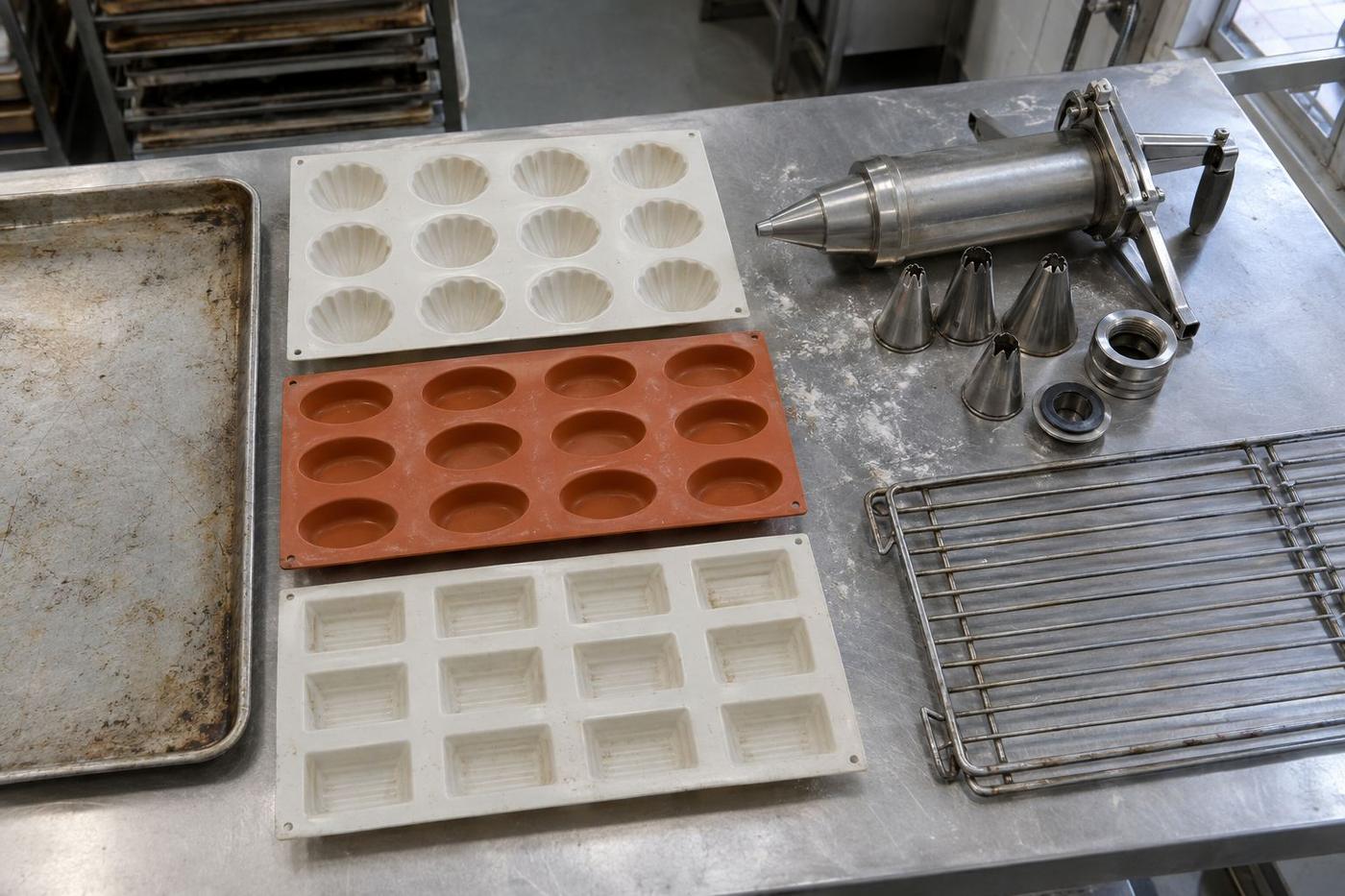
The oven cycle
Peak temperature, dwell time, how many cycles per day. We spec hardness and wall thickness around the actual duty cycle, not the peak.
Service · bakery
A bakery mould is oven equipment. It has to survive a bake cycle, release without a tear, and drop into the tray you already have. That is the brief.
Overview
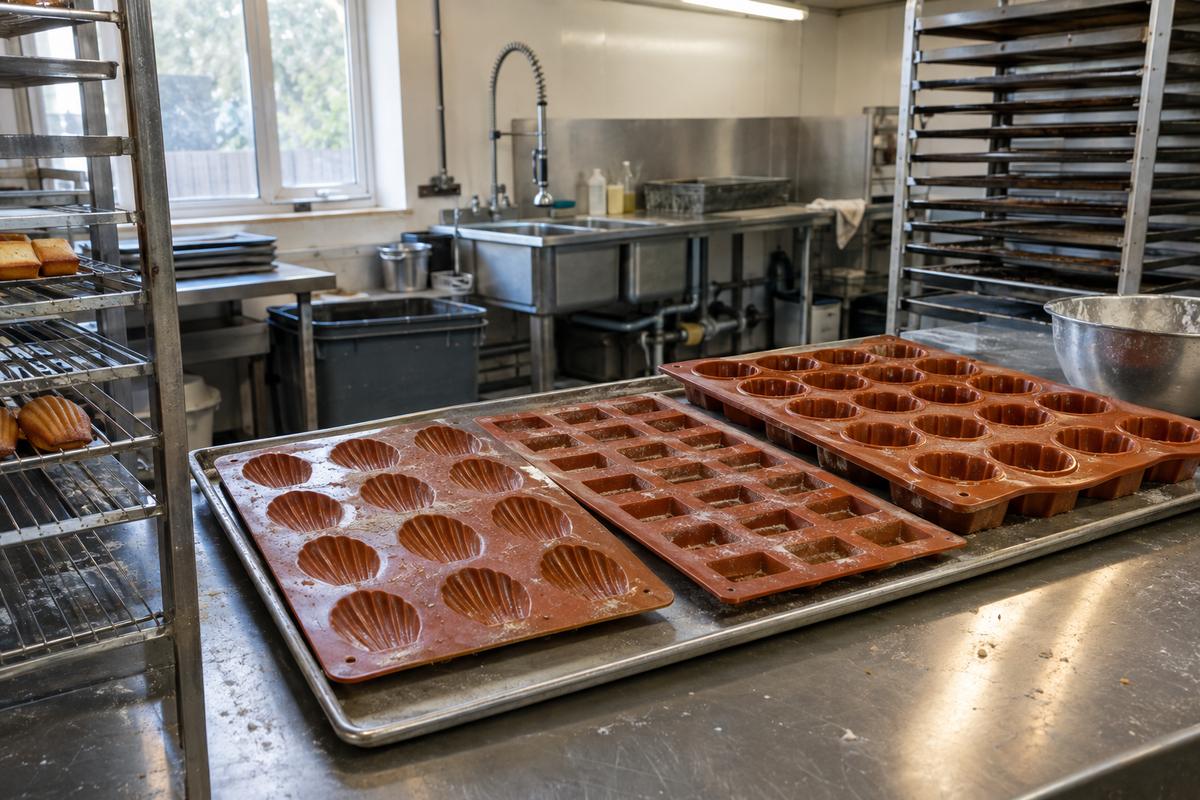
Bakery moulds live a hard life. Batter goes in warm, comes out at 180°C, and the tray gets washed at the end of every shift. A silicone mould that survives that duty cycle was designed for it — not adapted after the fact.
We build silicone bakery moulds for artisan bakeries, patisseries producing at bakery volume, retail cake lines, and specialist producers of tea-cakes, financiers, brioche, and cake formats that need a repeatable form.
What we make
Portion cakes with a clean top edge and reliable release, sized to your depositor plate and tray.
Loaf-format silicone in one piece or in a tray, with walls thick enough to hold shape at oven temperature.
Fine-form trays with the shell relief that reads through the crust.
Fluted cavities and defined tops for enriched doughs that need to hold their form through proof and bake.
Regional formats — Chorley cakes, Eccles cakes, Welsh cakes, teacakes — with the top-edge profile that lands on the shelf right.
The tray drops in without adjustment. Send us your plate dimensions and we design around them.
How it gets made
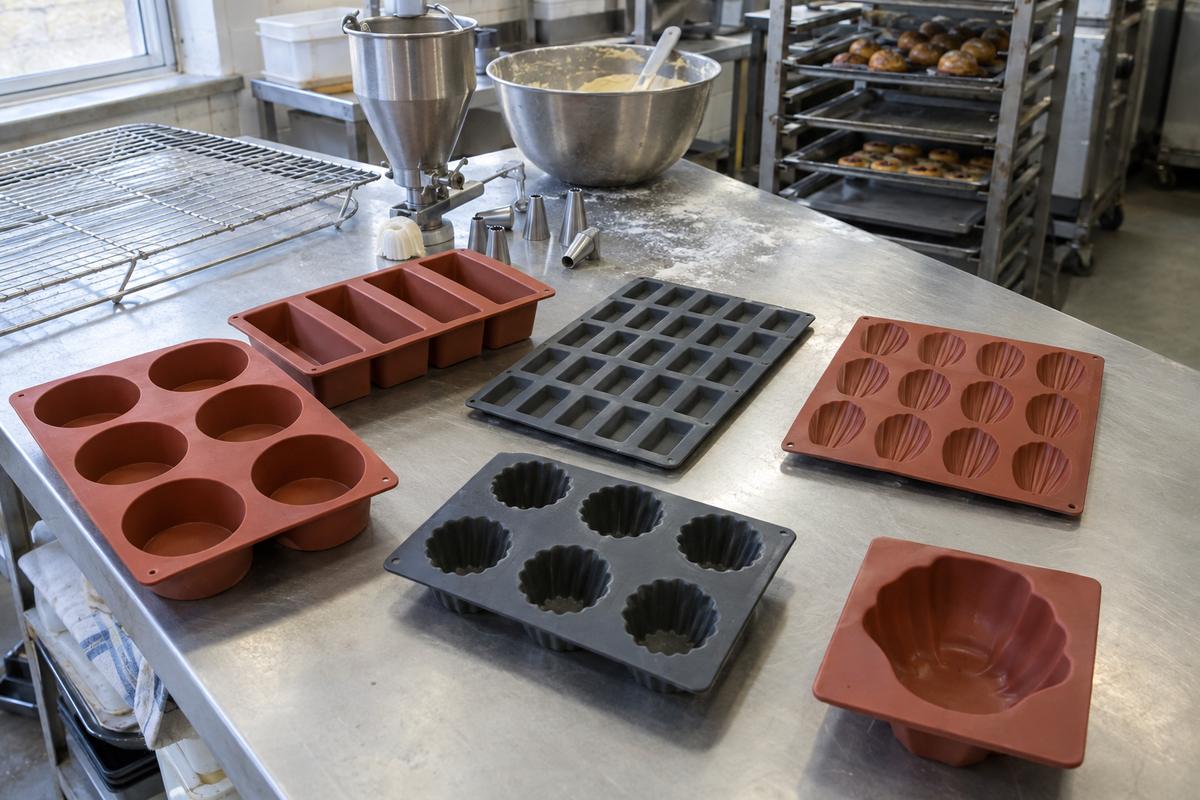
Every bakery mould starts as a drawing we agree with you. We make a master, pour a single proof cavity in PFAS-free platinum-cure food-grade silicone and let you test it with your own recipe.
Once you are happy, we pour or press the full tray, record the grade against your order and keep the drawing on file for reorders.
What we ask up front
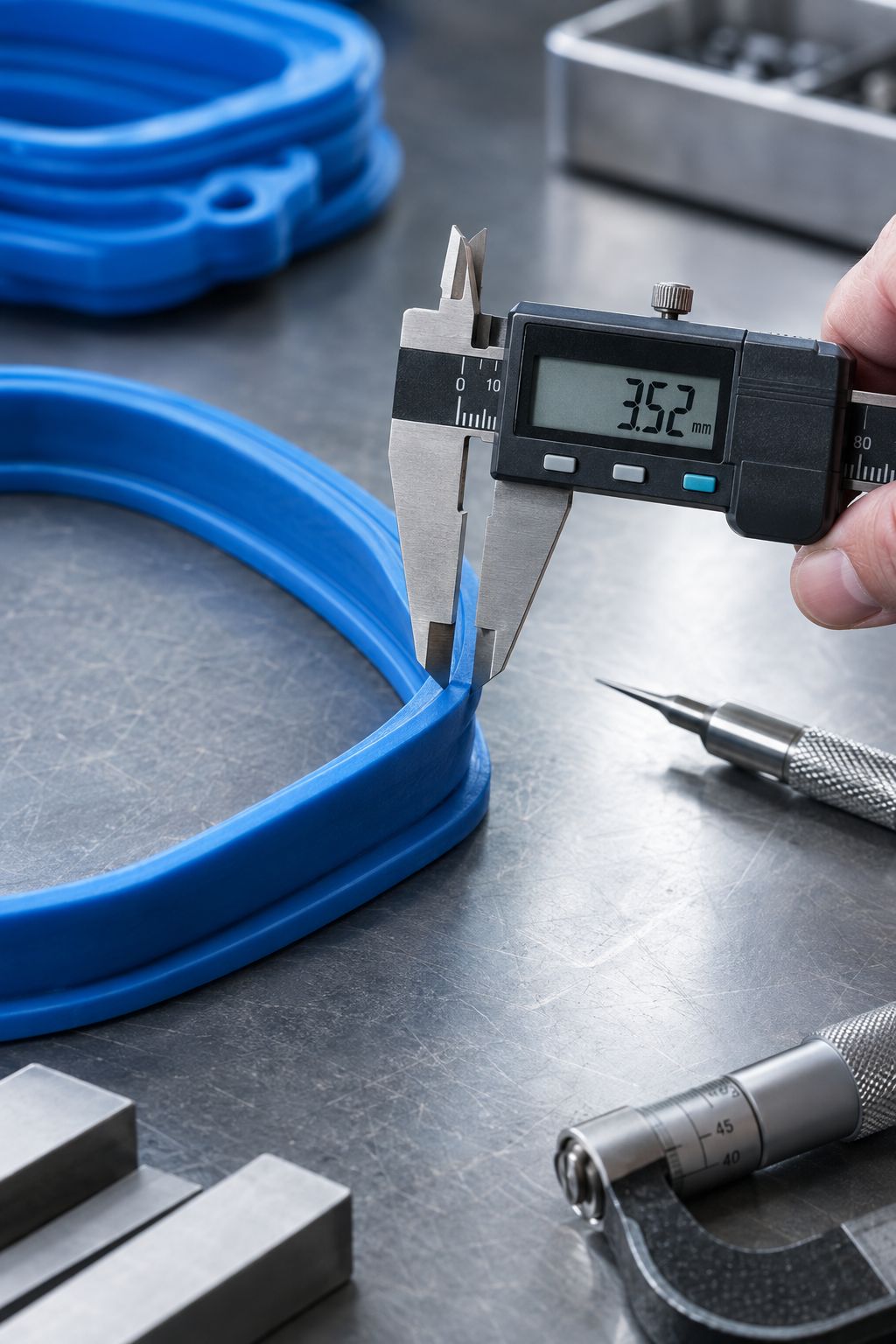
Peak temperature, dwell time, how many cycles per day. We spec hardness and wall thickness around the actual duty cycle, not the peak.
Hand-wash, dishwasher, tunnel, or caustic line. Cleaning attacks silicone harder than baking does. Grade sits around wash, not oven.
Send plate dimensions, or a photo of the tray you already run. We'll fit the new mould in without your team adjusting anything.
Rack pins, a solid tray, or a perforated bake tray. That affects the underside profile.
Typical work
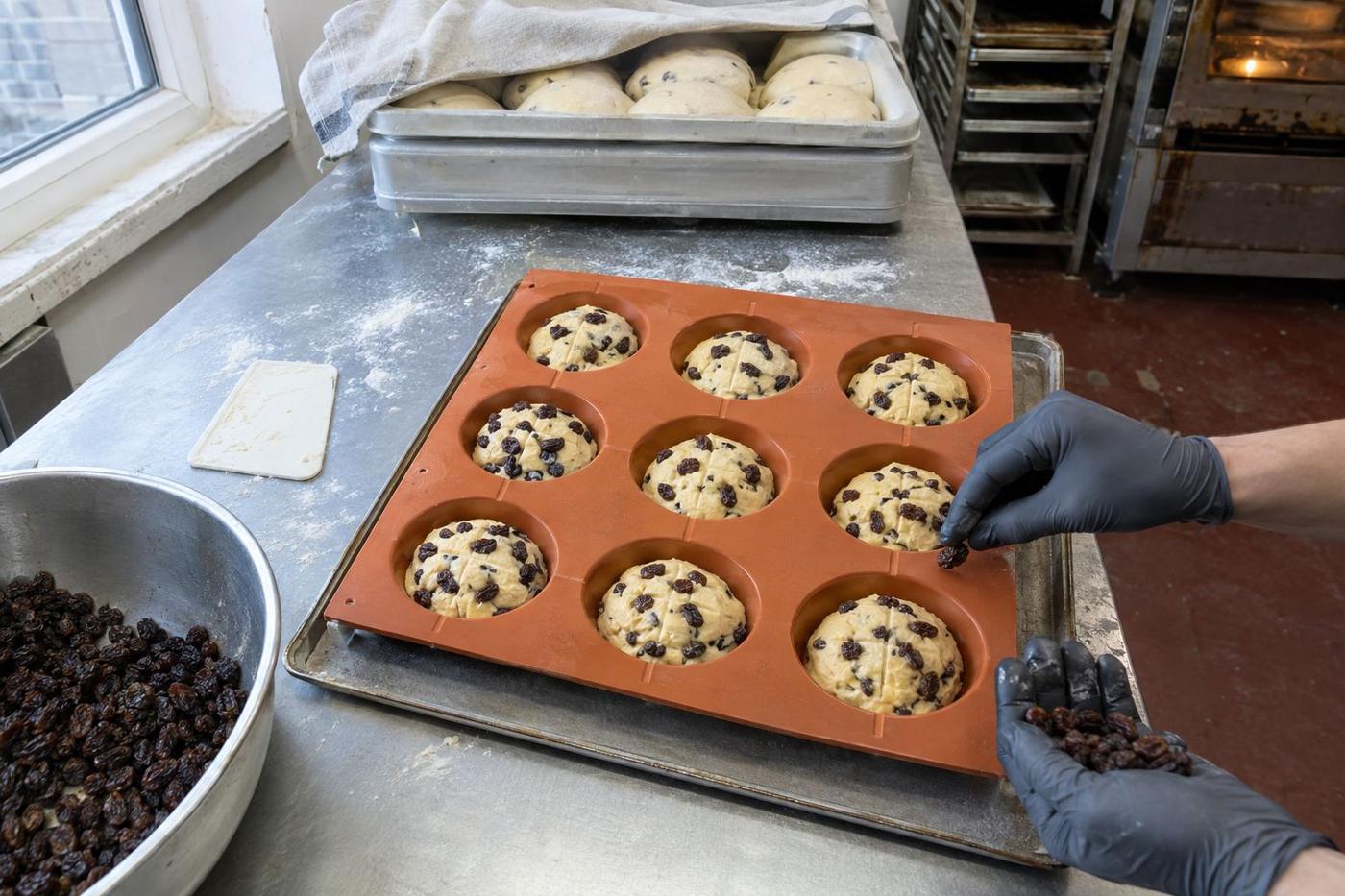
A tea-cake tray sized to the bakery's existing rack, with a scored top surface that helps the raisin studding sit even.
See projectA fluted-cavity brioche tray, drop-in for a standard depositor plate.
See project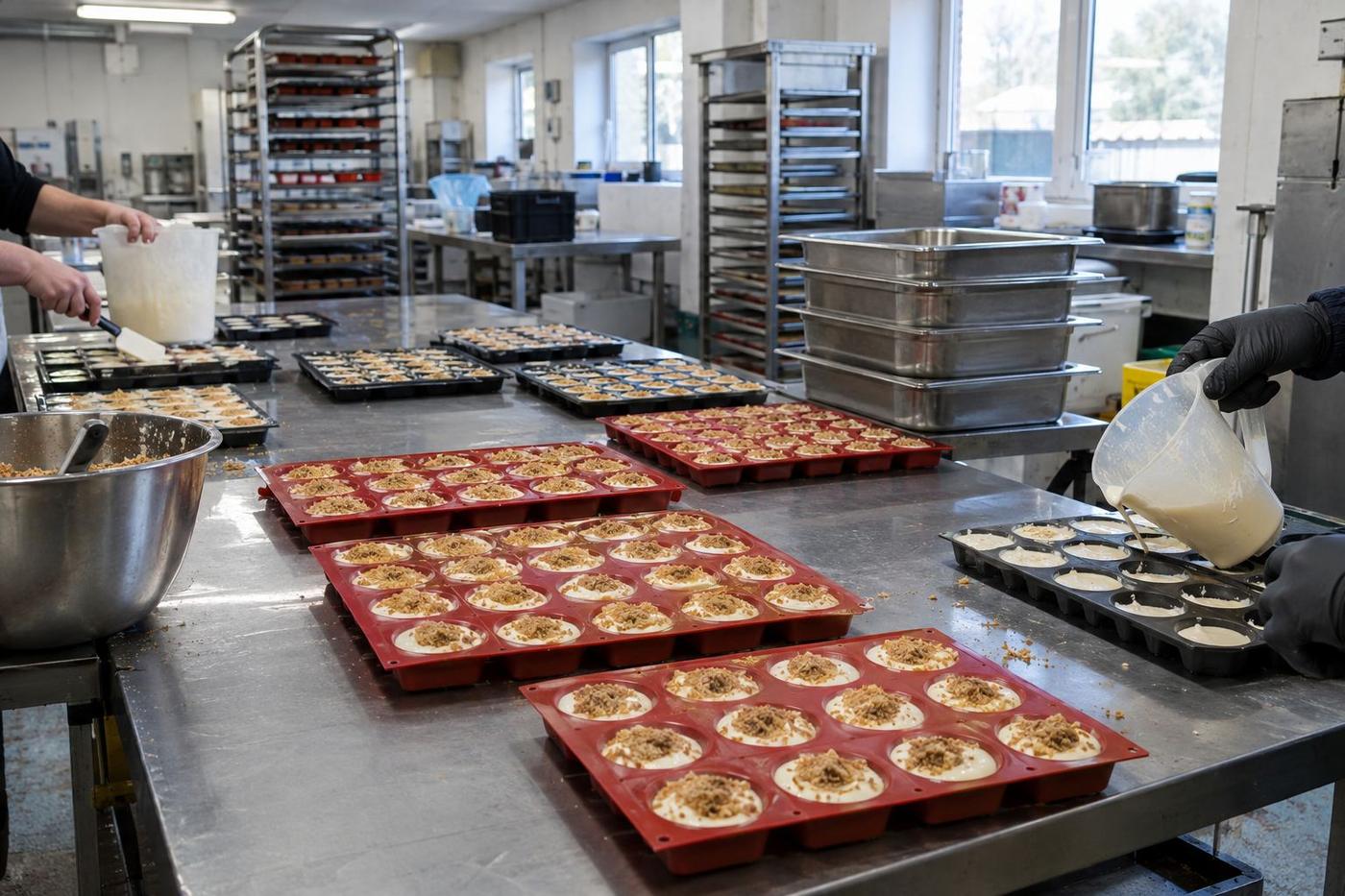
A retail portion cake mould that unmoulds without a tear and reads flat on the packaging shelf.
See projectAt a glance
Where food-grade silicone is used
Swipe to see the whole diagram
How a food mould gets made
Swipe to see the whole diagram
Questions
Food-contact silicone grades we spec run comfortably from freezer to a normal bake. Tell us your peak and we'll confirm the grade in writing on the quote.
Usually no, once the mould is broken in. Silicone releases on its own for most enriched doughs; a light spray helps on the first few bakes.
That is the whole point of a custom mould. Send the depositor plate spec and we design the tray around it.
Yes. Send a photo of the worn tray and the original spec if you have it. We can reproduce a matched replacement so nothing on your line changes.
Ready?
Send a photo, a sketch or a sample. We'll come back with a route and a quote.
Real people, a real workshop
No call centre and no middlemen. When you contact TCI Culinary, you speak to the team who design, build and check your mould.



 Thomas LaneManaging Director
 George PrestonDesign & Project Manager
 Kelly BallingerHead of Partnerships
 Jim AndertonProduction Manager
 TheodoreEmployee Welfare