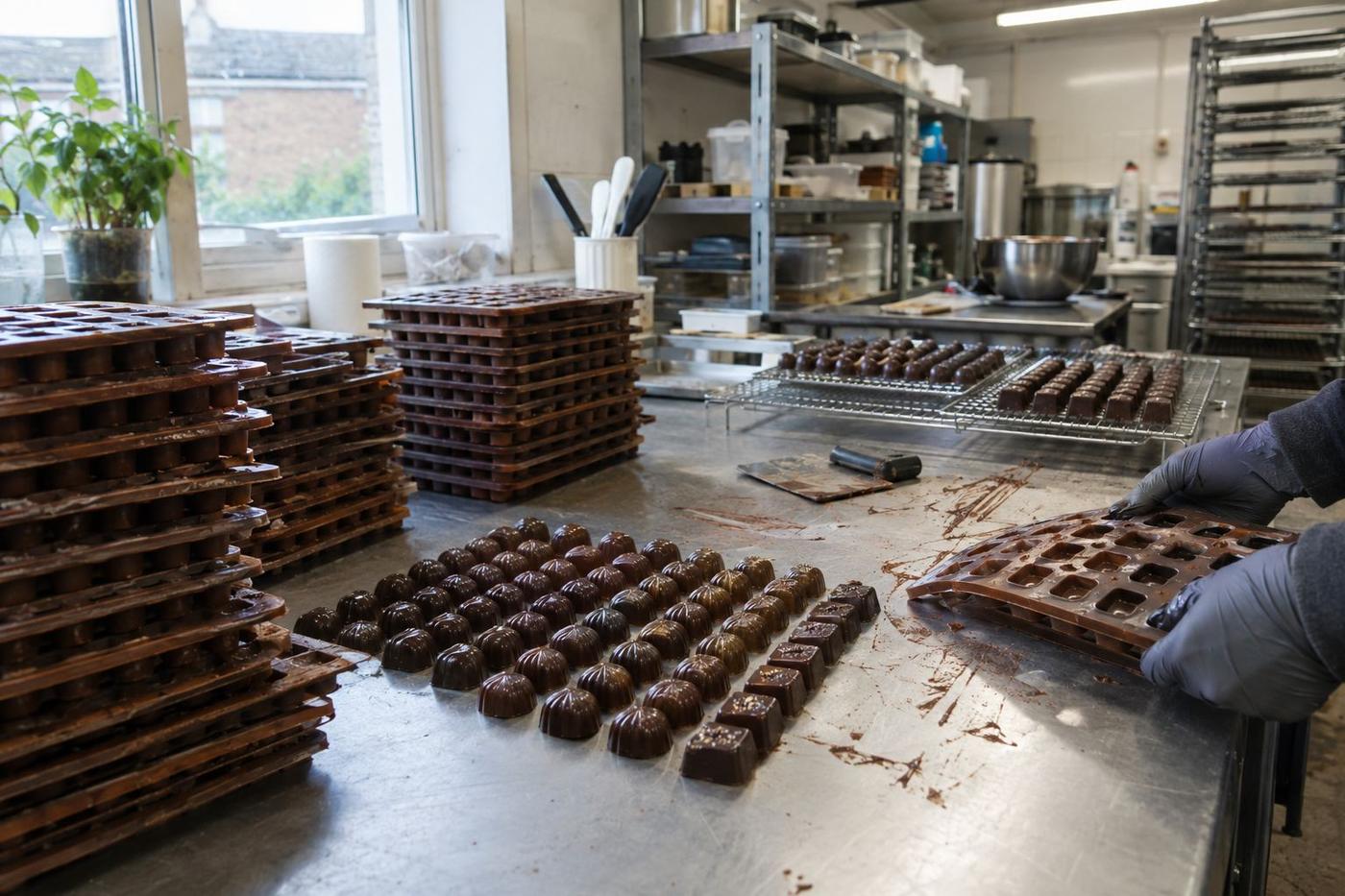
The chill cycle
Tell us how you set — walk-in chiller, blast, or worktop marble. The setting rate affects wall thickness and how gently the tray needs to flex.
Service · chocolate work
The tempered chocolate has to snap out clean, the surface has to hold gloss, and the tray has to keep flat over a run of a thousand. That is the mould brief for chocolate work.
Overview
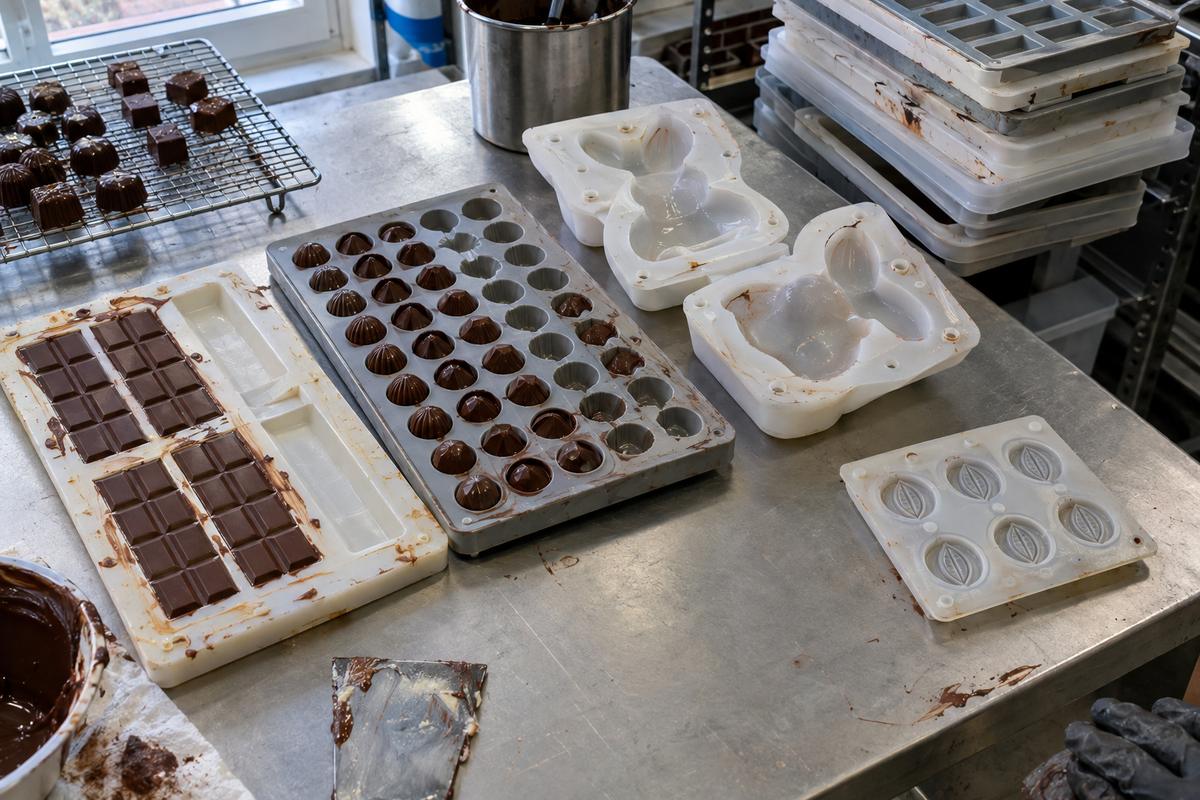
Chocolate moulding punishes tooling. It is poured warm, chilled hard, and knocked out fast. Every one of those steps is easier to survive if the mould was designed for it.
We make silicone moulds for chocolatiers producing bars, tablets, pralines, ganache centres, hollow figures, and moulded logos. Grade is food-contact silicone, spec is documented, and geometry is worked around your knock-out method.
What we make
One-piece silicone with defined chamfers on the tablet edges. We keep the shoulder height low enough that a hand-knock or a light tap releases the whole tray cleanly.
Fine cavity detail, matte or polished internal surface, closely spaced cavities for high plate yield. We size the tray to your enrober or your chilled worktop.
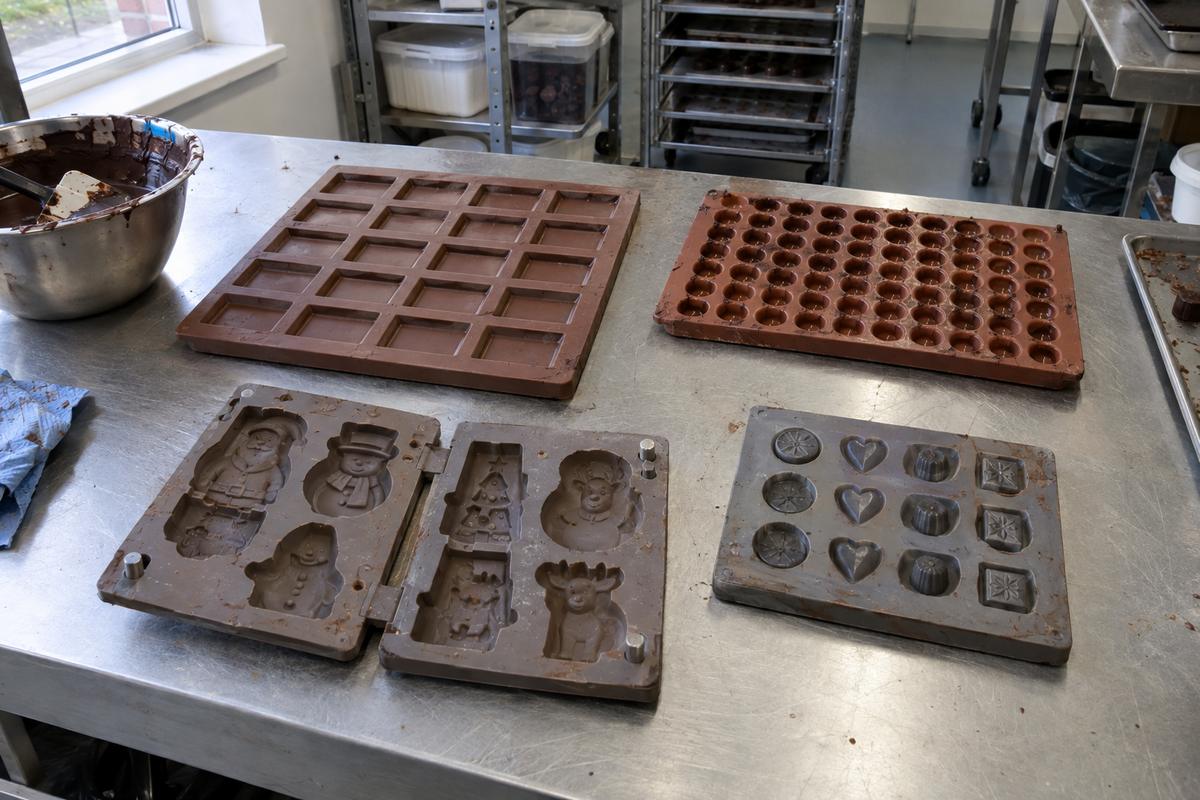
Two-part silicone with registration keys, sized for the closing method your chef uses. Eggs, bunnies, and seasonal figures live here.
Recessed marks in the cavity floor, sized so the raised chocolate detail reads cleanly. We warn you if a detail is too fine for the material and offer alternatives.
Deeper cavities with rounded corners for chocolate with nuts, fruit or crumble, so the inclusion sits proud without cracking the surface.
How it gets made
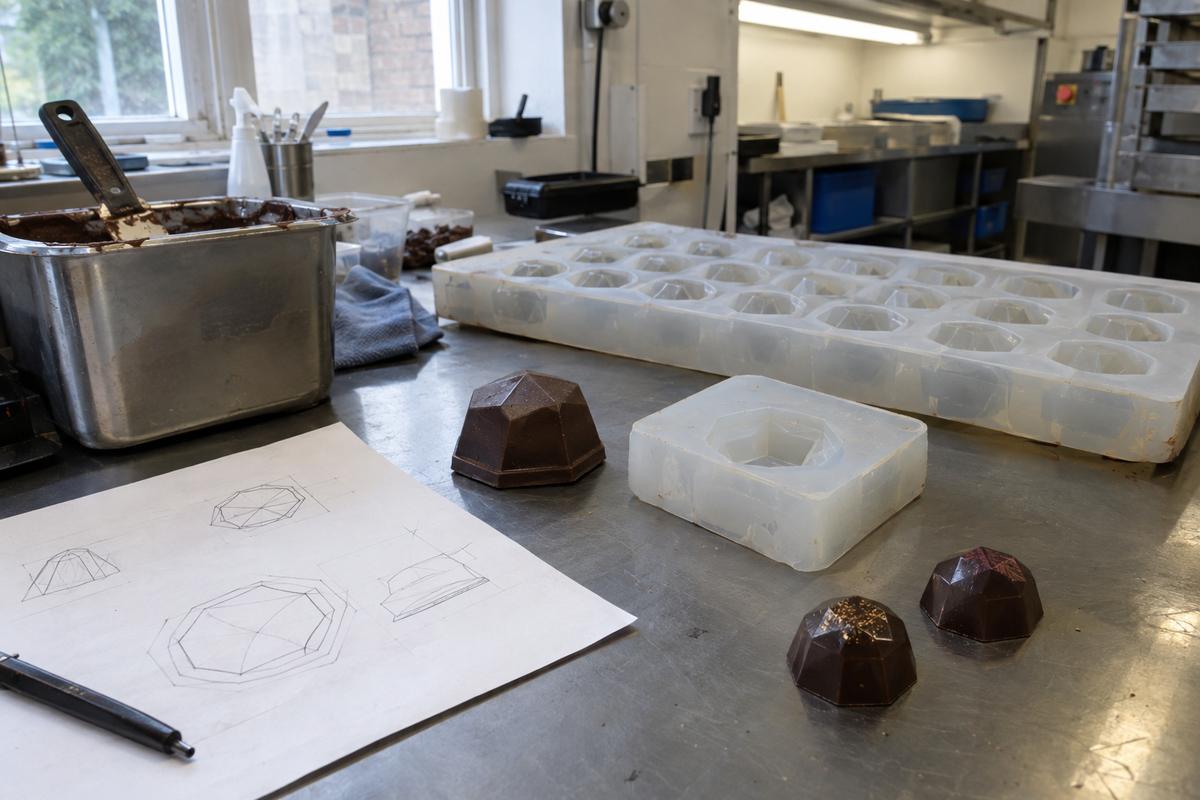
Every chocolate mould starts as a drawing we agree with you. We make a master, pour a single proof cavity in PFAS-free platinum-cure food-grade silicone and let you test it with your own recipe.
Once you are happy, we pour or press the full tray, record the grade against your order and keep the drawing on file for reorders.
What we ask up front
Tell us how you set — walk-in chiller, blast, or worktop marble. The setting rate affects wall thickness and how gently the tray needs to flex.
Bench-tap, air-cushion table, or invert-and-flex. Each one wants a slightly different silicone hardness. We spec around the way your team actually works.
Not every layout maximises yield. We help you settle the cavity spacing so the tray fits your chiller and stacks in the racks you already own.
Gloss inside the mould does not become gloss on the chocolate — that comes from temper. But cavity finish still matters. We can polish to matte or high polish; we can also texture.
Typical work
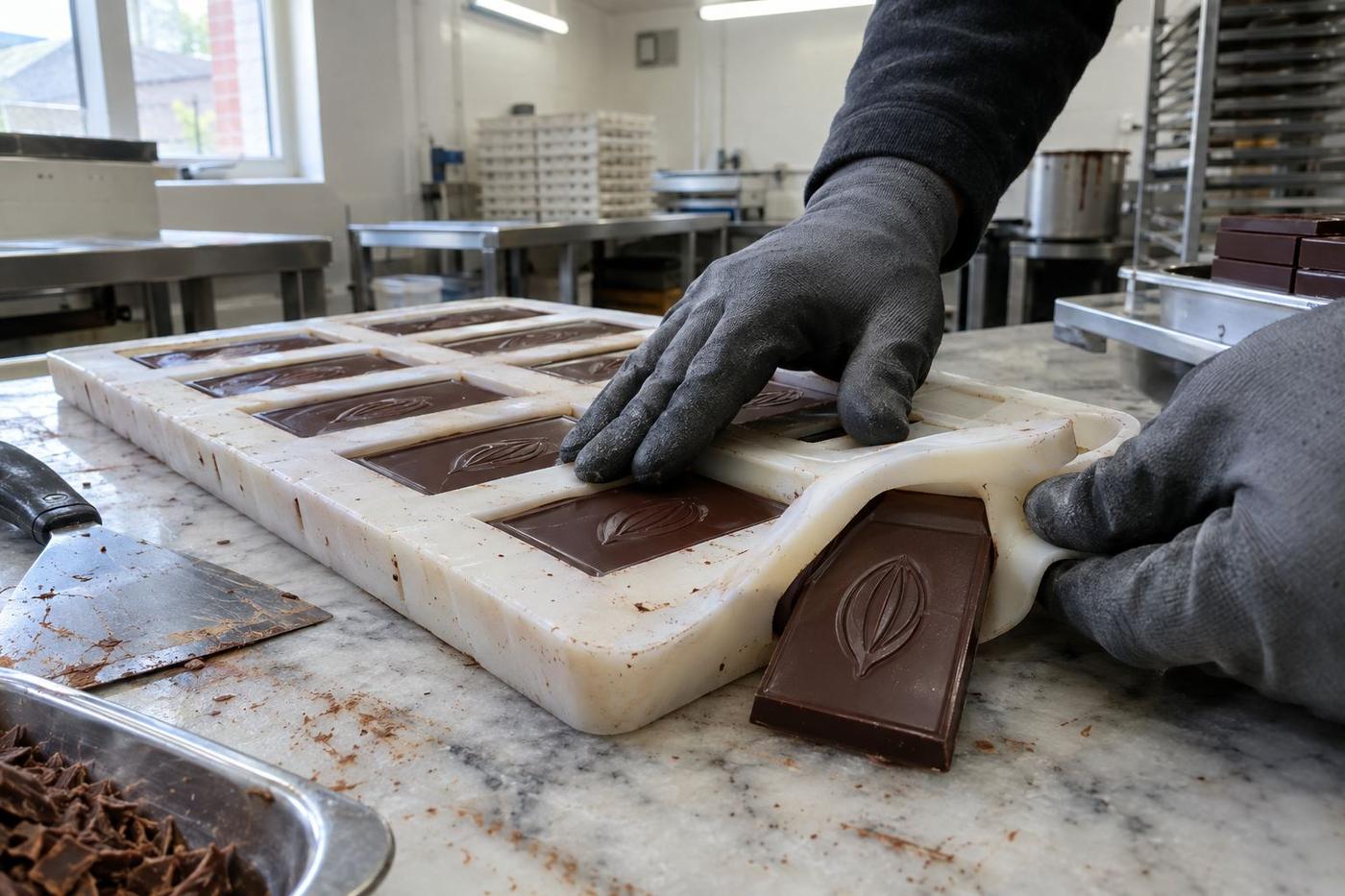
A recessed maker's mark on the bar face, sized to read at a glance without weakening the tablet edge.
See project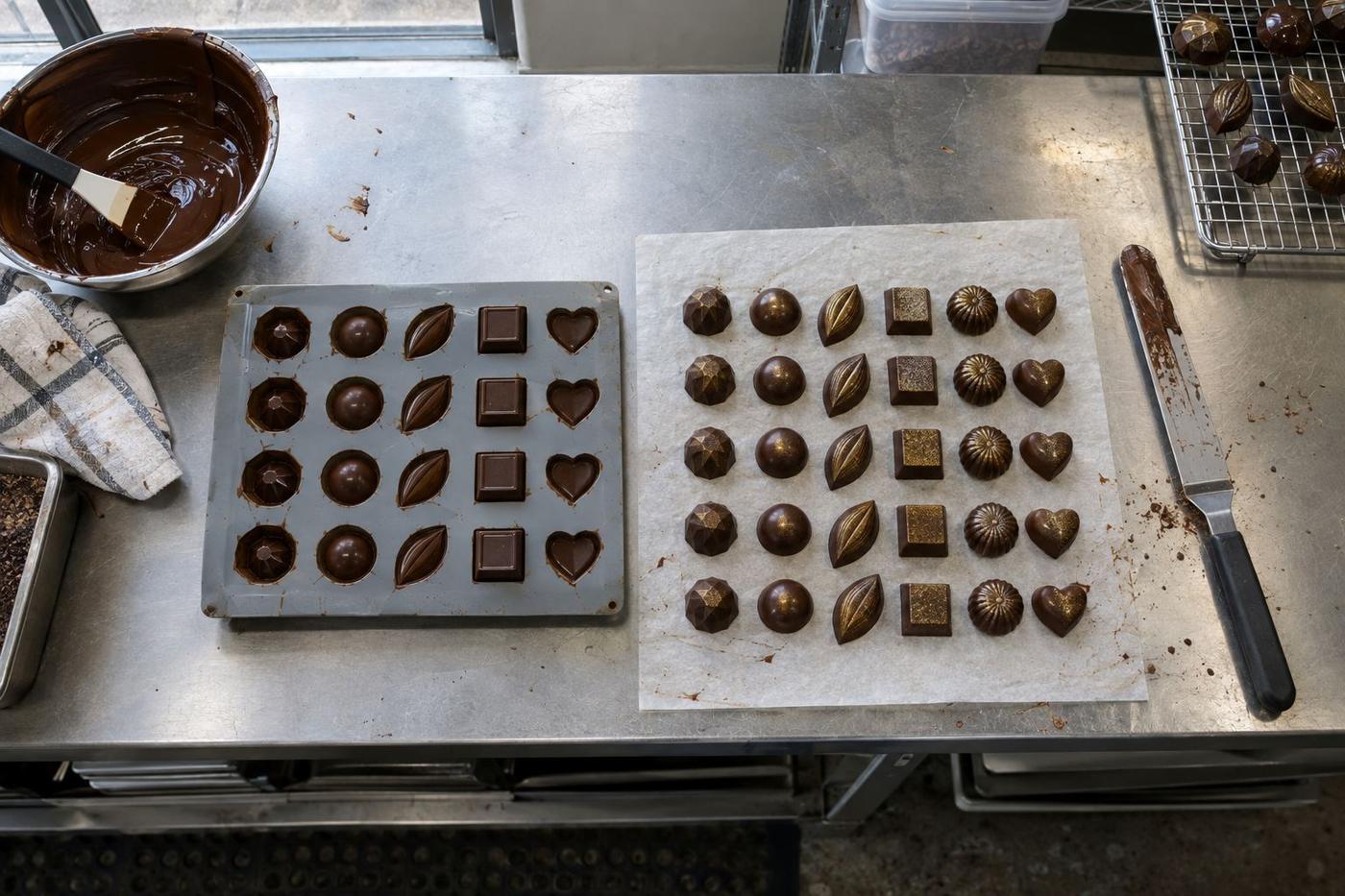
A 24-cavity praline mould with mixed cavity shapes, sized to a chiller shelf.
See project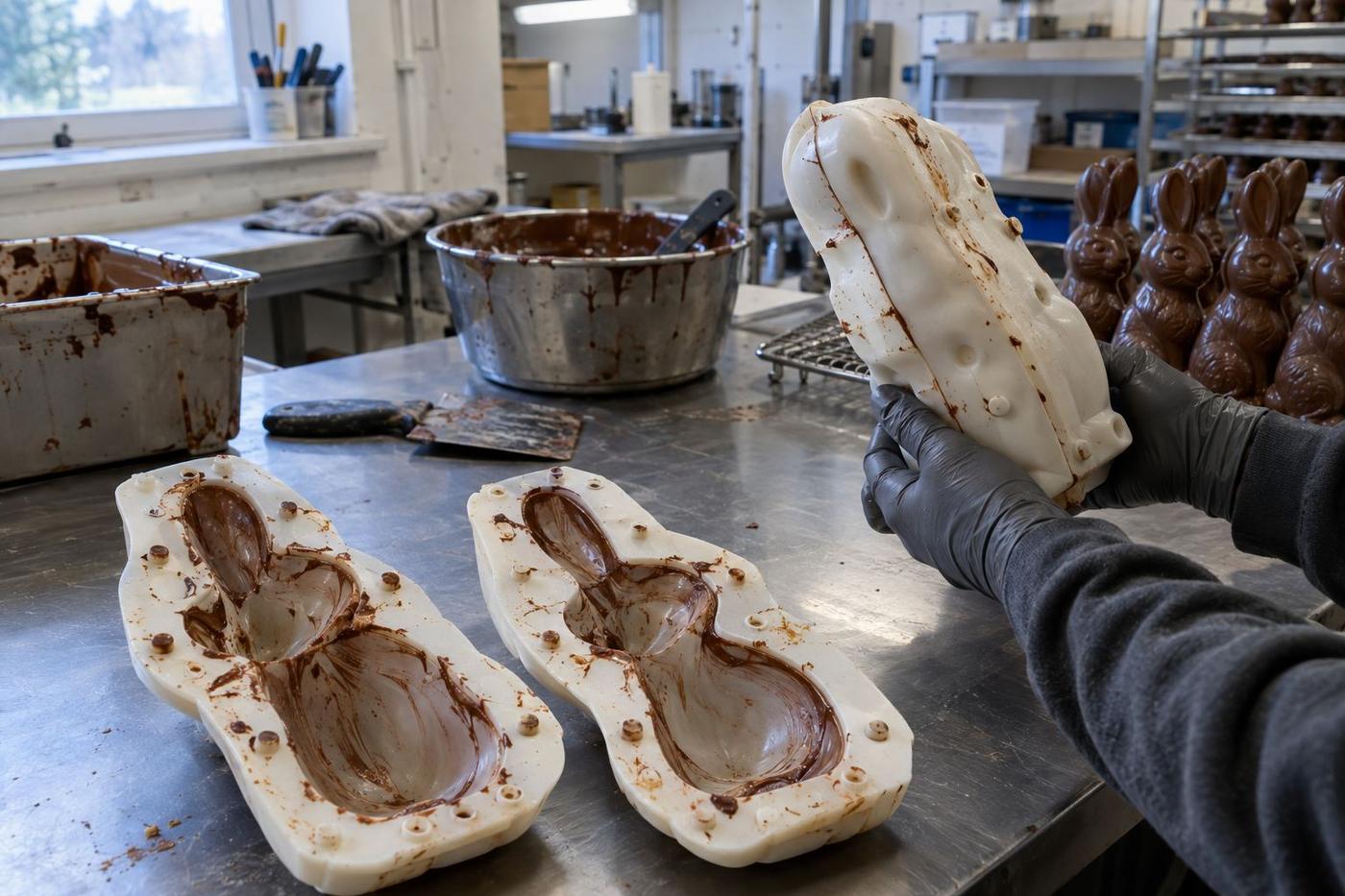
Registration keys and vents worked out around how the chef actually closes and rotates the tool.
See projectAt a glance
Solid pieces and shelled pieces
Swipe to see the whole diagram
How a food mould gets made
Swipe to see the whole diagram
Questions
If the mould was designed around your temper and chill, yes. A silicone mould flexes; a properly tempered bar has already contracted; the combination knocks out. If a design does not release, ninety percent of the time it is temper, not mould.
Yes. Send a bar, or a drawing. We can lift the cavity form directly from an existing bar and reproduce the geometry, though we always suggest small refinements at that point rather than copying every quirk.
Standard. We cut the logo into the cavity floor with the depth and draft that keeps the chocolate detail reading crisp. Tell us the smallest detail on your logo at enquiry stage.
Not usually. Chocolate moulds are normally hand-cleaned. Tell us if yours will meet a caustic line and we will spec accordingly.
Ready?
Send a photo, a sketch or a sample. We'll come back with a route and a quote.
Real people, a real workshop
No call centre and no middlemen. When you contact TCI Culinary, you speak to the team who design, build and check your mould.



 Thomas LaneManaging Director
 George PrestonDesign & Project Manager
 Kelly BallingerHead of Partnerships
 Jim AndertonProduction Manager
 TheodoreEmployee Welfare