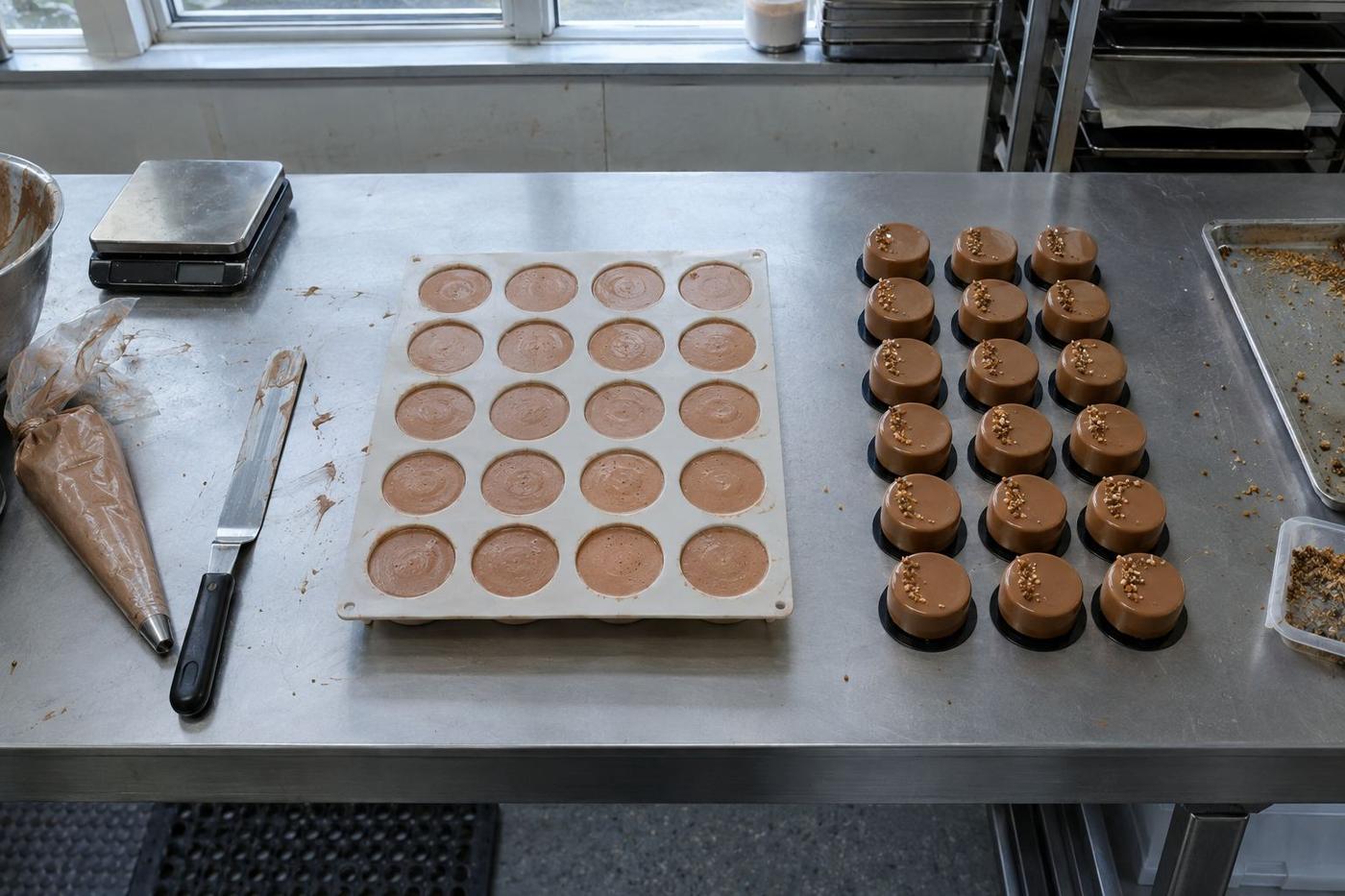
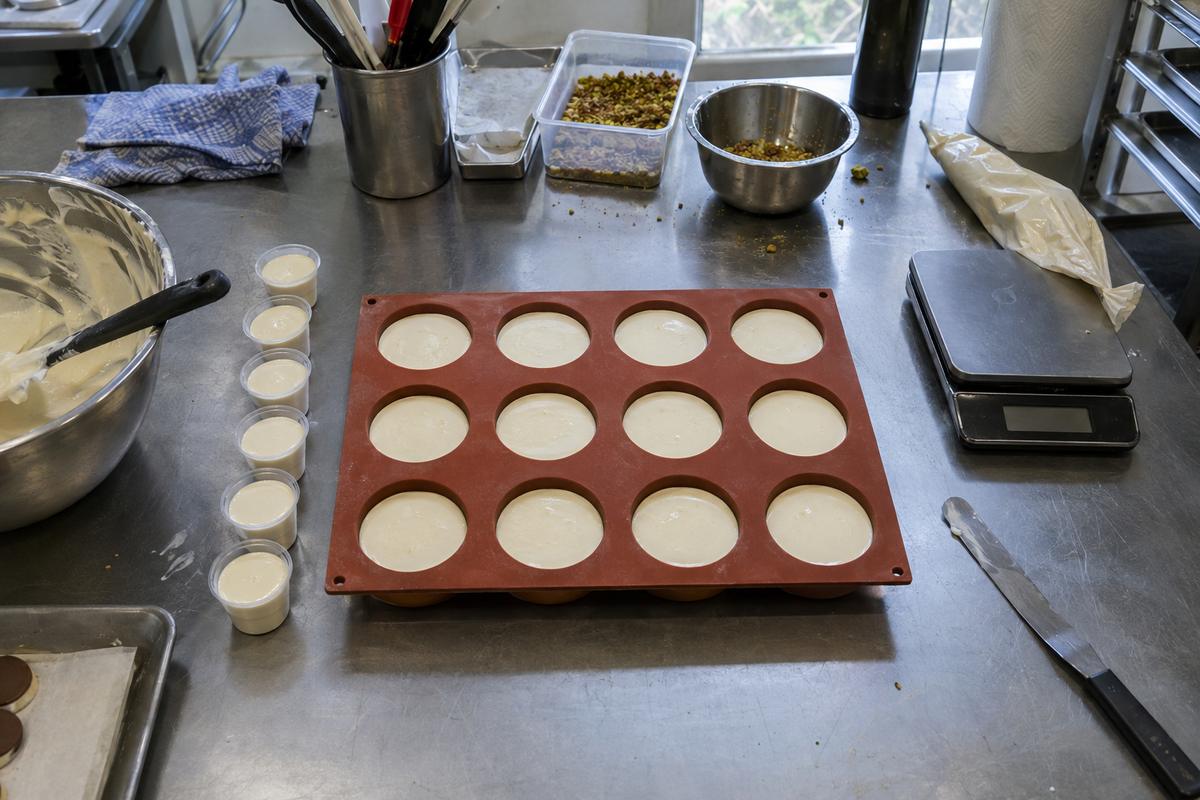
01Every cavity has to be measured
It sounds obvious, but many production moulds don't have their cavity volume checked at manufacture. If cavity one, cavity two, and cavity thirty deliver different volumes, portion size drifts. We check cavity volume at manufacture and record the check on paperwork.
02Density matters as much as volume
If you're holding a labelled weight, weight is volume times density. That means an unchanged mould can drift portion weight if your fill density drifts. Consistent portion weight comes from consistent fill as well as consistent cavity.
03Fill temperature changes the game
Hot fills shrink on cooling. A cavity designed for a room-temperature fill will over-portion on a hot fill. If your fill temperature changes between products, cavity volume has to account for that.
04The demould motion changes the answer
How the dessert leaves the mould affects perceived portion size. A gentle unmould keeps every detail; a rough one leaves a mark that looks like a smaller portion even if the volume is identical. The mould has to survive the demould.
05Multi-portion trays are one solution
For a menu with three portion sizes, a single tray with three cavity sizes is often cheaper and cleaner than three trays. Service can pull the right portion without swapping tooling.
06Cavity check paperwork is standard
Every portion-controlled mould we build leaves with a cavity check record. If a portion-critical mould arrives without one, ask why — it's a fair question.