01Not all silicone is food-contact
General-purpose silicone rubber and food-contact silicone rubber are different formulations, made to different specifications. A general-purpose silicone might be perfectly safe to touch — but it isn't certified for food contact and shouldn't be used on a food mould. If you order a food mould, the base material should be food-contact grade from the raw stock.
02Food-contact silicones are a family, not a single material
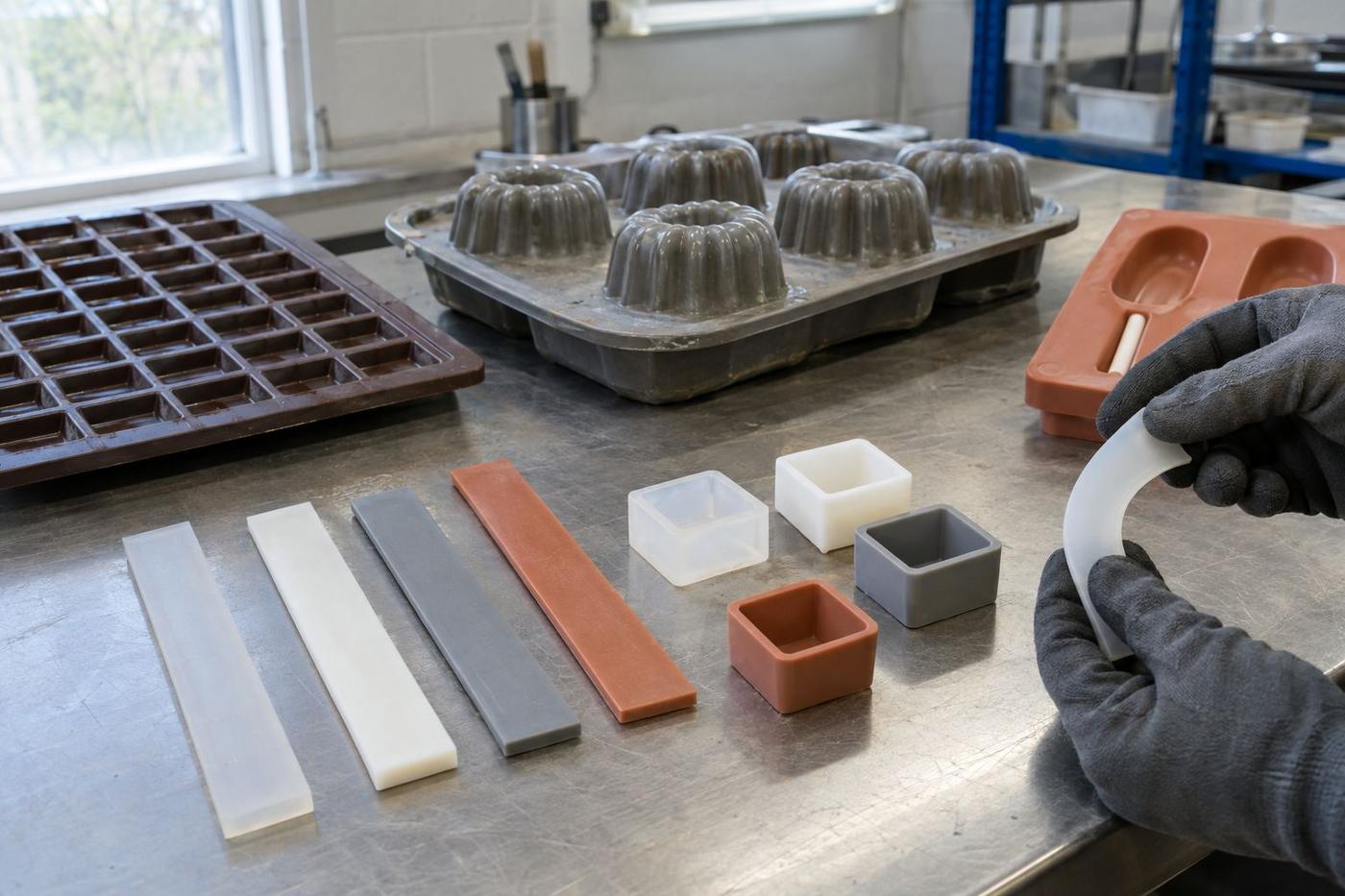
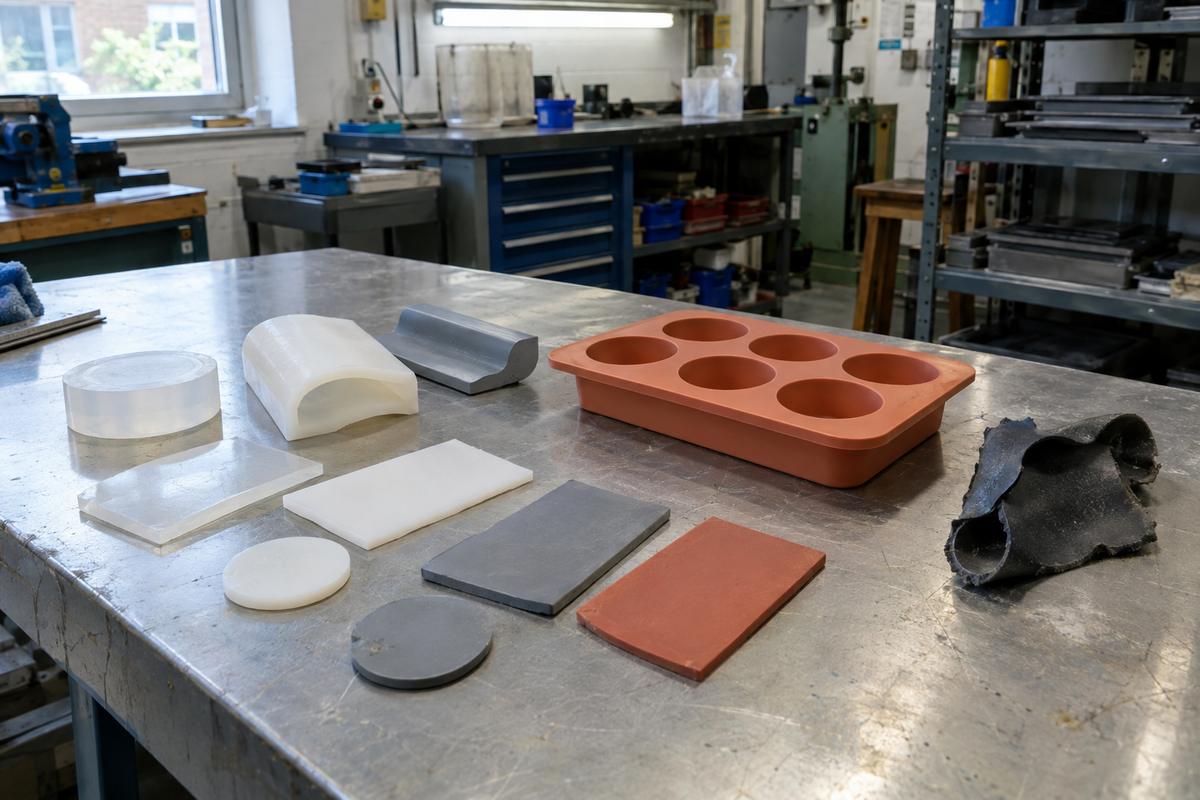
There isn't one food-contact silicone; there's a family. They differ on temperature tolerance, chemical resistance, hardness, and cure system (platinum or peroxide). We spec platinum-cure food-contact silicones as standard because they're cleaner-curing and better-behaved in most food applications.
03Temperature is a real variable
A grade that's comfortable at chiller temperatures may soften under a caustic wash. A grade that's comfortable at bake temperatures may over-cure and go brittle if it's parked next to a burner. The peak temperature the mould will see, and how long it sits there, both matter. We ask about both.
04Chemical exposure matters more than you'd think
For a lot of producers, the cleaning cycle punishes the mould more than the food does. Caustic detergents, sanitisers, chlorine — each attacks silicone differently. Grade selection is often driven by wash, not by fill.
05Colour can narrow your choice
Coloured silicone has a pigment. Pigment has to be food-contact too. If you want a specific colour, we'll match it — but colour requests sometimes narrow the sensible grade list, so tell us early rather than at sign-off.
06Paperwork travels with the material
Every food-contact silicone we buy comes with a supplier declaration of what it is. We keep that on file against your order. When you reorder or get audited, the paperwork is there.