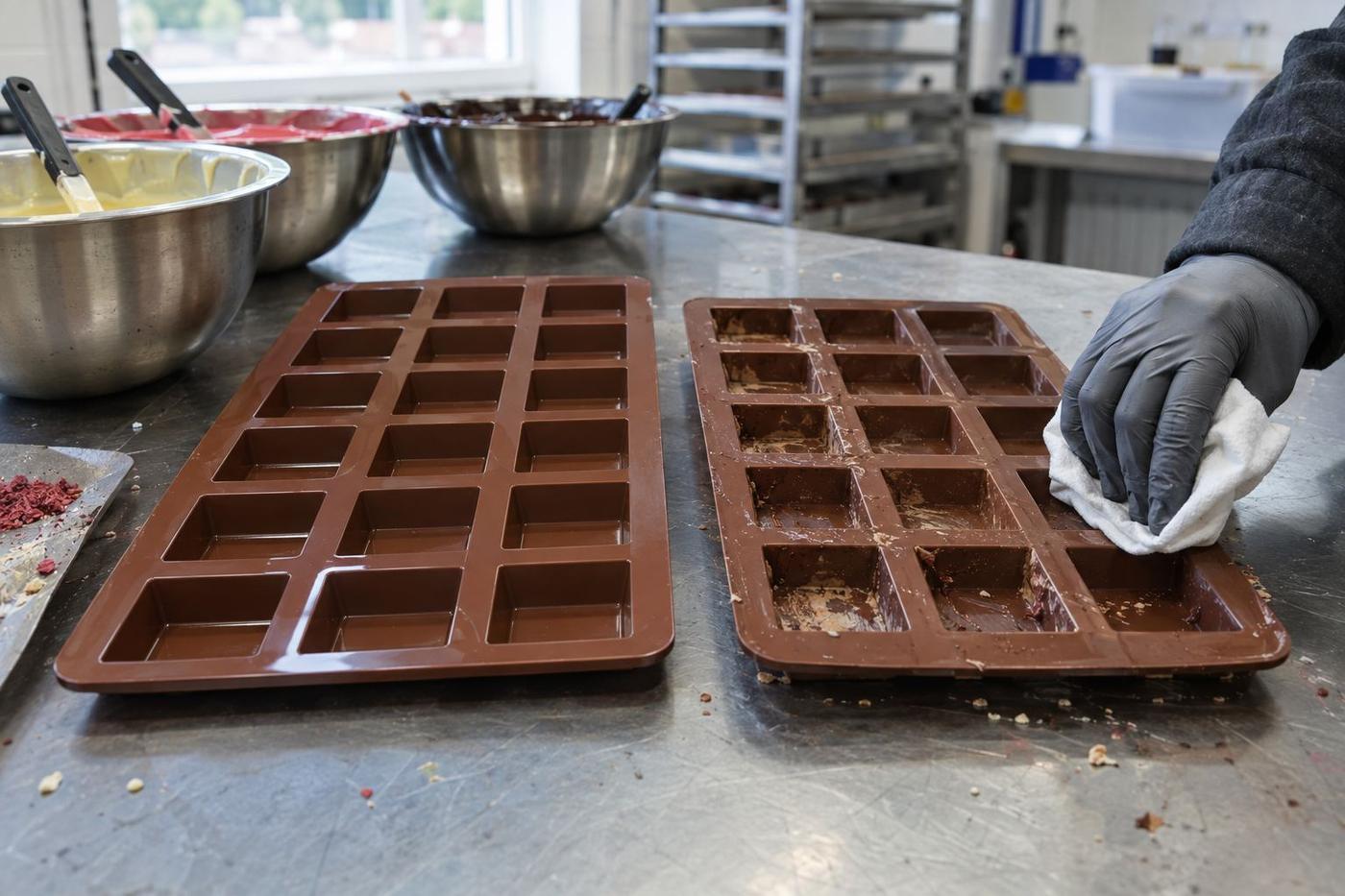
The cavity is a mirror
Chocolate copies the surface it sets against. A smooth, clean cavity gives a glossy face; a dull or marked cavity gives a dull or marked face.
Guide · chocolate finish
Gloss on chocolate comes from three things: your temper, the cavity surface and what has built up on it. Here is how the last two work.
The guide
Chocolate copies the surface it sets against. A smooth, clean cavity gives a glossy face; a dull or marked cavity gives a dull or marked face.
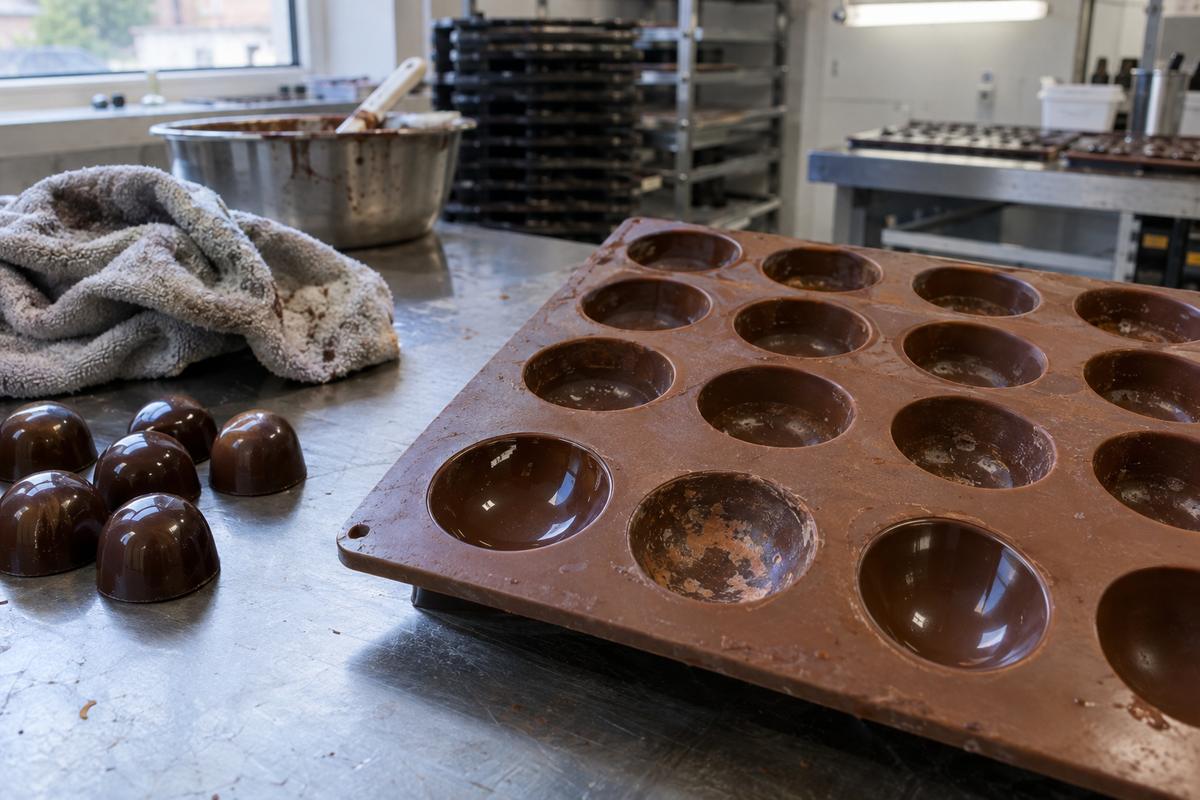
Many chocolatiers find a new mould improves after a few runs, as a very thin film of cocoa butter settles on the cavity. That film is your friend.
Over time, that film can thicken and go patchy. The gloss turns uneven. A gentle clean restores it.
Warm water and a soft cloth or sponge. Avoid abrasive pads and harsh detergents, which dull the surface for good.
If you paint or spray colour into the cavity, the cavity finish decides how glossy that colour looks. Tell us at design stage and we match the finish.
Polycarbonate gives the hardest gloss at high volume. Silicone gives easier release and more freedom of shape, with a slightly softer shine. Both have a place.
At a glance
Solid pieces and shelled pieces
Swipe to see the whole diagram
Need advice on your specific job?
You're not obliged to order anything. If we don't think we're the right supplier for your job, we'll say so.
Real people, a real workshop
No call centre and no middlemen. When you contact TCI Culinary, you speak to the team who design, build and check your mould.



 Thomas LaneManaging Director
 George PrestonDesign & Project Manager
 Kelly BallingerHead of Partnerships
 Jim AndertonProduction Manager
 TheodoreEmployee Welfare