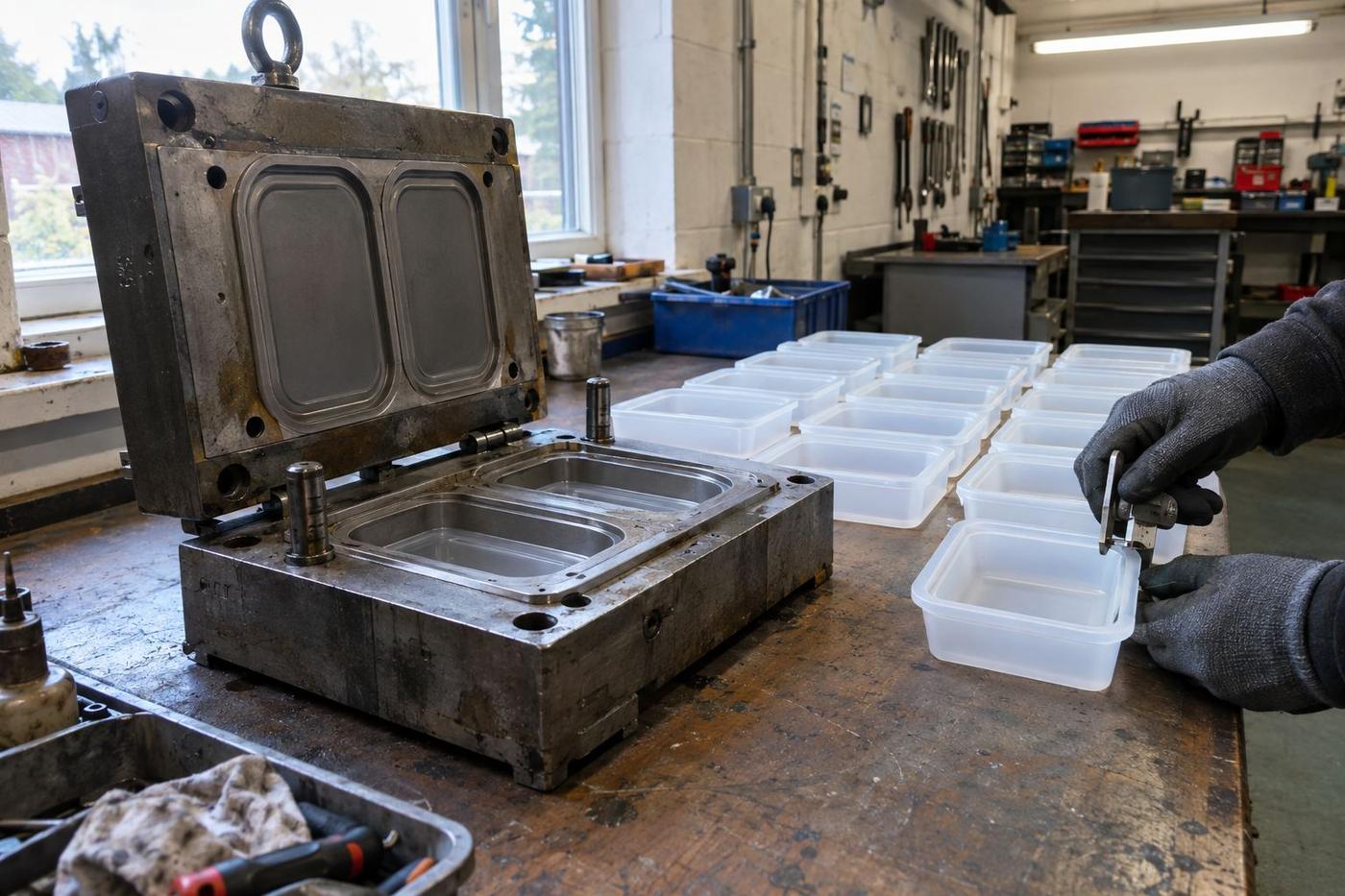
Steel-tool consistency
Every tray pressed from the same tool.
Scaled production · compression food tooling
When you need hundreds of identical trays, compression moulding in a steel tool gives consistency that hand-pouring cannot.
Overview
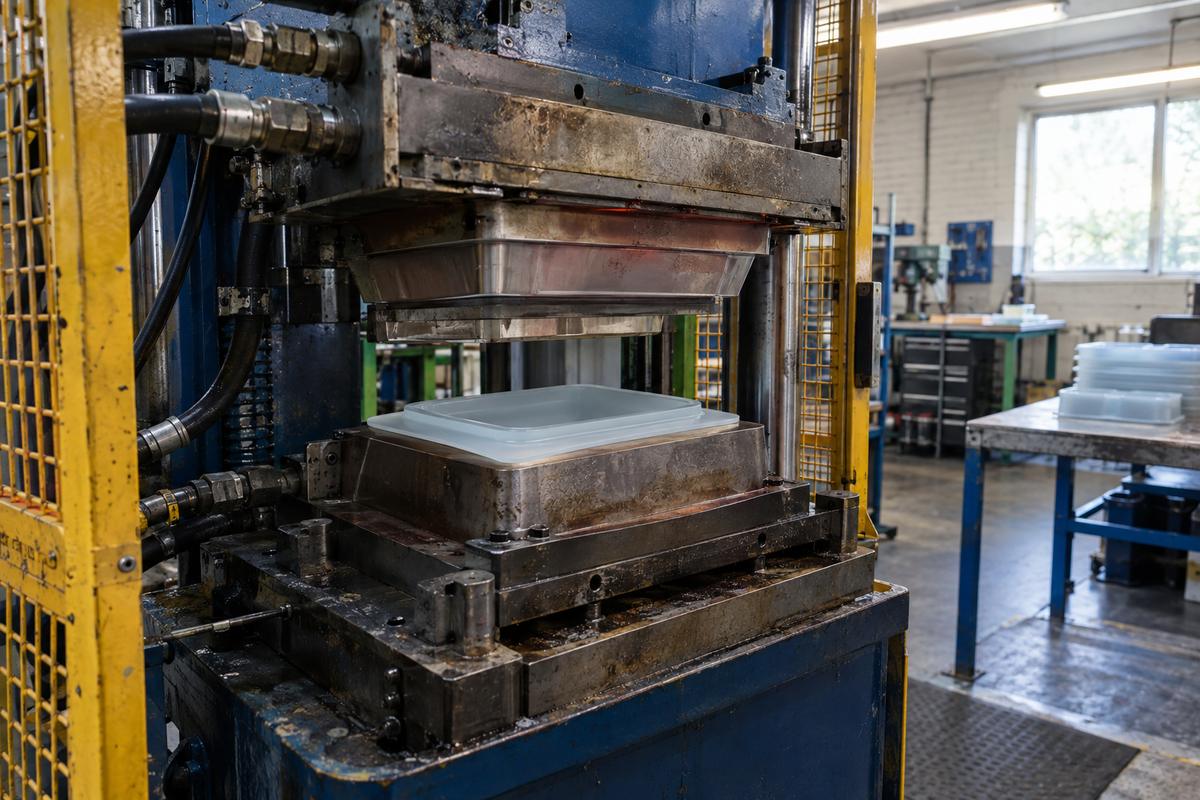
Compression moulding presses silicone into a heated steel tool. Every tray comes out the same, which matters when you run a fleet.
We design compression tooling for food trays once the product is proven, translating a hand-poured design into a production tool.
What we design for
Every tray pressed from the same tool.
Draft and radii adjusted for pressing.
Material declaration, cavity record and drawing pack.
Many identical trays for multi-line or multi-site use.
What we ask up front
Not today's rate. The rate you're building for. We size tooling around ambition, not present state.
A production line often fills and sets differently from a bench. We factor that into the tool.
A caustic tunnel wash is a different beast from a hand wash. Grade selection reflects it.
Should the tool live on our floor, or should we deliver it to your line? Both are valid; the choice matters.
Related case study
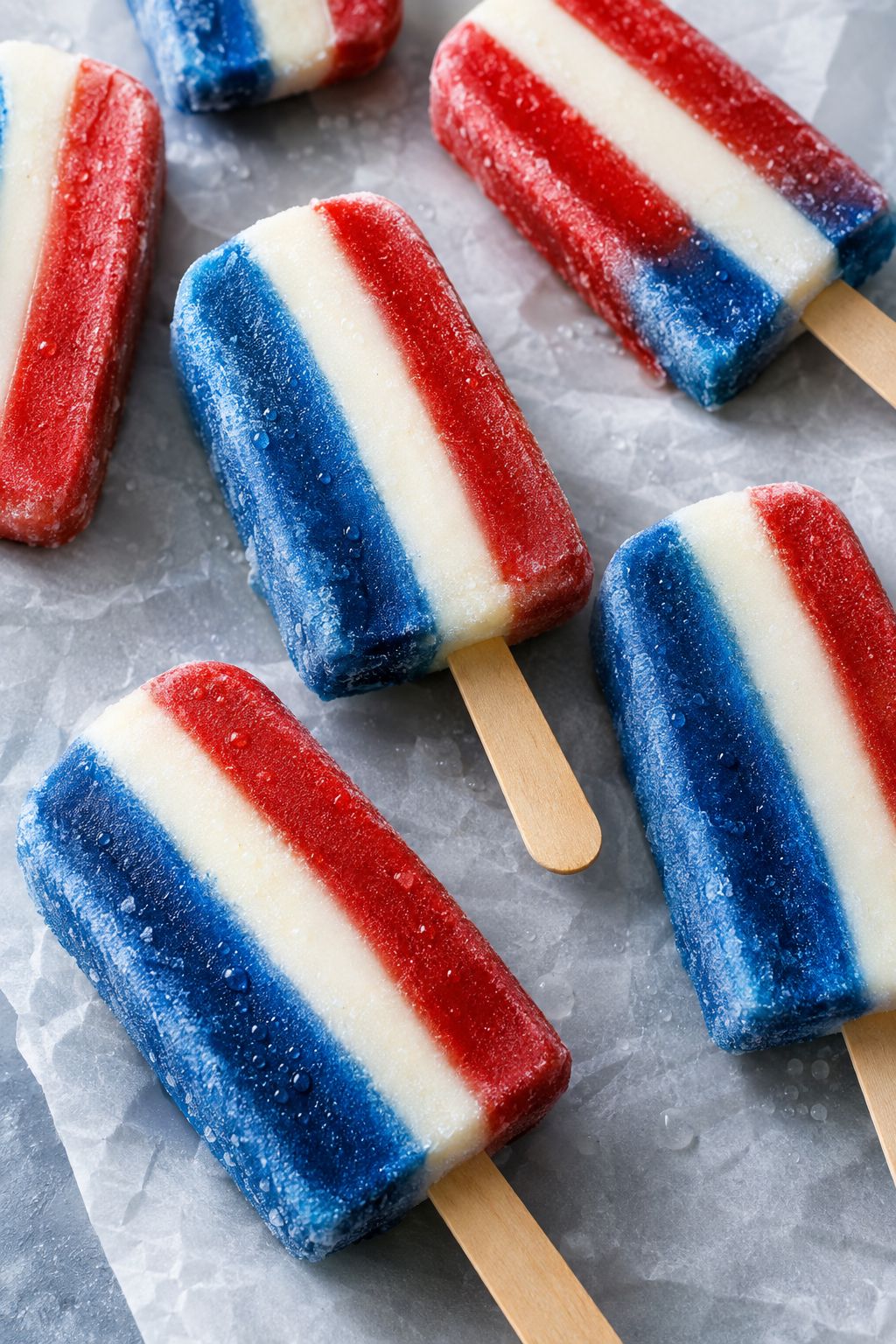
Multi-cavity production tooling for a gelato stick-bar range, sized to the brine tunnel with a defined stick channel and matched fleet.
At a glance
How a production tray is laid out
Swipe to see the whole diagram
How a food mould gets made
Swipe to see the whole diagram
Questions
When you need many identical trays and the design is settled.
No. It translates, sometimes with small changes we show you first.
Agreed up front. Often the customer.
Related formats
Liquid silicone at high volume. Explore
The full service overview. See service
All twenty services in one place. What we make
Ready?
Send a photo, a sketch or a sample. We'll come back with a route and a quote.
Real people, a real workshop
No call centre and no middlemen. When you contact TCI Culinary, you speak to the team who design, build and check your mould.



 Thomas LaneManaging Director
 George PrestonDesign & Project Manager
 Kelly BallingerHead of Partnerships
 Jim AndertonProduction Manager
 TheodoreEmployee Welfare