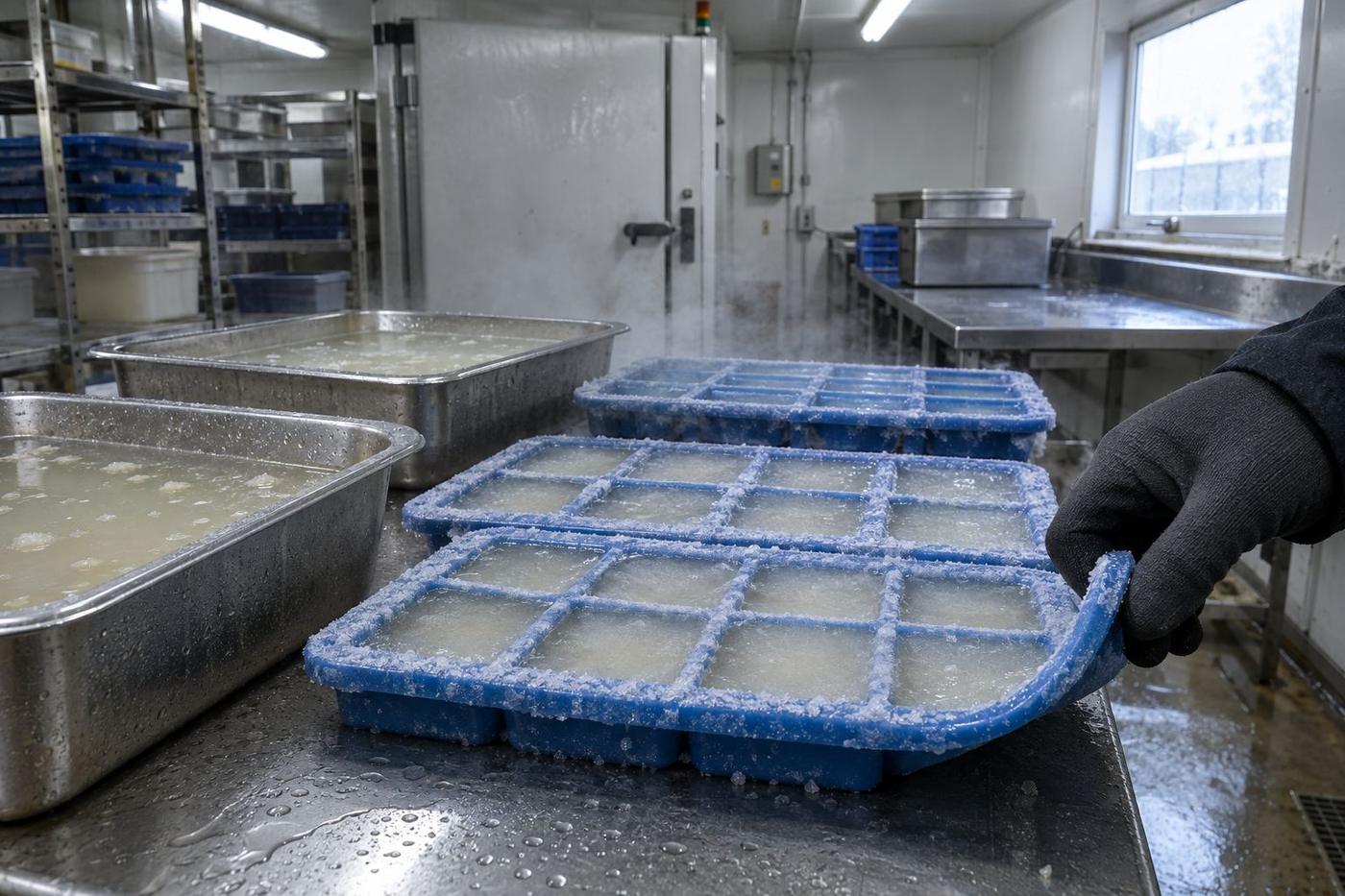
Stays flexible cold
Grades that flex at deep-freeze temperature.
Material selection · freezer and brine silicone
Deep freeze and brine chemistry both test silicone. The right grade stays flexible and does not degrade.
Overview
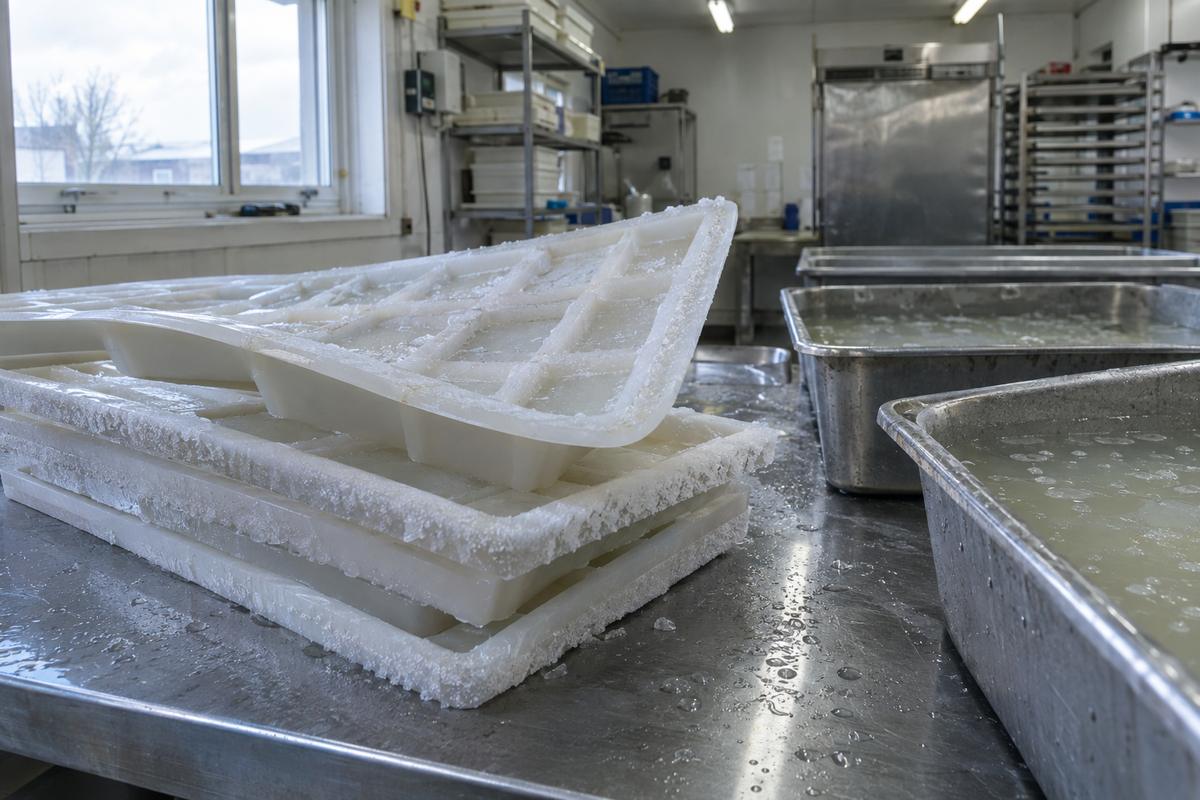
Some rubbers go stiff in deep freeze; some degrade in brine. Frozen lines need a grade chosen for both.
We specify freezer- and brine-tolerant food-grade silicones around your freezer and brine chemistry.
What we design for
Grades that flex at deep-freeze temperature.
Chosen for your brine composition.
Also checked against your cleandown.
Grade recorded, declaration supplied.
What we ask up front
We describe grades as food-contact grade, hot-fill capable, high-temperature capable, or caustic-tolerant, and record the exact spec on paperwork.
A supplier declaration is a material statement. A certification scheme audits a site. We're clear about which of these we supply.
Occasionally a supplier updates a grade. We tell you at reorder if this has happened, before shipping.
Tell us what your auditor needs. We'd rather find a gap now than after the mould ships.
Related case study
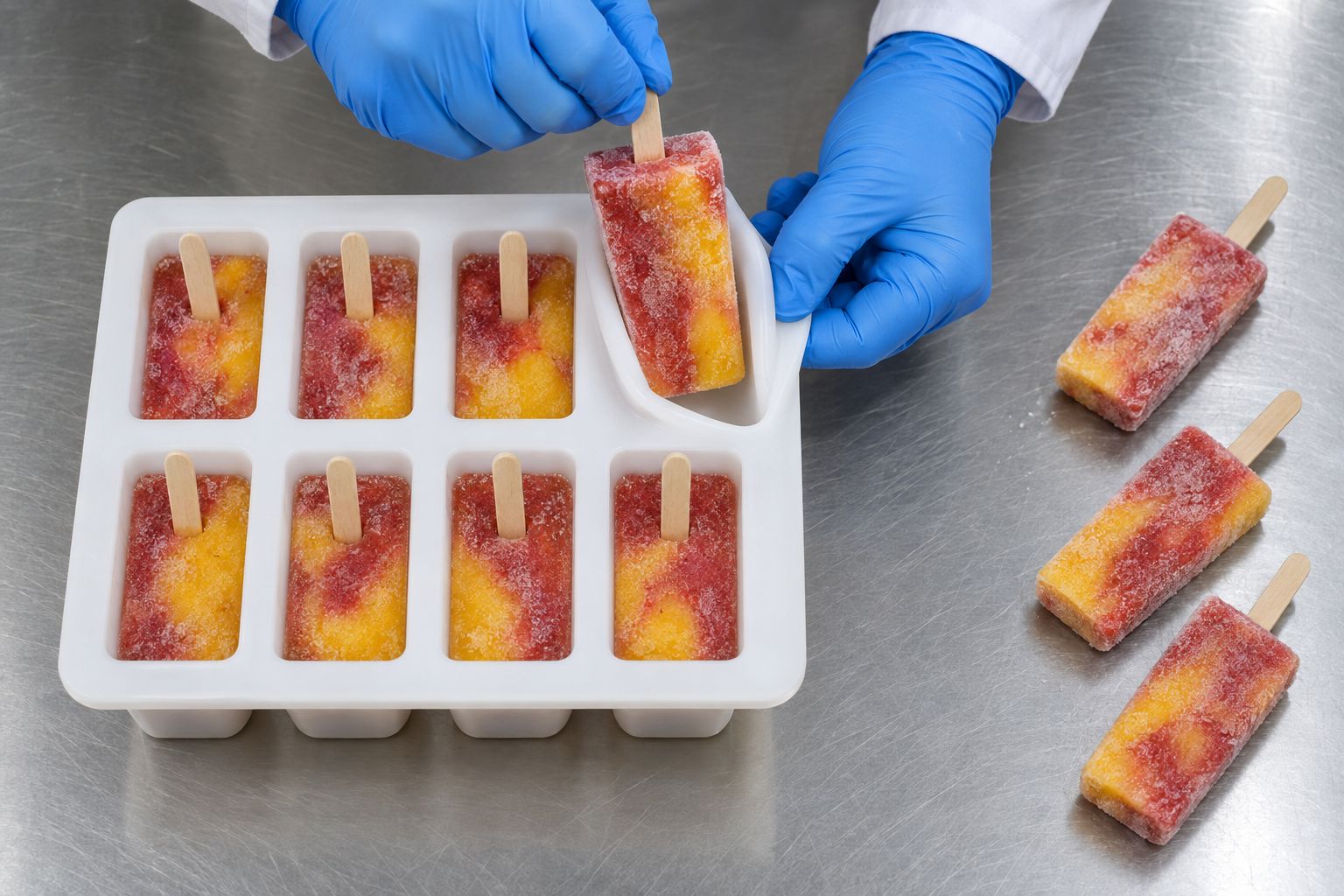
Multi-cavity production tooling for a gelato stick-bar range, sized to the brine tunnel with a defined stick channel and matched fleet.
At a glance
Where food-grade silicone is used
Swipe to see the whole diagram
How a food mould gets made
Swipe to see the whole diagram
Questions
Yes, please.
Not a grade chosen for it.
Yes, noted on paperwork.
Related formats
Grades for hot sugar and long bakes. Explore
The full service overview. See service
All twenty services in one place. What we make
Ready?
Send a photo, a sketch or a sample. We'll come back with a route and a quote.
Real people, a real workshop
No call centre and no middlemen. When you contact TCI Culinary, you speak to the team who design, build and check your mould.



 Thomas LaneManaging Director
 George PrestonDesign & Project Manager
 Kelly BallingerHead of Partnerships
 Jim AndertonProduction Manager
 TheodoreEmployee Welfare