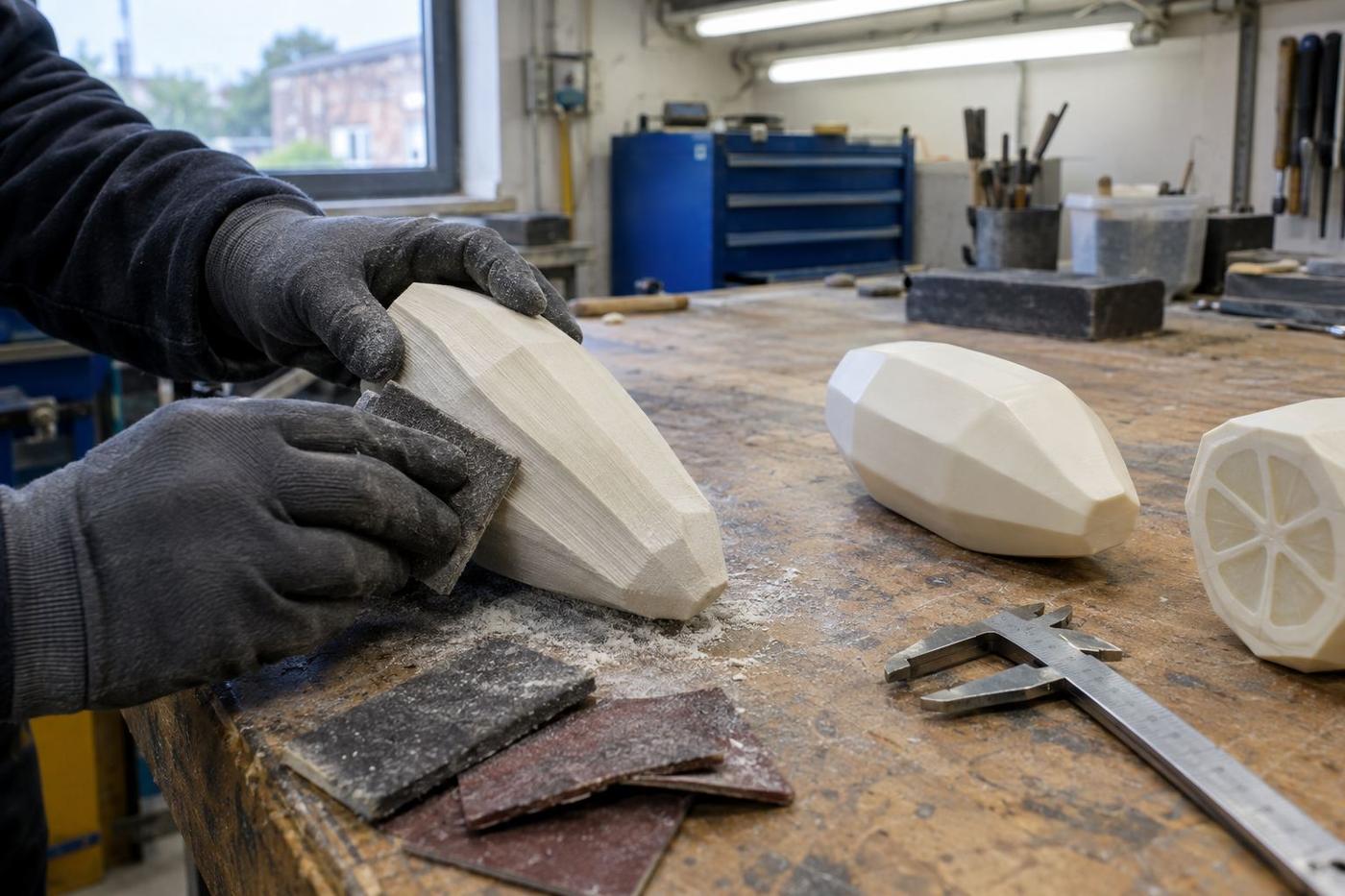
From sketch to CAD
We draw it up if you only have a sketch.
Master patterns · 3d printed food masters
Printing gets complex shapes made quickly. Finishing removes the print lines, so the mould shows your shape and not the printer.
Overview
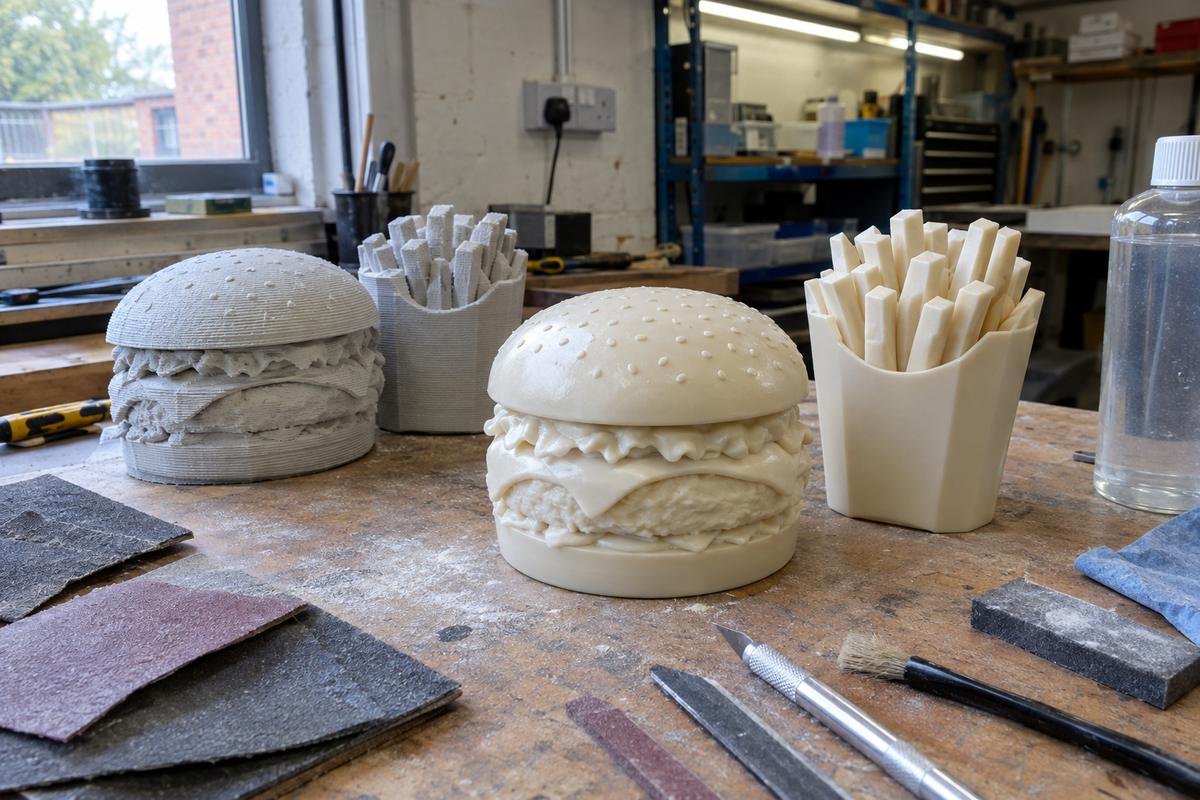
A raw print carries layer lines that transfer straight into the silicone and on to the food. The finish is what makes a printed master usable.
We print masters from your CAD or ours, finish them by hand, and seal them so they do not inhibit the silicone cure.
What we design for
We draw it up if you only have a sketch.
Layer lines removed before casting.
Masters sealed so platinum-cure silicone sets properly.
The master is stored for future moulds.
What we ask up front
A functional part, a decorative form, a chef's sketch. Each drives a different pattern-making route.
Matte, satin, polished. The finish on the master carries into every silicone mould poured from it.
The smallest feature that must read on the finished product drives pattern-making resolution.
Some pattern resins don't play nicely with food-contact silicones. We spec around that.
Related case study
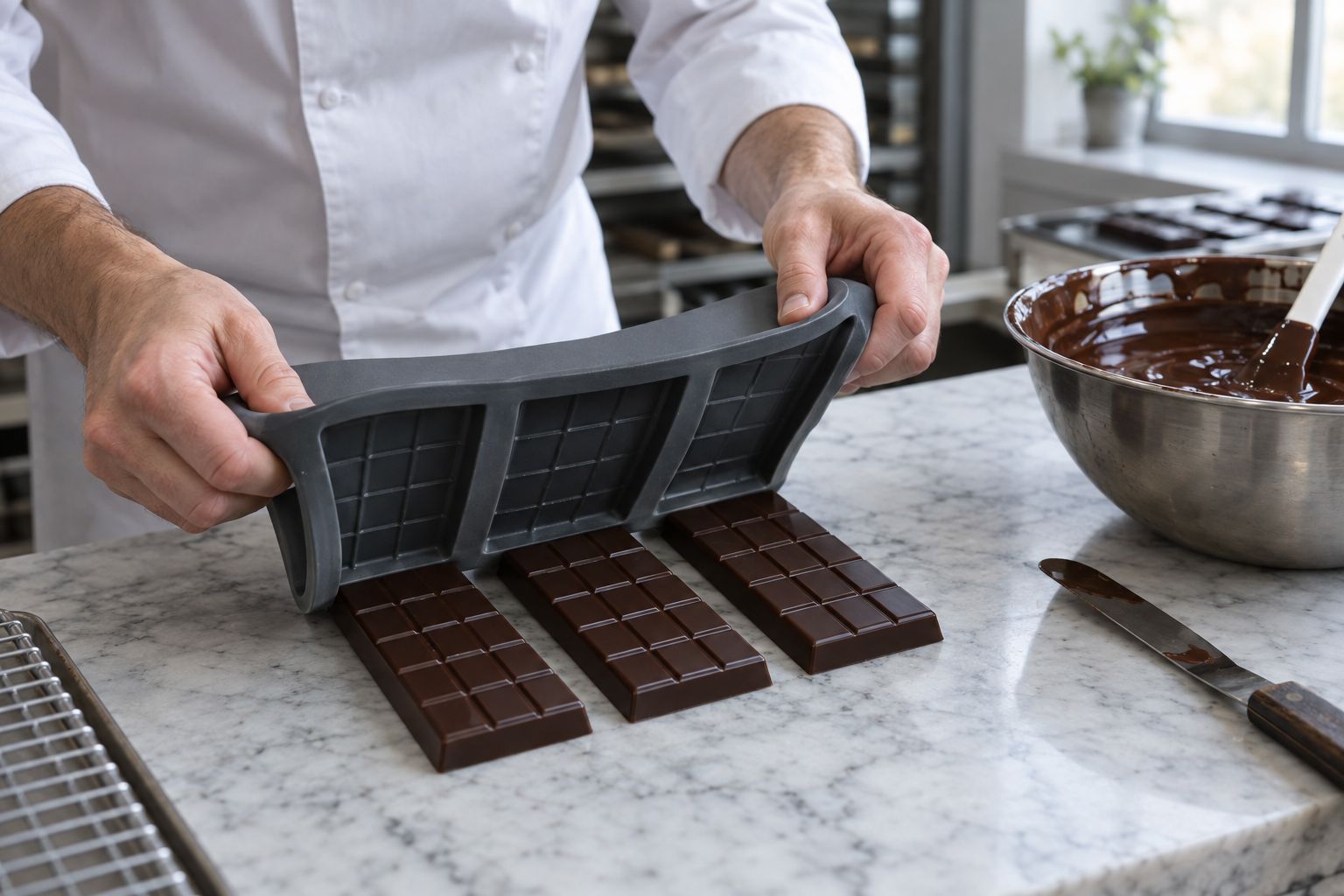
One bar, one moulded logo, one bench-tap knock-out. A concise project that shows what silicone chocolate mould work looks like when the temper and knock-out are considered up-front.
At a glance
How a food mould gets made
Swipe to see the whole diagram
Questions
Yes, though a sketch with sizes is better.
Not once the master is finished properly.
Yes, by agreement.
Related formats
Machined masters for sharp geometry. Explore
The full service overview. See service
All twenty services in one place. What we make
Ready?
Send a photo, a sketch or a sample. We'll come back with a route and a quote.
Real people, a real workshop
No call centre and no middlemen. When you contact TCI Culinary, you speak to the team who design, build and check your mould.



 Thomas LaneManaging Director
 George PrestonDesign & Project Manager
 Kelly BallingerHead of Partnerships
 Jim AndertonProduction Manager
 TheodoreEmployee Welfare