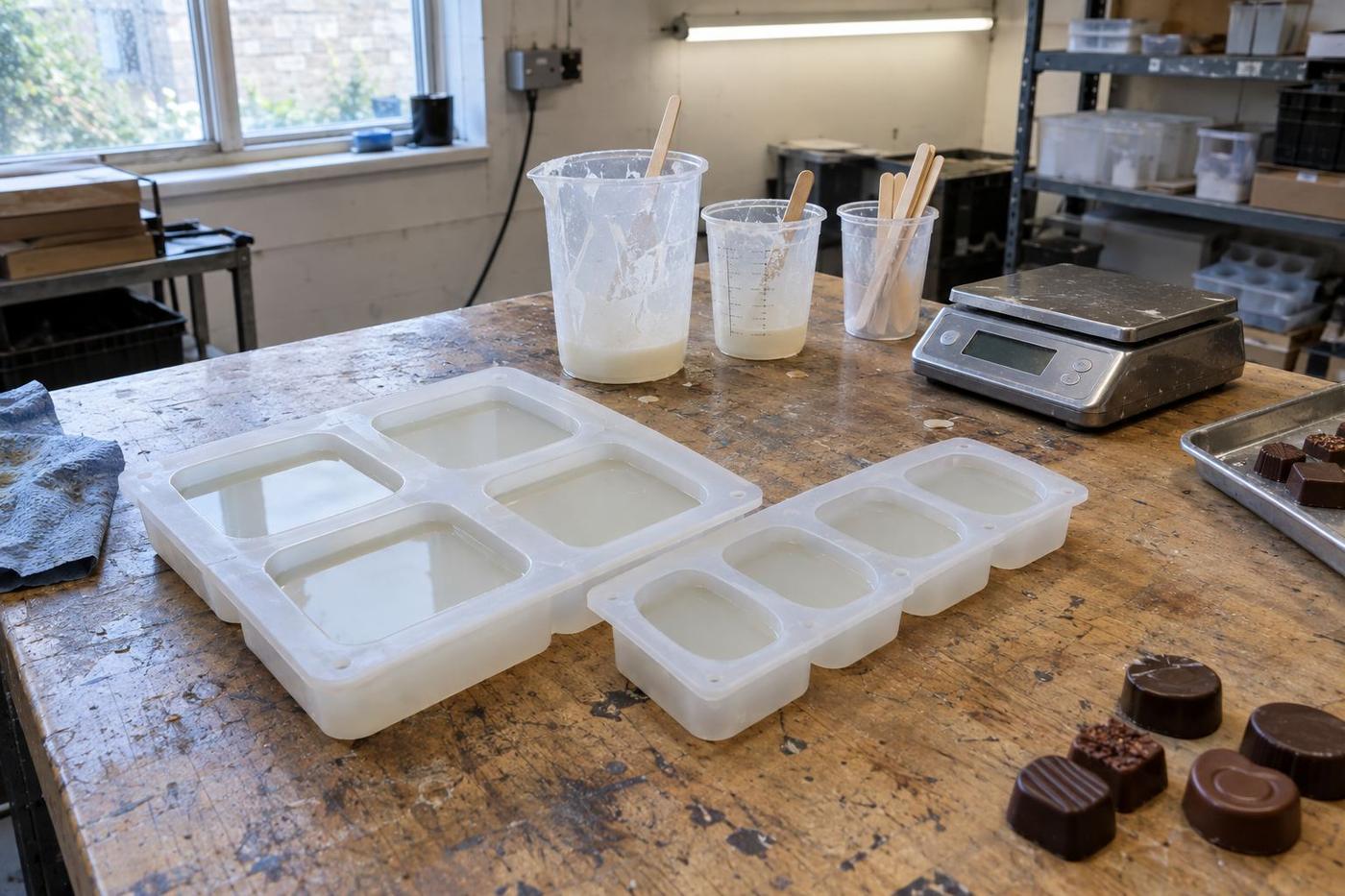
Bench-sized trays
Sized to a small chiller or a marble slab.
Hand-poured moulds · artisan short-run trays
Four or six cavities, poured by hand, is often exactly right for a small chocolatier, bakery or patisserie. No production tool needed.
Overview
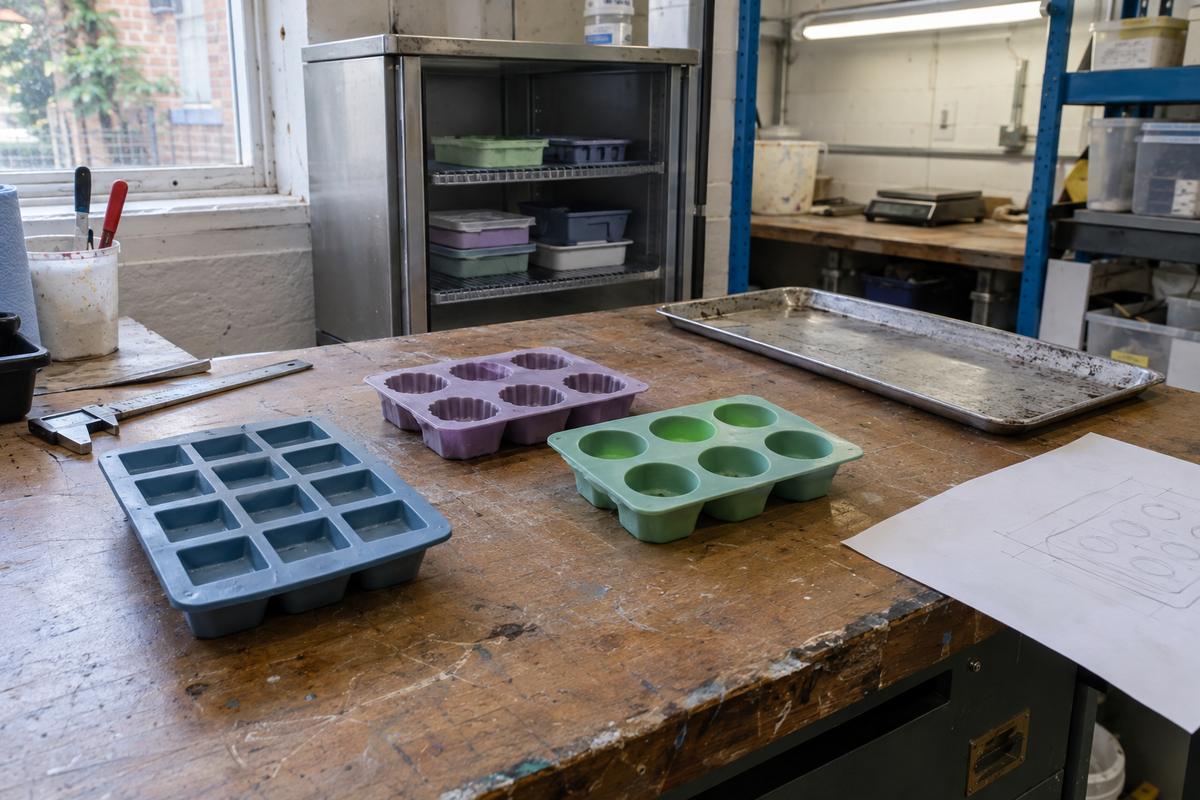
Small producers do not need thousands of parts. They need a few good trays that match their bench, their chiller and their week.
We hand-pour small trays for artisan production, with the drawing and grade kept on file for easy repeat orders.
What we design for
Sized to a small chiller or a marble slab.
No steel tooling cost for small volumes.
Drawing and grade on file.
Move to production tooling when volume justifies it.
What we ask up front
Sketch, photo or sample, whichever's to hand. We start from what you actually have.
The demould motion matters even on a single cavity. Tell us how you plan to work with the mould.
A hand-poured tool is right for tens or hundreds, not tens of thousands. We'll be honest about when to graduate to a production tool.
Food-contact from the start. We don't use a general-purpose silicone on a food job and swap later.
Related case study
Twenty-four cavities, six different shapes across four repeats each, all on a tray sized to a specific chiller shelf.
At a glance
How a production tray is laid out
Swipe to see the whole diagram
How a food mould gets made
Swipe to see the whole diagram
Questions
When bench labour costs more than a tool would. See our scaling guide.
Yes. We can pour a larger tray from the same master.
Yes, platinum-cure food-grade silicone throughout.
Related formats
One cavity to test an idea. Explore
The full service overview. See service
All twenty services in one place. What we make
Ready?
Send a photo, a sketch or a sample. We'll come back with a route and a quote.
Real people, a real workshop
No call centre and no middlemen. When you contact TCI Culinary, you speak to the team who design, build and check your mould.



 Thomas LaneManaging Director
 George PrestonDesign & Project Manager
 Kelly BallingerHead of Partnerships
 Jim AndertonProduction Manager
 TheodoreEmployee Welfare