Substrate
Mould or supply the rigid first part.
Manufacturing services · Chapter B · Method 11
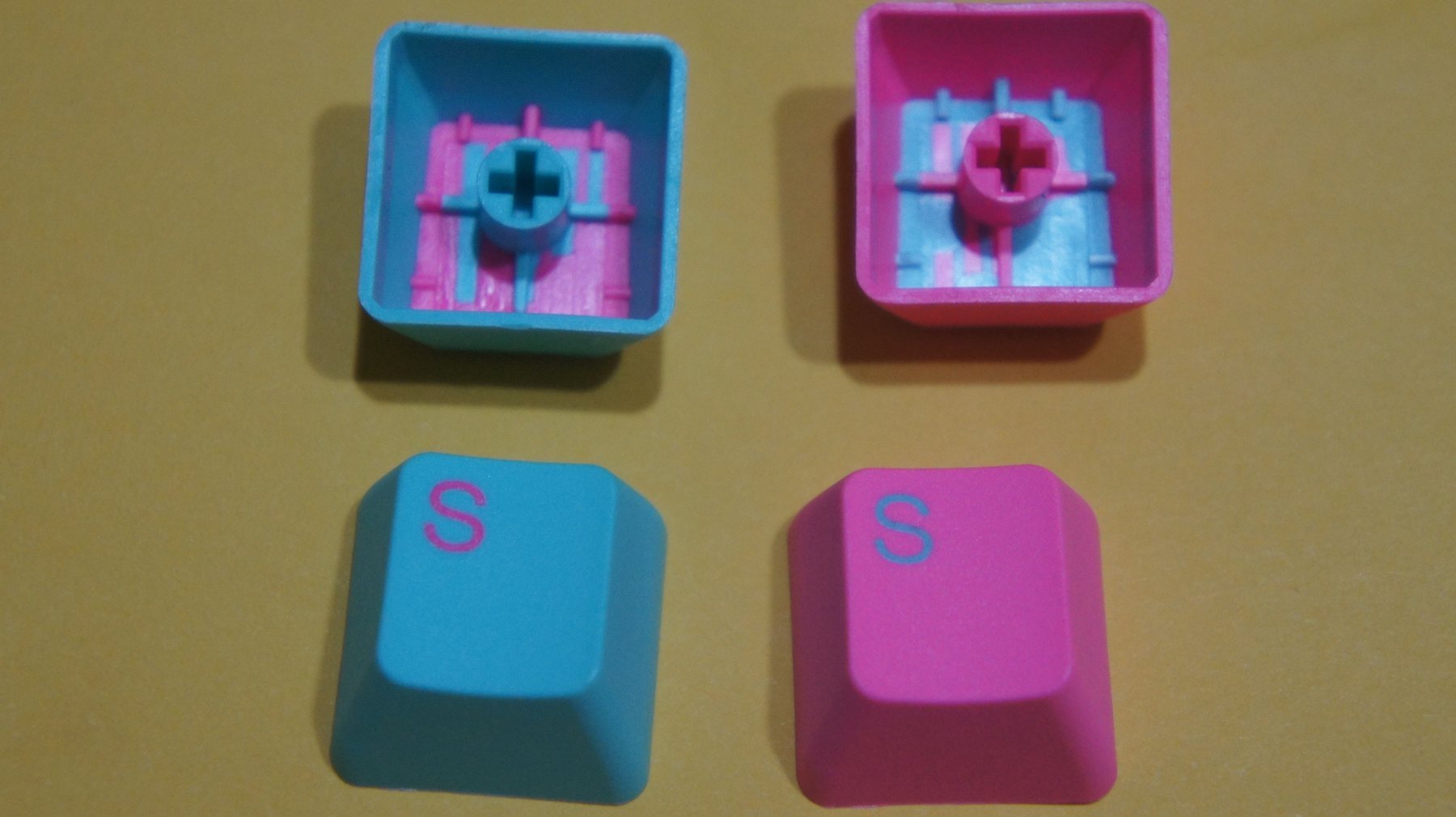
A second material, usually a soft TPE or silicone, is moulded over a rigid substrate to add grip, sealing or colour in one part.
How it works
A labelled schematic of the process (not to scale), and the four steps every job goes through.
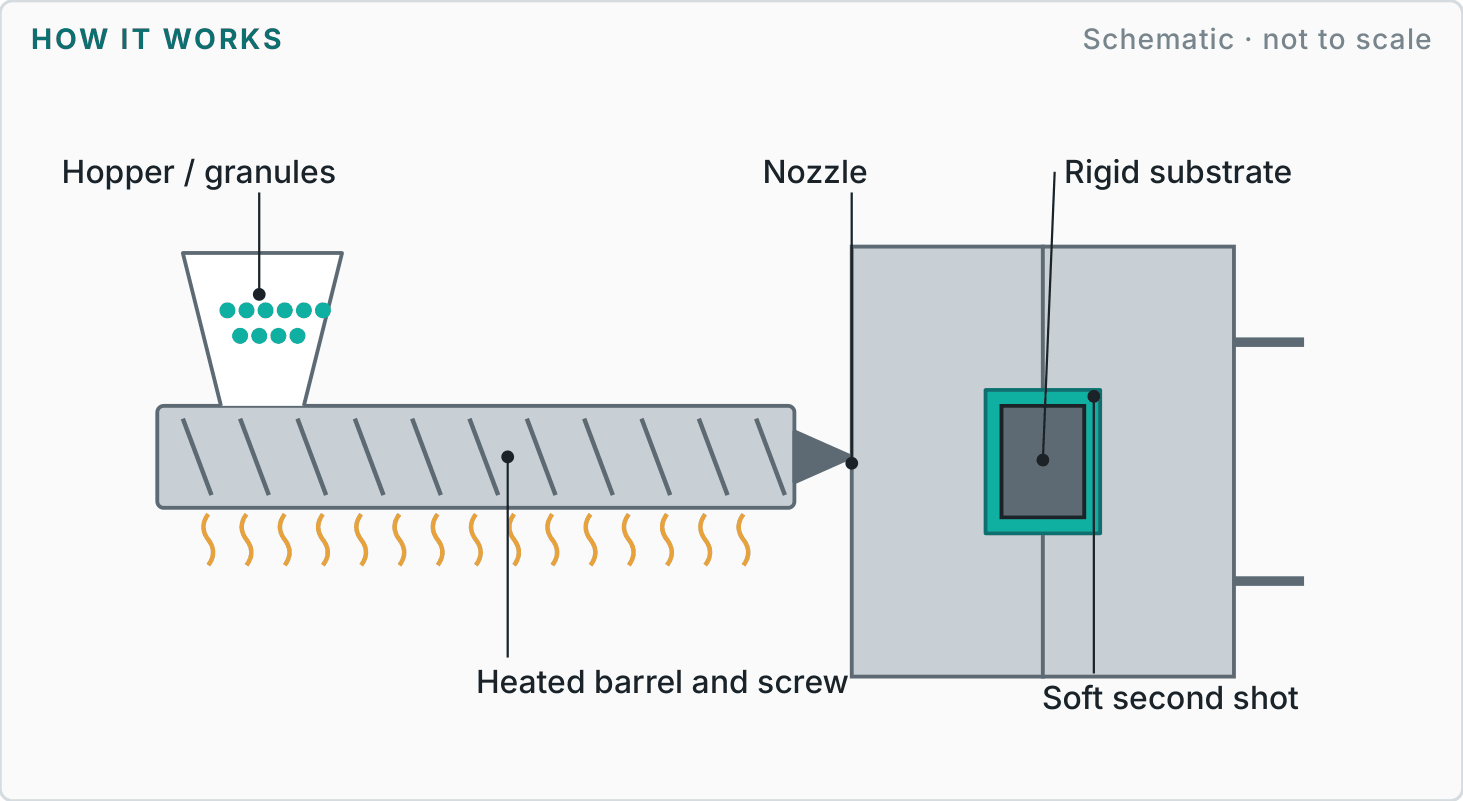
Mould or supply the rigid first part.
Move it into the second tool or rotate the platen.
Inject the soft material over the substrate.
Eject and check adhesion and appearance.
Reference figures
Typical industry values to help you plan. We agree the figures for your part on the drawing.
| Materials | Rigid PP, ABS, PC, PA substrates; TPE, TPU and LSR overmould materials chosen for compatibility. |
|---|---|
| Finishes | Contrasting colours and textures; matte soft-touch grips over gloss substrates. |
| Design guidance |
|
| Best suited to | Tool and appliance handles, seals on housings, wearable devices and kitchen utensils. |
| Watch-outs | Two tools or a two-shot press; adhesion must be proven by test. |
More in chapter B
Next step
Send a sketch, photo, sample or CAD file with your quantity and target date. We will recommend the most sensible route and explain the trade-offs before quoting.
Reference figures are typical published industry values for planning, not a guarantee; final tolerances, materials and finishes are agreed in writing for each project.