Tool
Cast a silicone tool from the master, or use a rigid mould.
Manufacturing services · Chapter B · Method 08
Two-part polyurethane is mixed and cast into silicone or rigid tools. Covers rigid, flexible and elastomeric parts without the cost of steel tooling.
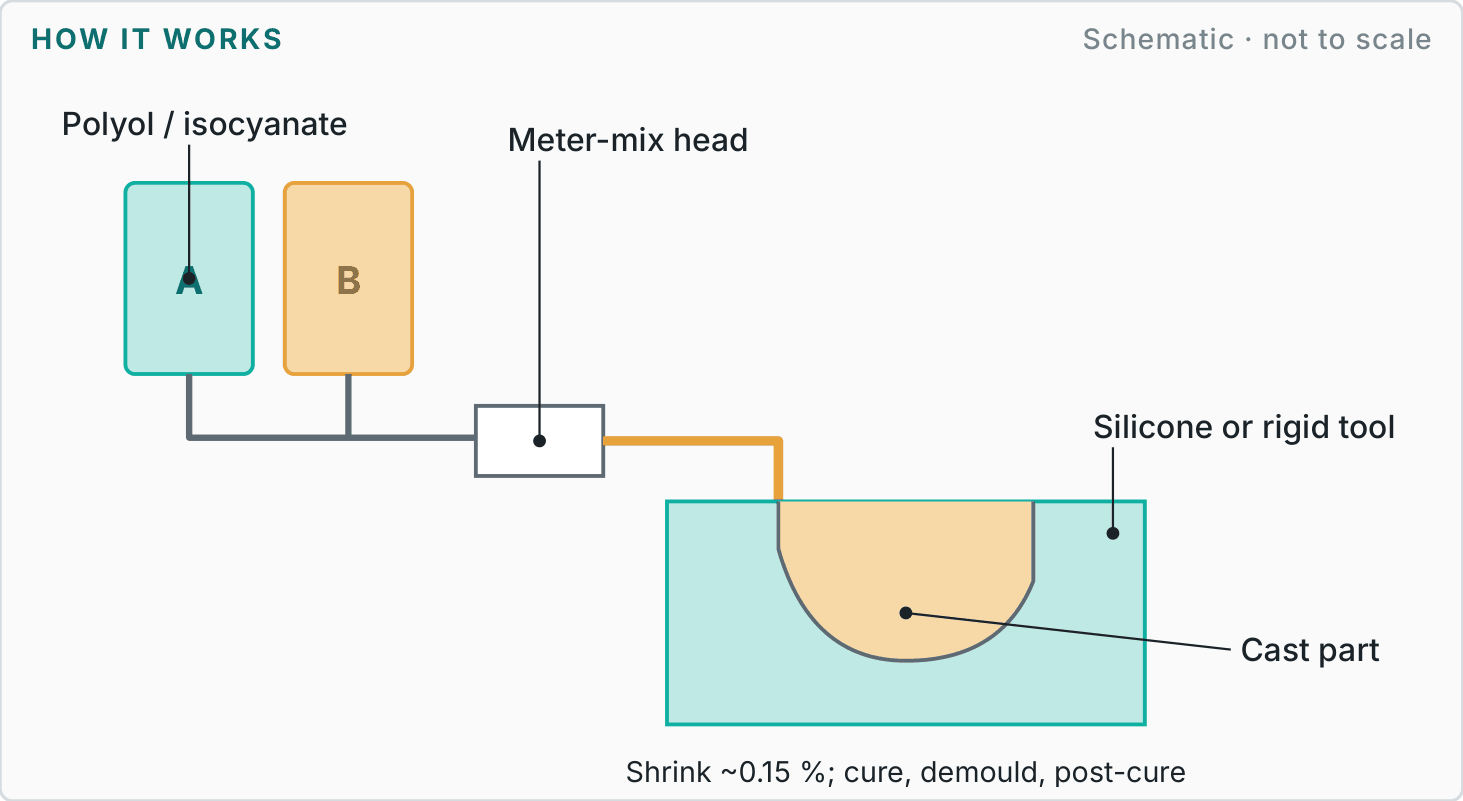
How it works
A labelled schematic of the process (not to scale), and the four steps every job goes through.
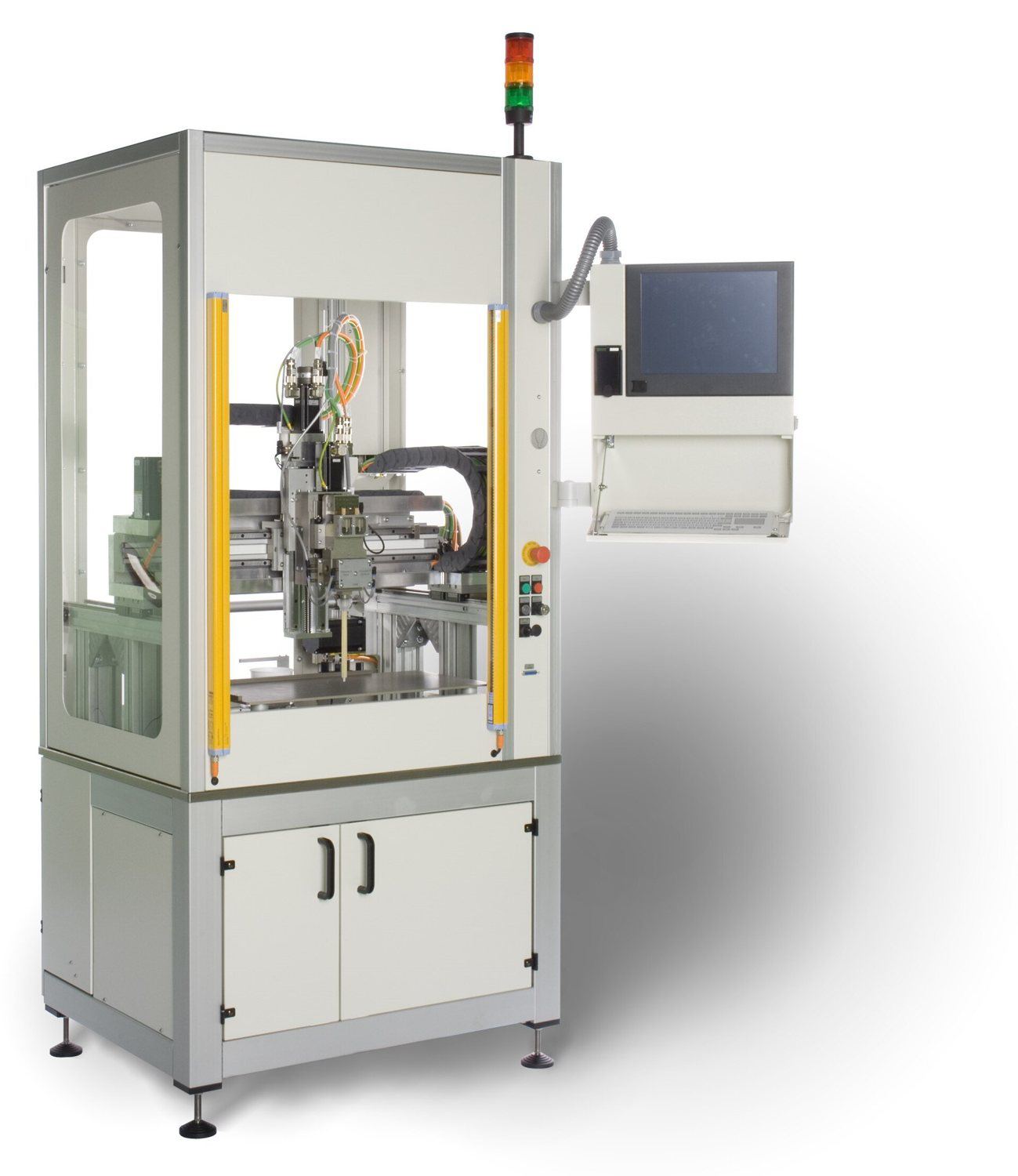
Cast a silicone tool from the master, or use a rigid mould.
Mix A and B by hand or with a meter-mix machine.
Pour or inject into the tool, under vacuum if needed.
Cure, demould and post-cure for full properties.
Reference figures
Typical industry values to help you plan. We agree the figures for your part on the drawing.
| Materials | Rigid, flexible and elastomeric PU; clear, flame-retardant and high-temperature grades. |
|---|---|
| Finishes | Satin or matte as standard; polished or custom finishes agreed at order. Pigmented or painted. |
| Design guidance |
|
| Best suited to | Rollers, wheels, bumpers, buffers, industrial tooling and low-volume end-use parts. |
| Watch-outs | Sharp corners and fine text may round slightly; moisture affects cure. |
More in chapter B
Next step
Send a sketch, photo, sample or CAD file with your quantity and target date. We will recommend the most sensible route and explain the trade-offs before quoting.
Reference figures are typical published industry values for planning, not a guarantee; final tolerances, materials and finishes are agreed in writing for each project.