Feed
Strip-feed compound into the extruder screw.
Manufacturing services · Chapter A · Method 07
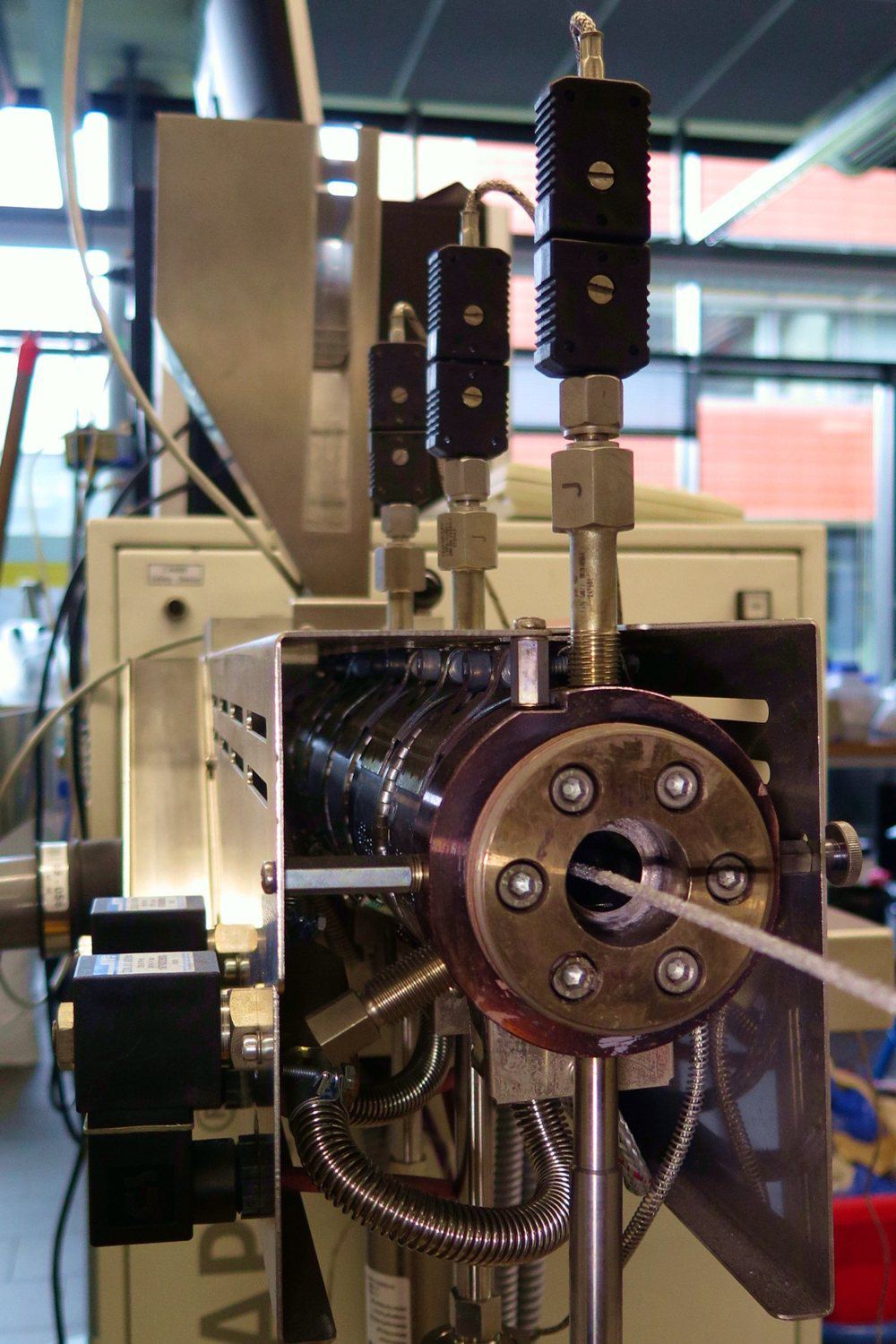
Uncured compound is forced through a shaped die to make continuous profiles, cords and tubes, then cured in a hot-air or salt-bath line.
How it works
A labelled schematic of the process (not to scale), and the four steps every job goes through.
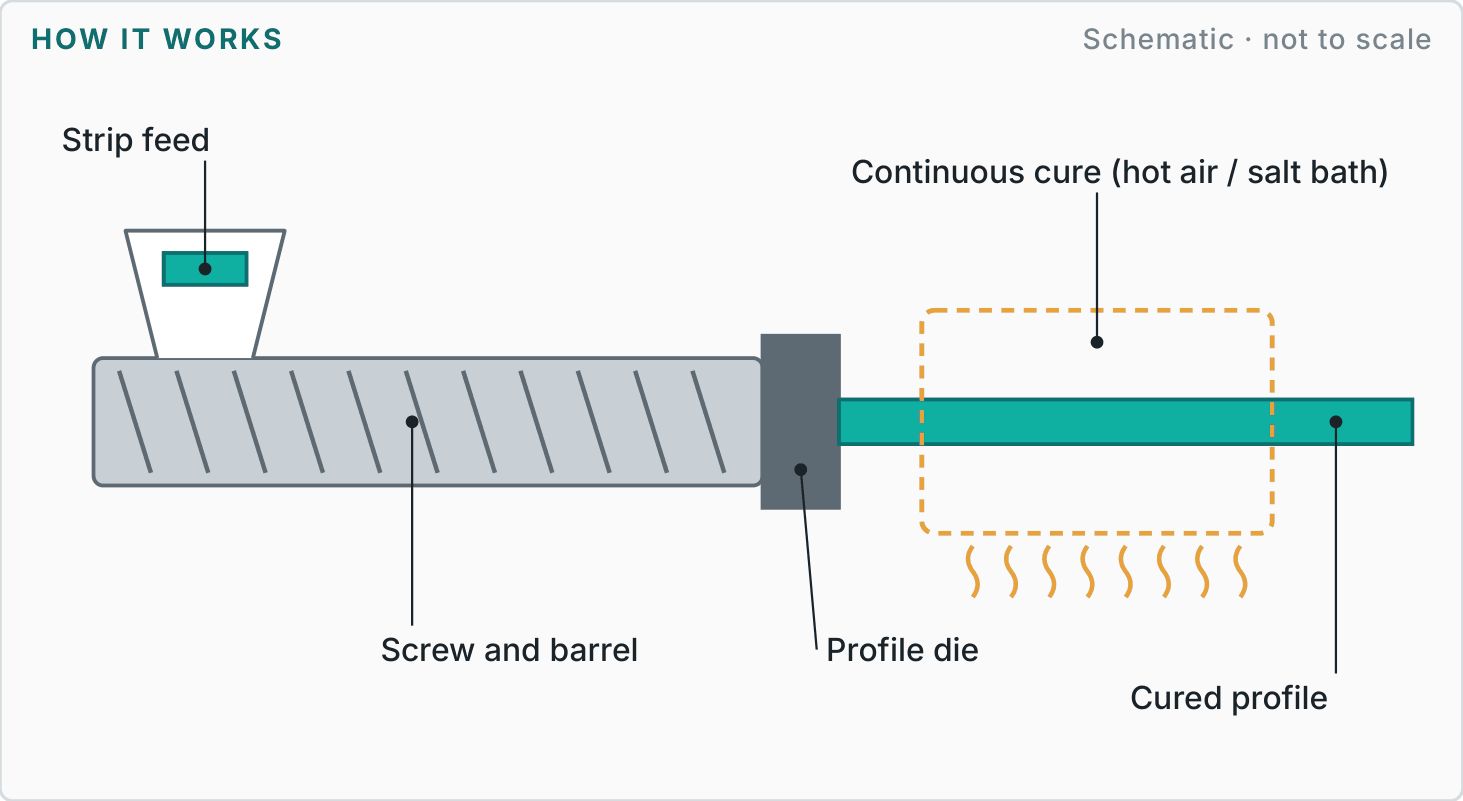
Strip-feed compound into the extruder screw.
Compound passes through a profile die.
A continuous oven or bath vulcanises the profile.
Cool, cut to length, splice or join into rings.
Reference figures
Typical industry values to help you plan. We agree the figures for your part on the drawing.
| Materials | HCR silicone, EPDM, sponge silicone and EPDM, NBR, neoprene; food and pharmaceutical silicone grades. |
|---|---|
| Finishes | Smooth or matte extruded skin; flocked, low-friction or adhesive-backed options. |
| Design guidance |
|
| Best suited to | Door and hatch seals, tubing, cord, edge trims and gaskets made into rings. |
| Watch-outs | Die swell and cure shrink make tight tolerances harder than moulding. |
More in chapter A
Next step
Send a sketch, photo, sample or CAD file with your quantity and target date. We will recommend the most sensible route and explain the trade-offs before quoting.
Reference figures are typical published industry values for planning, not a guarantee; final tolerances, materials and finishes are agreed in writing for each project.