Load sheet
Clamp the sheet to the moving table.
Manufacturing services · Chapter D · Method 24
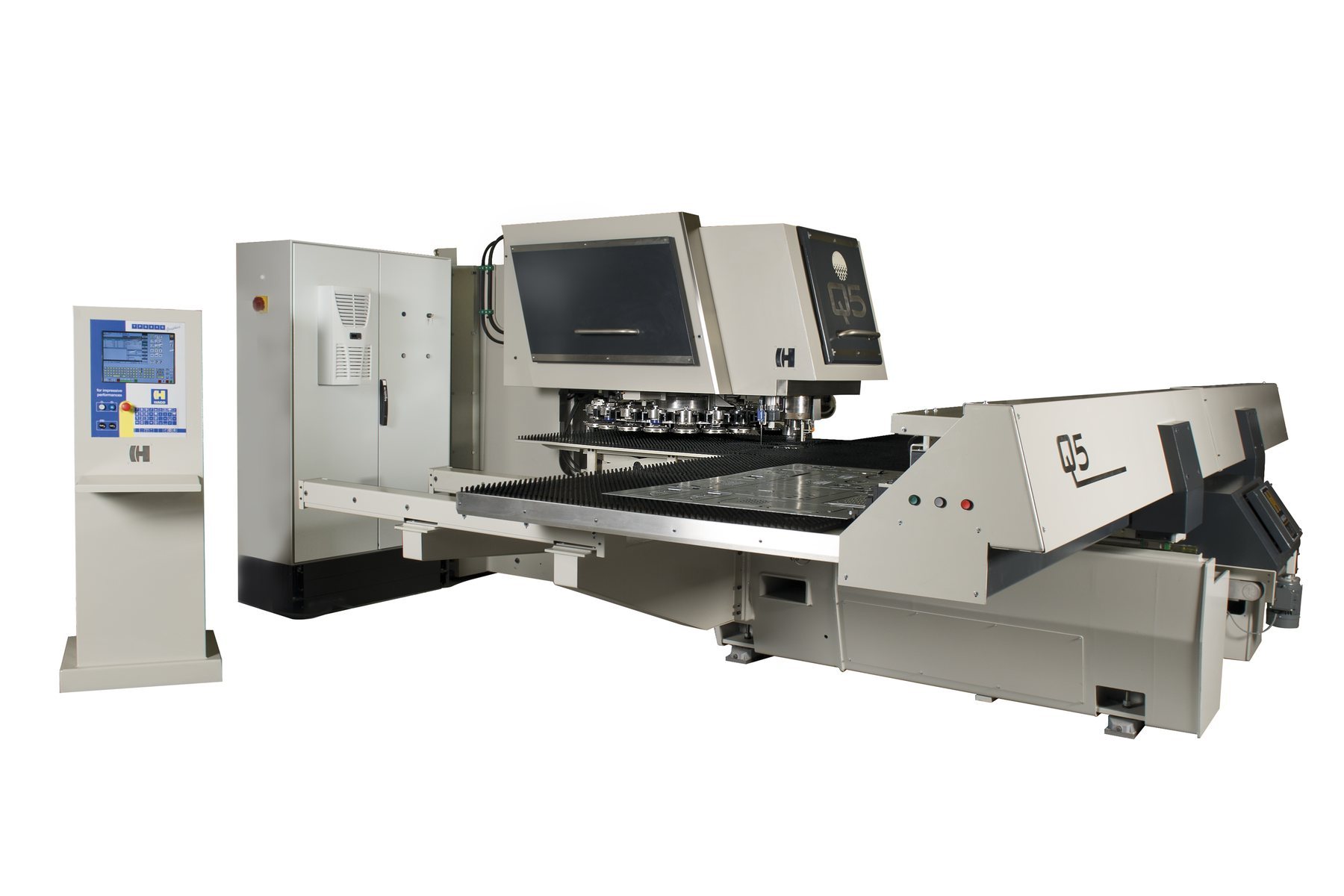
A CNC punch press strikes standard or special tools through sheet to create holes, louvres and formed features at high speed.
How it works
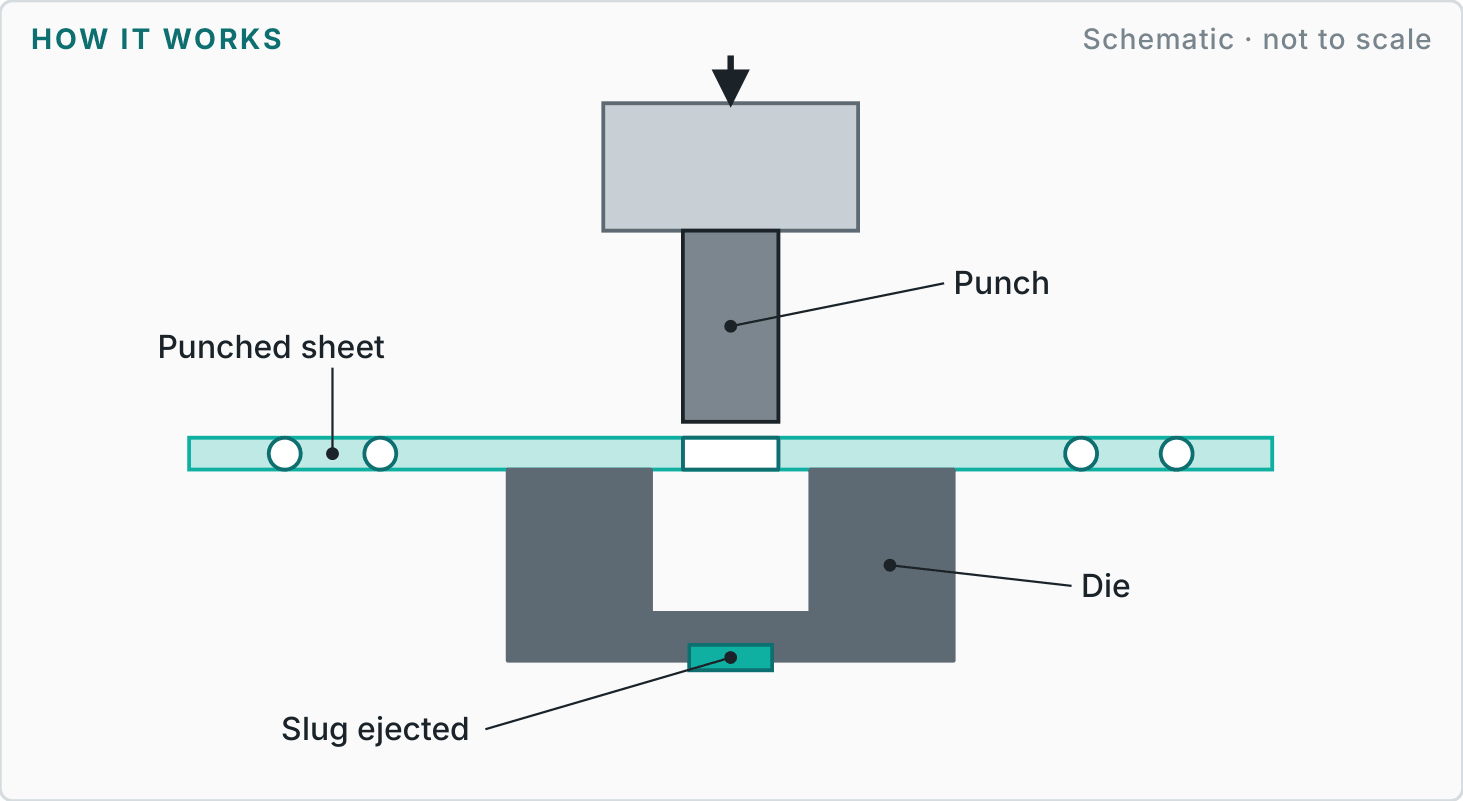
A labelled schematic of the process (not to scale), and the four steps every job goes through.
Clamp the sheet to the moving table.
The turret indexes the required punch and die.
Each stroke shears a slug through the sheet.
Formed tools add louvres, embosses and countersinks.
Reference figures
Typical industry values to help you plan. We agree the figures for your part on the drawing.
| Materials | Mild steel, stainless, aluminium and galvanised steel sheet. |
|---|---|
| Finishes | Small burr on the exit side; deburring as specified. |
| Design guidance |
|
| Best suited to | Perforated panels, enclosures and parts with many repeated holes. |
| Watch-outs | Special shapes need special tools; nibbled edges show scallops. |
More in chapter D
Next step
Send a sketch, photo, sample or CAD file with your quantity and target date. We will recommend the most sensible route and explain the trade-offs before quoting.
Reference figures are typical published industry values for planning, not a guarantee; final tolerances, materials and finishes are agreed in writing for each project.