Slice
Slice the model into layers and paths.
Manufacturing services · Chapter F · Method 32
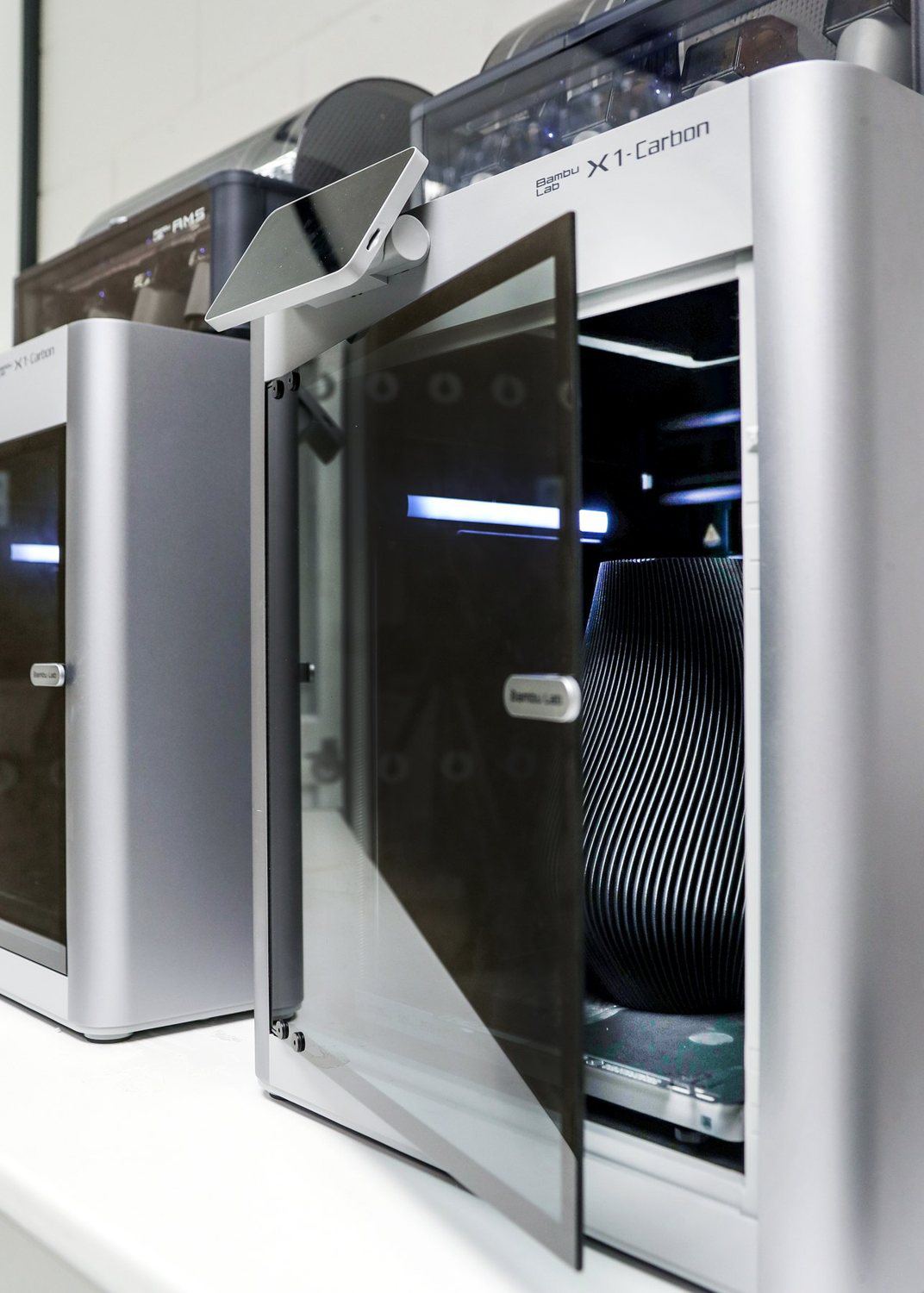
Thermoplastic filament is melted and laid down bead by bead, layer by layer. Quick and inexpensive for jigs, formers and concept models.

How it works
A labelled schematic of the process (not to scale), and the four steps every job goes through.
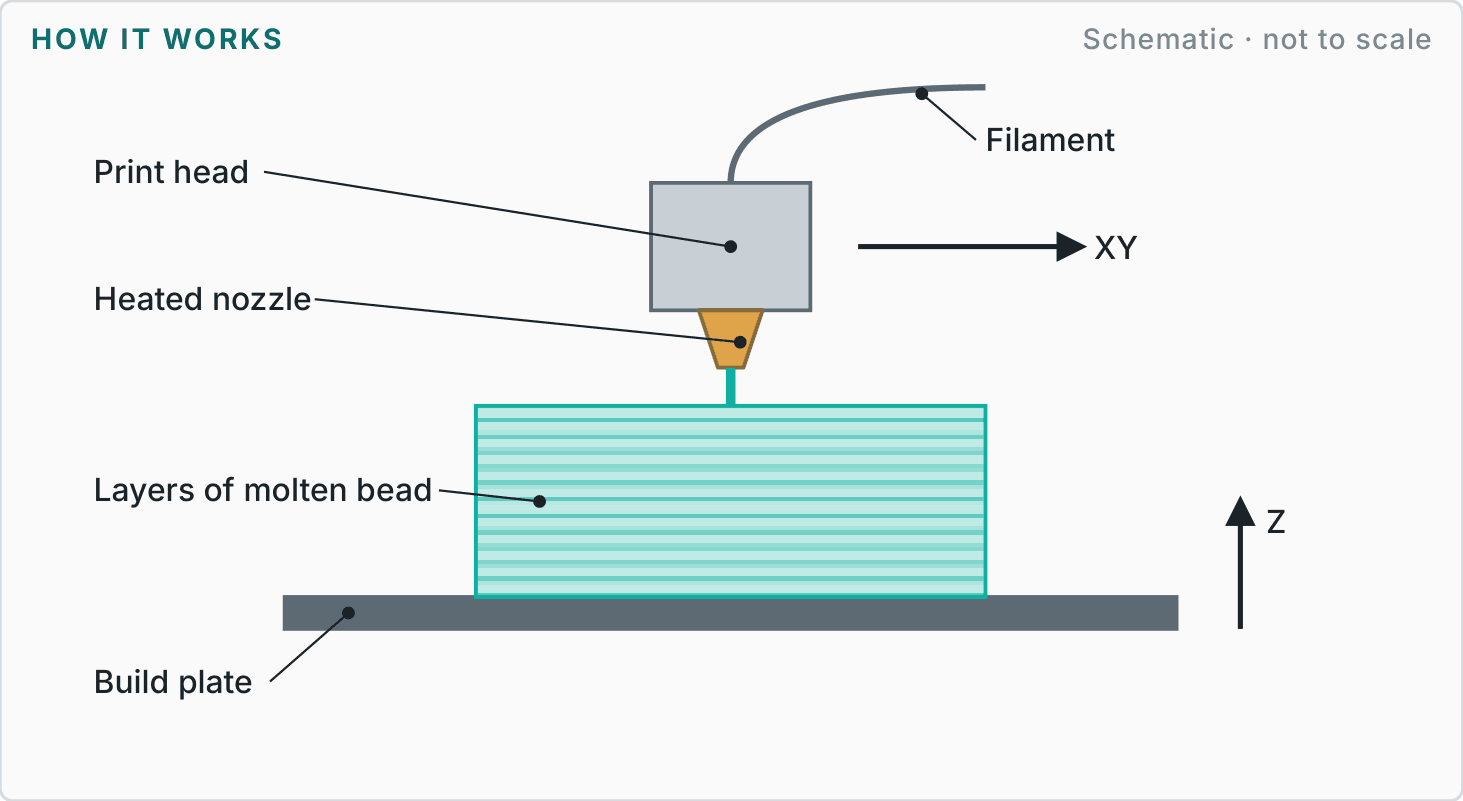
Slice the model into layers and paths.
A heated nozzle lays down molten filament.
The bed or head steps up one layer at a time.
Remove supports; sand or seal if needed.
Reference figures
Typical industry values to help you plan. We agree the figures for your part on the drawing.
| Materials | PLA, PETG, ABS, ASA, nylon, TPU, PC and carbon-filled grades. |
|---|---|
| Finishes | Visible layer lines; sanded, primed and painted or vapour smoothed. |
| Design guidance |
|
| Best suited to | Mould boxes, pour formers, jigs, fixtures and early concept models. |
| Watch-outs | Anisotropic strength and visible layers; not ideal as a master for fine silicone detail. |
More in chapter F
Next step
Send a sketch, photo, sample or CAD file with your quantity and target date. We will recommend the most sensible route and explain the trade-offs before quoting.
Reference figures are typical published industry values for planning, not a guarantee; final tolerances, materials and finishes are agreed in writing for each project.