Orient & support
Orient the model and add supports.
Manufacturing services · Chapter F · Method 35
A UV laser or light source cures liquid resin layer by layer. Very smooth, detailed parts that make excellent master patterns for silicone moulds.
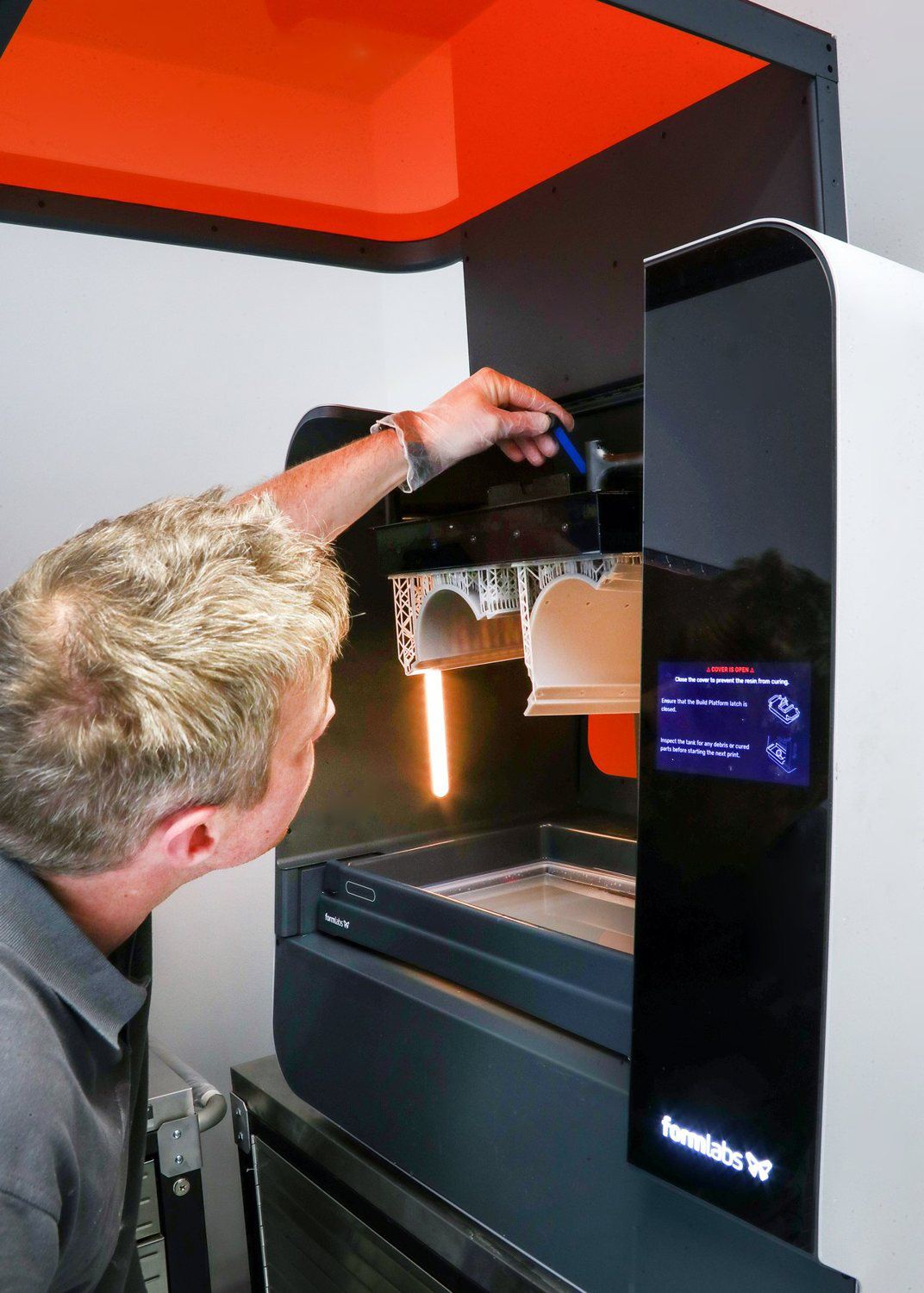
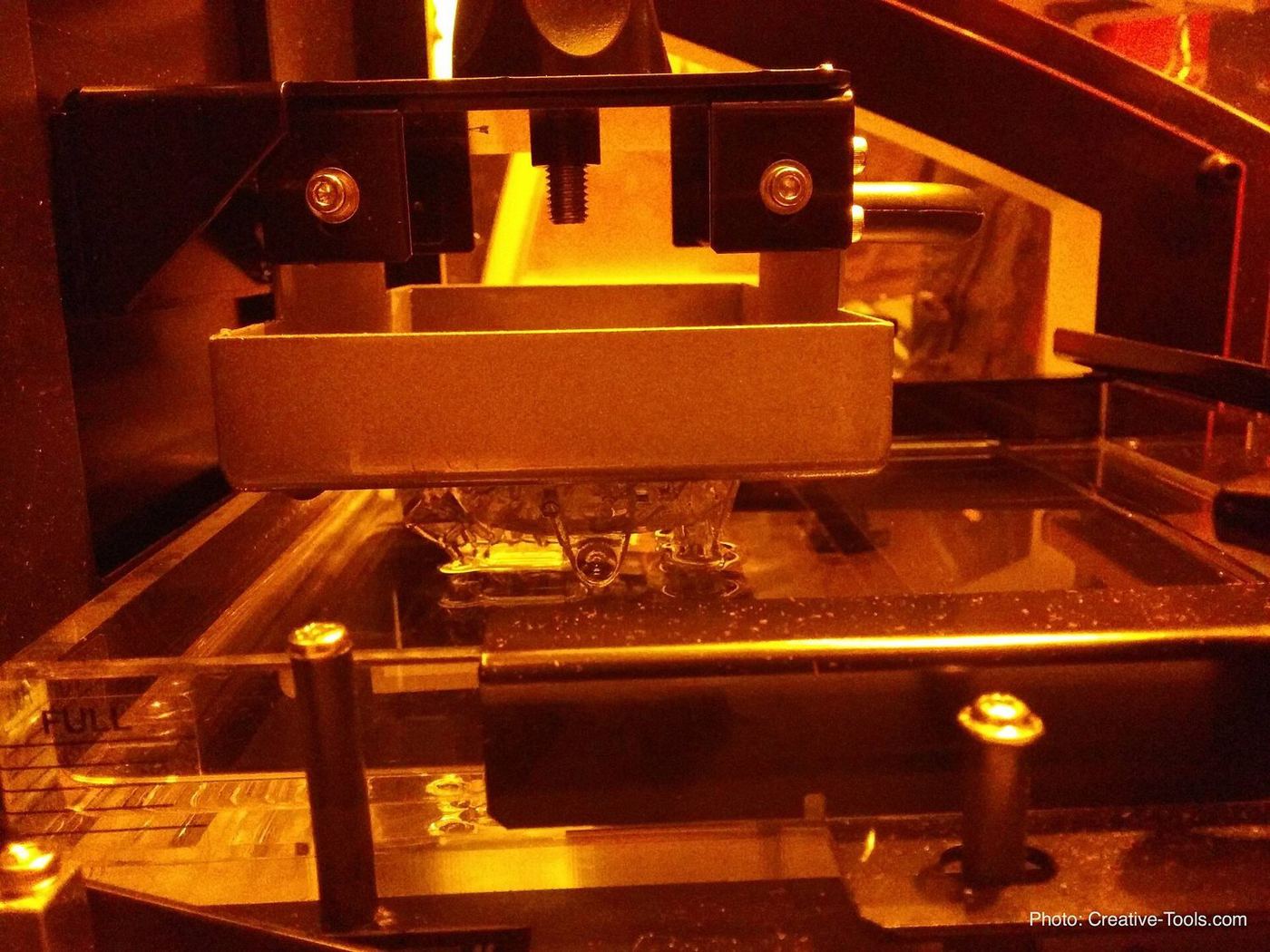
How it works
A labelled schematic of the process (not to scale), and the four steps every job goes through.
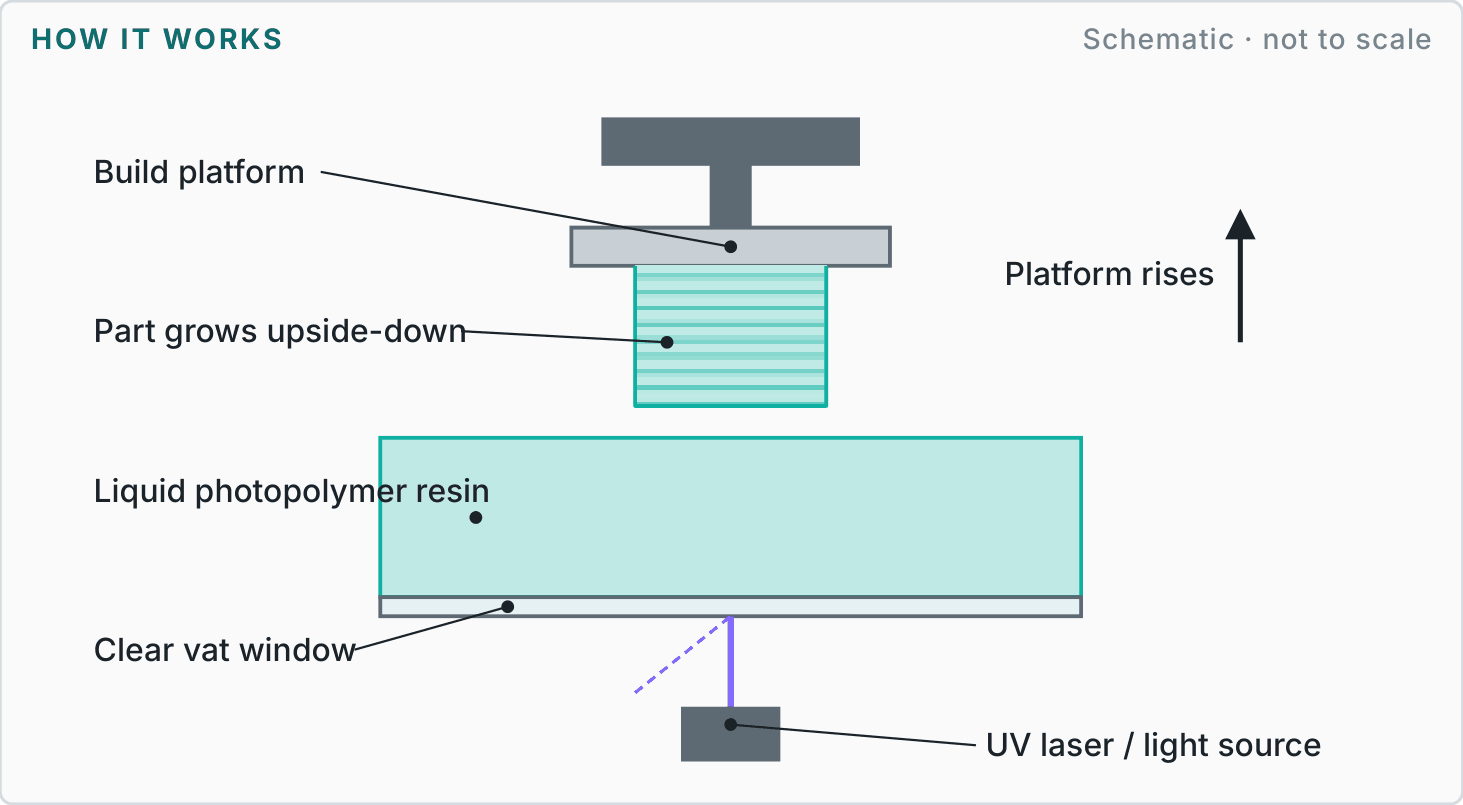
Orient the model and add supports.
Light cures each layer in the resin vat.
Wash off uncured resin in solvent.
UV post-cure; remove supports and finish.
Reference figures
Typical industry values to help you plan. We agree the figures for your part on the drawing.
| Materials | Standard, tough, clear, high-temperature, flexible and castable photopolymer resins. |
|---|---|
| Finishes | Smooth as printed; sanded, primed, painted or clear-coated. Ideal for master patterns. |
| Design guidance |
|
| Best suited to | Master patterns for silicone tooling, fine-detail prototypes and visual models. |
| Watch-outs | Resins can be brittle and UV-sensitive; support marks need finishing. |
More in chapter F
Next step
Send a sketch, photo, sample or CAD file with your quantity and target date. We will recommend the most sensible route and explain the trade-offs before quoting.
Reference figures are typical published industry values for planning, not a guarantee; final tolerances, materials and finishes are agreed in writing for each project.