Load bar
Load bar or billet into the chuck or collet.
Manufacturing services · Chapter C · Method 14
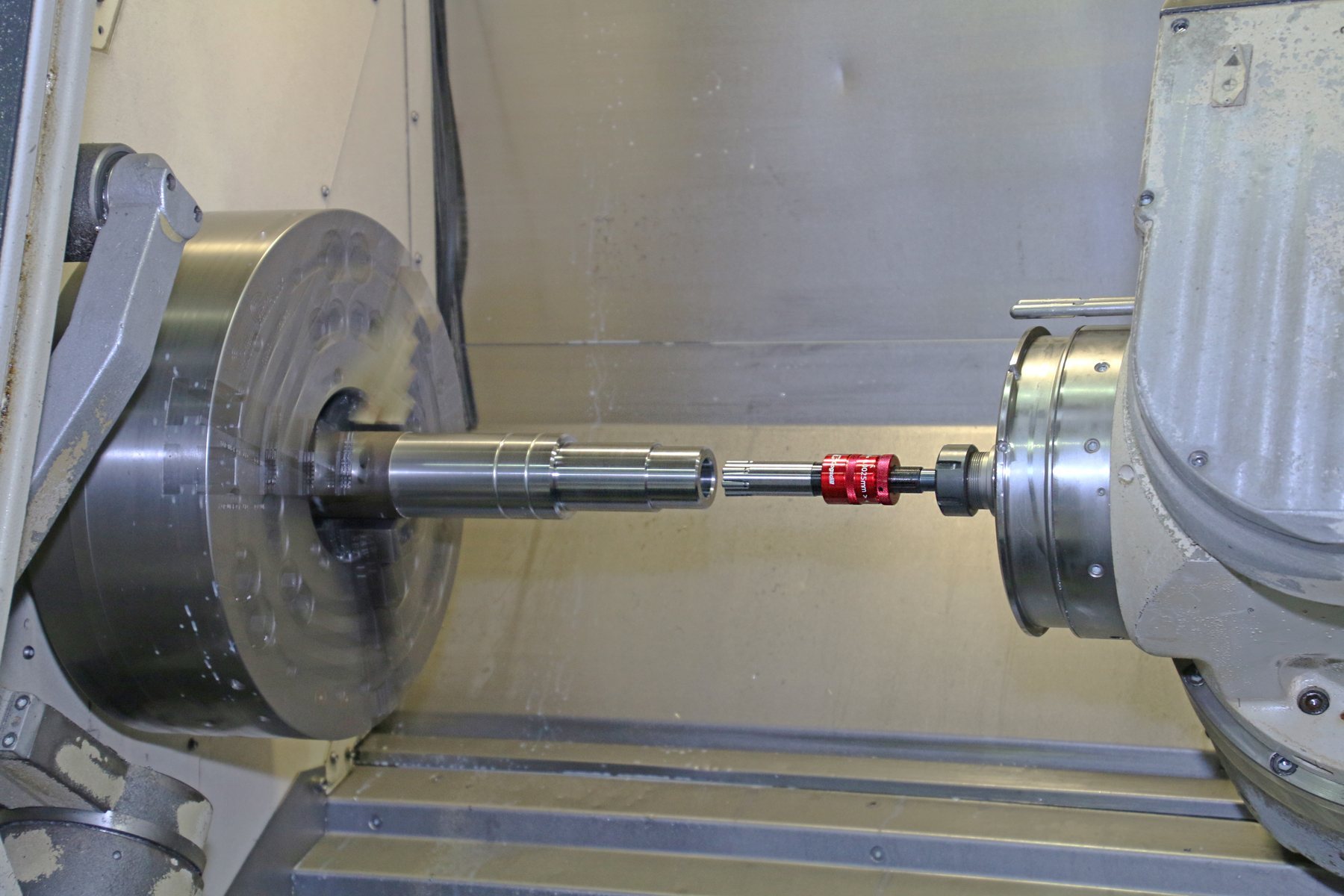
The workpiece rotates while a fixed tool cuts it, producing round parts such as shafts, pins and bushes quickly and accurately.
How it works
A labelled schematic of the process (not to scale), and the four steps every job goes through.
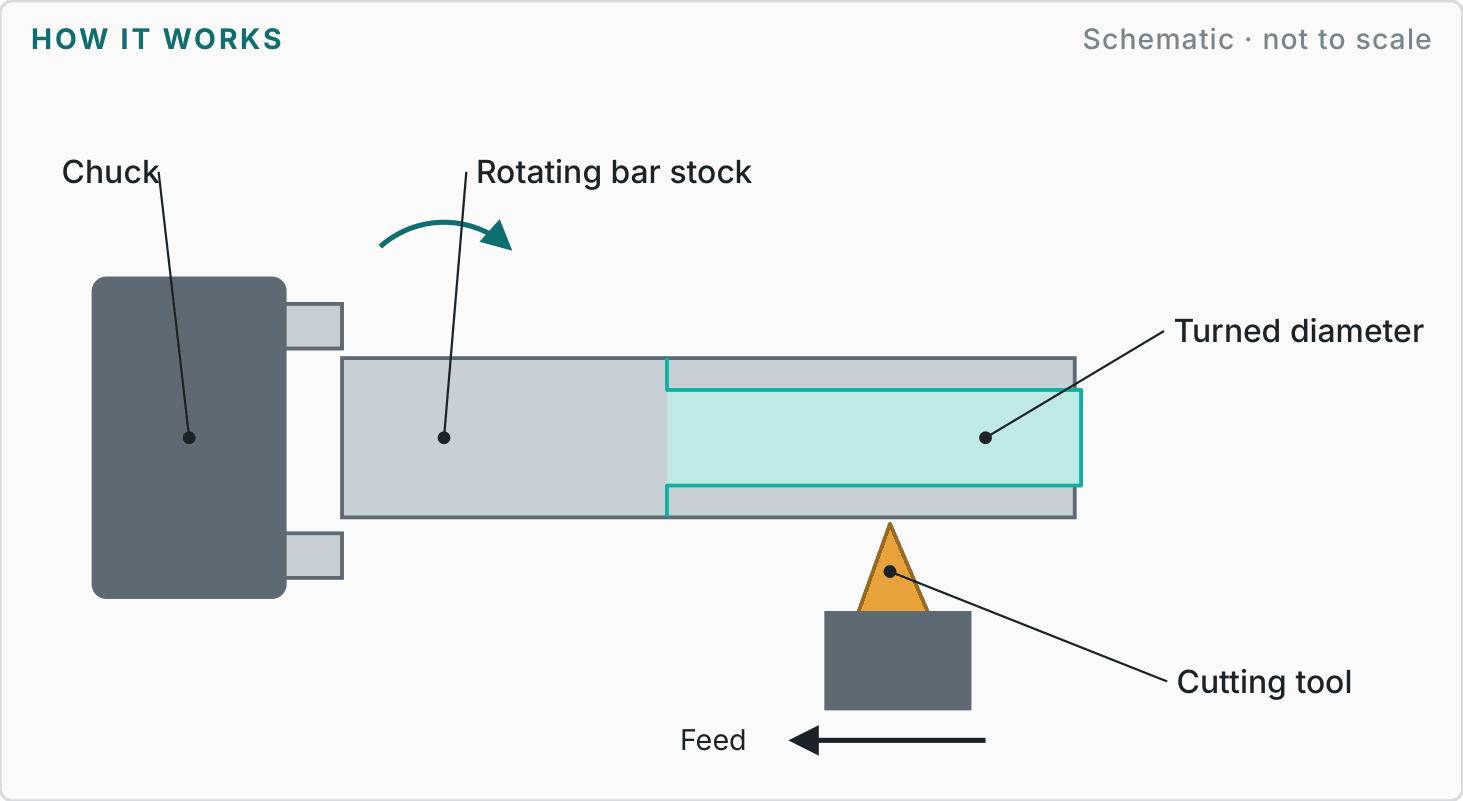
Load bar or billet into the chuck or collet.
Face the end; turn outside diameters.
Drill, bore, groove and thread.
Cut the part from the bar and deburr.
Reference figures
Typical industry values to help you plan. We agree the figures for your part on the drawing.
| Materials | Free-machining steel, stainless, brass, aluminium, titanium; POM, nylon, PEEK and PTFE. |
|---|---|
| Finishes | As turned, polished, knurled, anodised or plated. |
| Design guidance |
|
| Best suited to | Shafts, spacers, mandrels, bushes and fittings. |
| Watch-outs | Non-round features need live tooling or a second operation. |
More in chapter C
Next step
Send a sketch, photo, sample or CAD file with your quantity and target date. We will recommend the most sensible route and explain the trade-offs before quoting.
Reference figures are typical published industry values for planning, not a guarantee; final tolerances, materials and finishes are agreed in writing for each project.