Start hole
Drill a start hole, or start from an edge.
Manufacturing services · Chapter C · Method 17
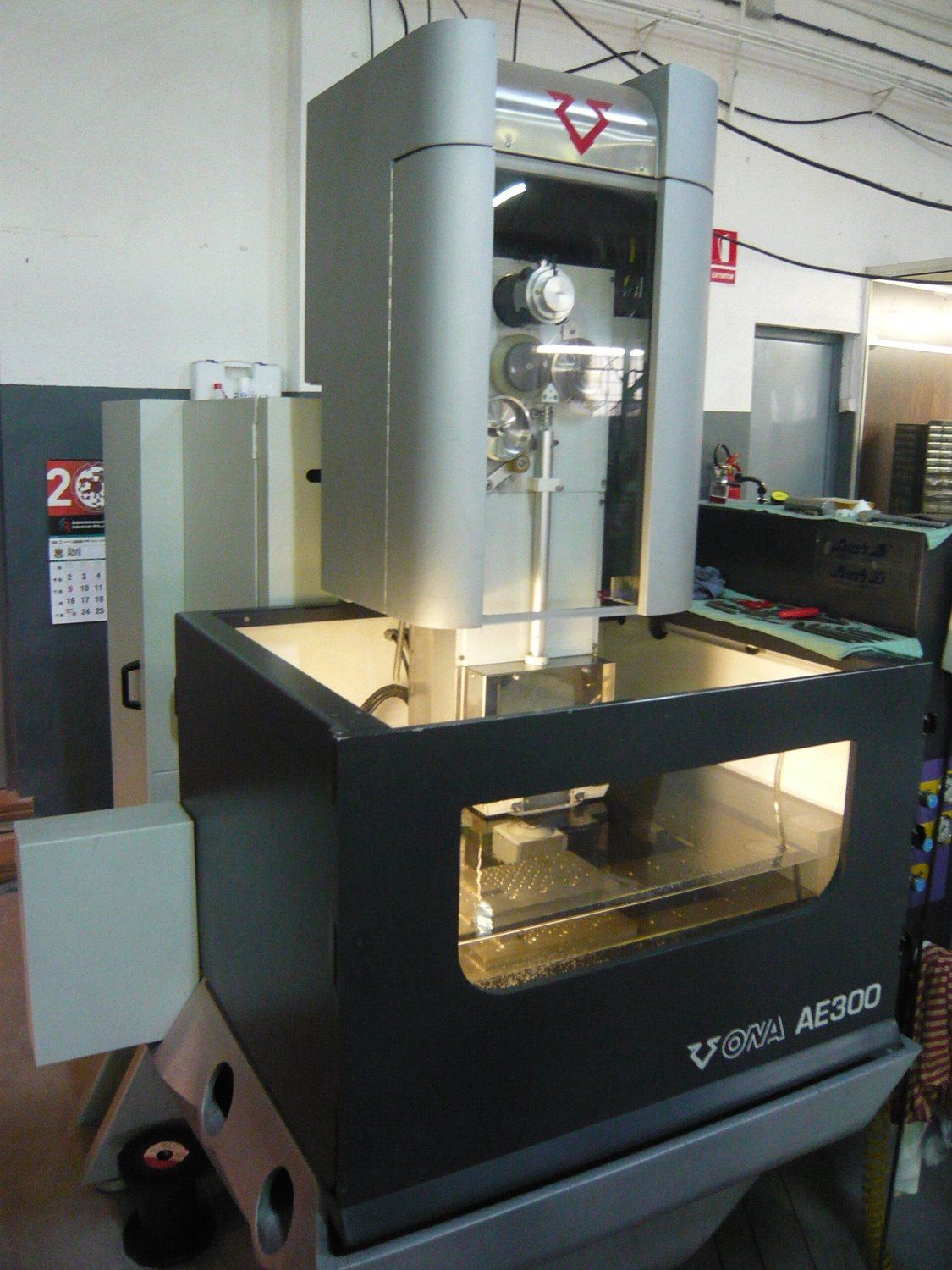
A thin charged wire cuts conductive metal by spark erosion, without cutting force. Produces sharp internal corners and very accurate profiles.
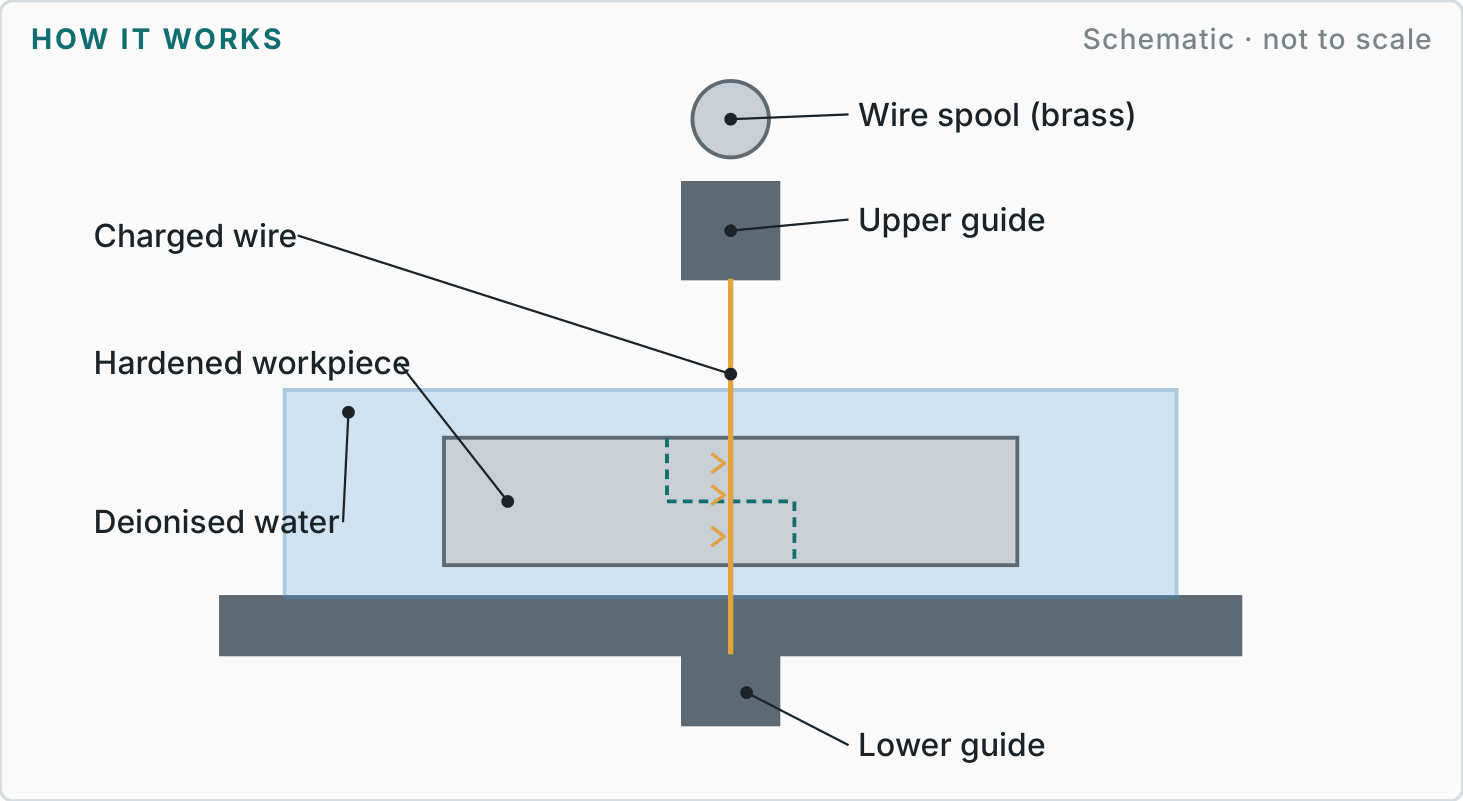
How it works
A labelled schematic of the process (not to scale), and the four steps every job goes through.
Drill a start hole, or start from an edge.
Thread brass wire through upper and lower guides.
Sparks remove metal in deionised water.
Further skim cuts refine size and finish.
Reference figures
Typical industry values to help you plan. We agree the figures for your part on the drawing.
| Materials | Hardened tool steel, carbide, stainless, titanium, copper and aluminium. |
|---|---|
| Finishes | Fine matte EDM finish; improved with extra skim passes. |
| Design guidance |
|
| Best suited to | Punches, dies, extrusion dies, mould inserts and precision gears. |
| Watch-outs | Slow and costly for thick sections; conductive materials only. |
More in chapter C
Next step
Send a sketch, photo, sample or CAD file with your quantity and target date. We will recommend the most sensible route and explain the trade-offs before quoting.
Reference figures are typical published industry values for planning, not a guarantee; final tolerances, materials and finishes are agreed in writing for each project.